
Flow Dynamics: Vanadium Redox Battery Energy Storage Efficiency
Vanadium redox flow batteries decouple power capacity from energy storage capacity, providing scalable long-duration stationary energy storage. Supported …
Our editorial team's curated selection of deep-dive engineering analyses, market reports, and clean-technology benchmarks.
Vanadium redox flow batteries decouple power capacity from energy storage capacity, providing scalable long-duration stationary energy storage. Supported …

Agrivoltaic systems combine agricultural crop cultivation with photovoltaic solar arrays to optimize land-use efficiency and microclimate shading. Grounded …

Smart home energy management systems utilize predictive algorithms to optimize appliance power schedules, battery storage, and solar generation. …

Solid-state batteries eliminate flammable liquid electrolytes, but require advanced interface engineering to minimize solid-solid electrical resistance. Grounded in …

High-speed rotational velocities expose offshore wind turbine blades to severe rain droplet erosion, increasing aerodynamic drag and reducing …

Diversifying critical mineral extraction and processing reduces vulnerability to supply chain bottlenecks across clean energy manufacturing sectors. Grounded …

Residential greywater heat recovery systems capture waste thermal energy from shower drains to pre-heat incoming domestic water supplies. …

Phase change materials integrated into building envelopes absorb and release thermal energy isothermally, reducing residential HVAC power demands. …
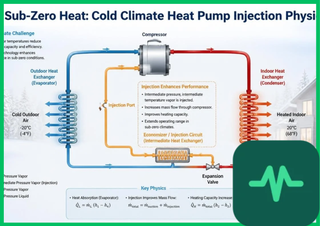
Enhanced vapor injection compressors maintain high thermal heating capacity in sub-zero ambient environments without resistive backup elements. Supported …
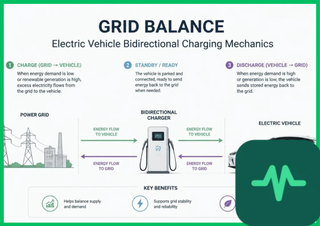
Bidirectional charging systems transform electric vehicle battery packs into active distributed energy storage resources for power grid stabilization. …

Floating photovoltaic systems leverage aquatic evaporative cooling to lower operating cell temperatures and boost solar energy conversion efficiency. …
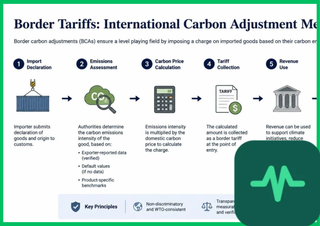
Carbon border adjustment mechanisms neutralize international trade imbalances by levying tariffs on carbon-intensive industrial imports. Supported by IEA …