

 [
 ]) to domestic delivery temperatures (
 to
 [
 to
 ]). Simultaneously, high-temperature greywater (
 to
 [
 to
 ]) generated during showers and bath usage drains directly into municipal sewage lines, wasting massive amounts of thermal energy. Analyzing counter-current heat exchange mechanics, falling film hydrodynamic behavior, and thermal recovery coefficients is essential for evaluating residential greywater heat scavenging performance.
Thermodynamic Fundamentals of Domestic Hot Water and Drain Losses
The foundational physical principle governing greywater heat recovery is the conservation of thermal energy during fluid-to-fluid heat exchange. The thermal energy rate ( ) required to heat incoming domestic water is formulated mathematically by the basic heat transfer equation:

where  represents mass flow rate (
 ),
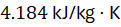
 is the specific heat capacity of water (
 ),
 is pre-heated water delivery temperature, and
 is municipal cold water supply temperature.
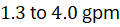
When a residential occupant uses a shower, wastewater cascades down vertical drain stacks at flow rates ranging from  to
 (
 ). Without heat scavenging, this greywater discharges thermal energy directly into the environment. Greywater heat recovery (GWHR) systems intercept this thermal waste stream, transferring heat from the outgoing wastewater to the incoming cold water supply via passive shell-and-tube or falling film heat exchangers.
Falling Film Heat Exchangers and Copper Tube Bundle Geometry
High-efficiency residential greywater heat recovery units predominantly utilize falling film vertical heat exchangers. In a vertical falling film configuration, wastewater drains down the interior vertical wall of a copper or stainless steel pipe under gravity, forming a thin, turbulent annular liquid film. Simultaneously, incoming cold municipal water flows upward through an outer jacket or an integrated helical copper tube bundle wrapped coaxially around the central drain pipe in a counter-current flow arrangement.
Counter-current flow orientation maintains maximum log-mean temperature difference (LMTD) across the entire heat exchange interface, driving high thermal effectiveness. The overall heat transfer coefficient ( ) is governed by the thermal resistance of the inner pipe wall, the wastewater film convective resistance, and the cold water boundary layer resistance:
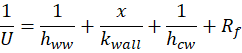
where  is the wastewater film heat transfer coefficient,
 is wall thickness,
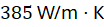
 is thermal conductivity of copper (
 ),
 is cold water convective heat transfer coefficient, and
 is fouling resistance. Utilizing high-purity copper tube bundles maximizes thermal conductivity, achieving sensible heat recovery efficiencies of 45% to 65% under steady-state operating conditions.
Technical Data Specifications of Greywater Heat Recovery Parameters
| Greywater Heat Recovery Parameter | Engineering Specification Standard |
|---|---|
| Sensible Heat Recovery Efficiency | 45% to 65% thermal effectiveness rating |
| Heat Exchanger Tube Material | High-purity copper ( Cu) or stainless steel |
| Wastewater Flow Rate Operating Band |  to  ( 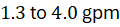 ) |
Thermal Conductivity of Copper ( ) | 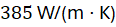 at  (  ) |
| Typical Domestic Cold Water Inlet |  to  (  to  ) |
| Pre-Heated Water Exit Temperature |  to  (  to  ) |
| Operational Lifespan Expectancy |  maintenance-free continuous service |
Pre-Heating Topologies: Equal-Flow Versus Unequal-Flow Configurations
Configuring greywater heat recovery systems within residential plumbing networks requires optimizing pre-heating flow topologies to maximize thermal energy capture. Plumbing engineers deploy two primary operational configurations:
- Equal-Flow (Balanced) Configuration: Routes pre-heated water exiting the heat exchanger directly to both the cold water inlet of the water heater and the cold water side of shower mixing valves. This configuration maximizes utilization of pre-heated water, raising overall domestic hot water system efficiency by 30% to 40%.
- Unequal-Flow Configuration: Directs pre-heated water exclusively to the water heater inlet, leaving shower cold water supplies at baseline municipal temperatures. While simpler to plumb in legacy retrofits, this topology captures lower aggregate thermal energy savings during simultaneous multi-fixture water usage.
Fouling Resistance and Long-Term Thermal Performance
A critical engineering challenge governing long-term greywater heat recovery system efficiency is surface fouling caused by soap scum, hair fibers, skin lipids, and organic biofilms adhering to the interior walls of the drain heat exchanger. Fouling introduces an additional thermal boundary resistance ( ), which degrades the overall heat transfer coefficient and reduces sensible recovery efficiency by 10% to 20% over extended operating intervals.
Falling film heat exchanger geometry mitigates fouling naturally through continuous gravitational shear forces. The high-velocity annular wastewater film creates turbulent Reynolds numbers ( ), which scour suspended particulate matter off the interior copper surface. Furthermore, annual chemical descaling or mechanical pipe-brush sanitization maintains optimal thermal conductivity, ensuring multi-decade system performance without permanent degradation.
Domestic Hot Water Efficiency and Primary Energy Savings
Integrating greywater heat recovery systems into residential buildings directly reduces the electrical or thermal energy demand of primary water heating appliances (electric resistance water heaters, natural gas boilers, or air-source heat pump water heaters). Because incoming cold municipal water is pre-heated from  (
 ) up to
 (
 ) before entering the water heater tank, the thermal energy required to reach final delivery temperature drops by 30% to 50%.
According to UNEP building energy assessments and academic heating literature, residential greywater heat recovery systems save  to
 of thermal energy annually per household, reducing household carbon footprints and lowering utility operating expenditures with payback periods under 4 to 7 years.



Comments (0)
Login to leave a comment.
No comments yet. Be the first to share your thoughts!