

Latent Heat Thermodynamics and Phase Transition Physics
The foundational thermodynamic principle governing phase change materials building thermal insulation is latent heat thermal energy storage (LHTES), which exploits the high enthalpy of phase transitions—specifically solid-liquid phase changes—to store or release thermal energy at a nearly constant temperature. Unlike sensible heat storage materials that experience a direct temperature rise when absorbing thermal energy (governed by specific heat capacity  and mass
 ), latent heat storage absorbs substantial thermal energy during melting without raising the material temperature.
The total thermal energy storage capacity ( ) of a phase change material composite is formulated mathematically by integrating sensible and latent heat contributions across a temperature range:

where  and
 represent initial and final temperatures,
 is the phase transition melting temperature,
 and
 are the specific heat capacities in solid and liquid phases, and
 denotes the specific latent heat of fusion (
 ).
When ambient diurnal temperatures rise above the phase transition threshold (typically calibrated between  and
 [
 and
 ] for indoor thermal comfort), solid PCMs absorb incoming thermal energy and melt. Conversely, as ambient temperatures drop during evening hours, the liquid PCMs solidify, releasing stored latent heat inward toward the building interior. This isothermal thermal buffering stabilizes indoor air temperatures and dampens peak thermal load fluctuations.
PCM Classifications: Paraffins, Salt Hydrates, and Bio-Based Composites
Selecting appropriate phase change materials for building insulation requires evaluating chemical stability, latent heat capacity, phase change temperature ranges, and volumetric expansion properties. PCMs are classified into three primary chemical categories: organic compounds, inorganic compounds, and eutectic mixtures.
- Paraffin Wax Composites: Organic paraffin waxes—composed of straight-chain alkanes (
 )—exhibit high latent heats of fusion (
 ), chemical stability, negligible supercooling, and non-corrosive behavior. Paraffin wax melting points can be engineered precisely by adjusting carbon chain length, making them optimal for residential building integration.
- Salt Hydrates: Inorganic salt hydrates (
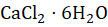 ,
 ) offer high volumetric latent heat storage densities and high thermal conductivities relative to paraffins. However, salt hydrates suffer from phase segregation and severe supercooling during freezing cycles, requiring nucleating agents and thickeners to maintain stable cyclic performance.
- Bio-Based Organic PCMs: Derived from fatty acids, plant oils, and animal fats, bio-based PCMs provide renewable sourcing and non-toxic profiles, though flammability ratings require chemical flame-retardant integration for building code compliance.
Technical Data Specifications of Phase Change Materials
| Phase Change Material Parameter | Engineering Specification Standard |
|---|---|
Latent Heat of Fusion ( ) |  for high-performance paraffins |
Phase Transition Melting Point ( ) |  to  (  to  ) human thermal comfort |
Thermal Conductivity ( ) |  raw unenhanced PCM |
| Microcapsule Particle Diameter |  to  polymer shell matrix |
| Volumetric Heat Storage Capacity |  across phase transition window |
| Cyclic Thermal Stability |  without degradation |
Density ( ) |  ( 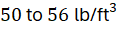 ) liquid state |
Microencapsulation and Building Envelope Integration
Integrating raw liquid-phase change materials directly into building construction assemblies poses severe leakage risks when the PCM transitions past its melting threshold. To prevent liquid migration and chemical breakdown, advanced manufacturing processes utilize microencapsulation.
Microencapsulation encases microscopic droplets of paraffin wax or fatty acid PCM ( to
 [
 ] diameter) within dense, cross-linked polymer shells—such as melamine-formaldehyde, polymethylmethacrylate, or polyurethane. These microcapsules are impregnated directly into gypsum drywall boards, cementitious plaster composites, polyurethane spray foam insulation, or structural ceiling tiles, achieving mass fractions of 20% to 35% PCM without altering structural mechanical properties or fire retardancy ratings.
A critical engineering limitation of organic PCMs is their low inherent thermal conductivity ( ). Low thermal conductivity impedes heat transfer rates into and out of the microcapsule core, slowing thermal charge and discharge kinetics during rapid diurnal temperature swings. To overcome this limitation, researchers incorporate high-conductivity nanomaterials—such as expanded graphite flakes, carbon nanotubes, or copper powder additives—into the PCM composite matrix, elevating bulk thermal conductivity by 200% to 400% and accelerating latent heat exchange rates.
Indoor Temperature Stabilization and HVAC Load Reduction
Implementing phase change materials building thermal insulation alters the transient heat transfer characteristics of building walls, roofs, and flooring. In uninsulated buildings, solar radiation striking exterior facades drives massive thermal waves inward, causing indoor air temperatures to fluctuate sharply and forcing heating, ventilation, and air conditioning (HVAC) systems to consume high electrical energy to maintain thermal comfort.
When microencapsulated PCMs are embedded within interior drywall or insulation layers, incoming thermal energy is absorbed as latent heat during peak diurnal solar irradiation hours. This phase transition dampens thermal amplitude, delaying peak indoor thermal loads by 3 to 6 hours and lowering maximum interior wall surface temperatures by  to
 (
 to
 ).
According to IEA and UNEP building decarbonization assessments, optimizing building envelopes with phase change material composites reduces annual HVAC cooling energy consumption by 15% to 30% and shifts peak electrical cooling demand away from grid congestion intervals. By smoothing indoor thermal profiles, latent storage technology eliminates extreme temperature spikes, reducing compressor cycling frequency in heat pumps and air conditioning units.

Comments (0)
Login to leave a comment.
No comments yet. Be the first to share your thoughts!