
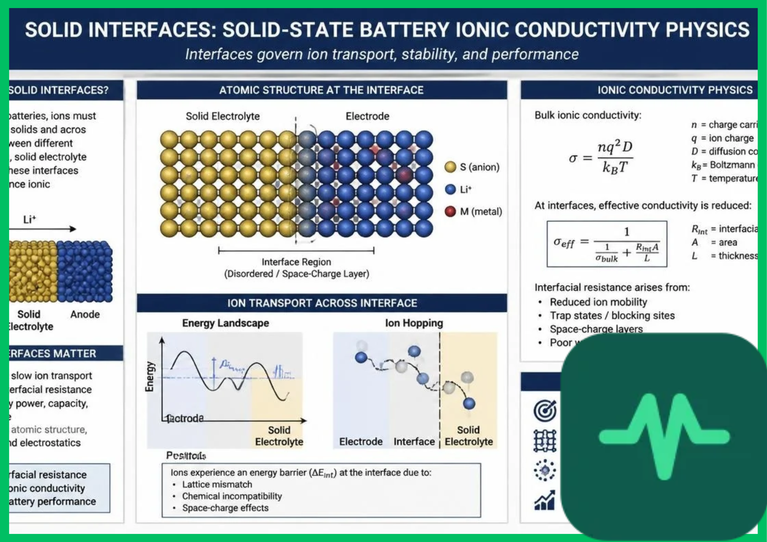
Arrhenius Ionic Conduction and Crystal Lattice Diffusion Physics
The foundational physical principle governing solid-state battery ionic conductivity is thermally activated ion hopping across crystal lattice vacancy sites, formulated mathematically by the Arrhenius relation:
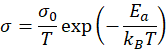
where  represents ionic conductivity (
 ),
 is the pre-exponential factor,
 is absolute temperature (
 ),
 is the activation energy for lithium-ion migration (
 ), and
 is the Boltzmann constant.
In solid superionic conductors—such as garnet-type 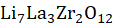 (LLZO), NASICON-type
 (LATP), and argyrodite-type
 sulfides—lithium ions hop between interstitial sites within rigid framework crystal structures. Sulfide-based solid electrolytes achieve exceptional room-temperature ionic conductivities exceeding
 , rivaling conventional liquid organic electrolytes. However, oxide-based ceramic electrolytes frequently exhibit higher grain boundary resistance, requiring high-temperature sintering processing during manufacturing to eliminate microscopic pore defects and achieve dense crystalline microstructures.
Solid-Solid Interfacial Impedance and Contact Resistance
While bulk solid-state electrolytes exhibit high intrinsic ionic conductivities, interfacial resistance across solid-solid boundaries between the electrolyte membrane, cathode active material, and lithium metal anode remains a major engineering obstacle. Unlike liquid electrolytes that wet porous electrode surfaces spontaneously, solid-state interfaces feature imperfect microscopic physical contact, yielding high interfacial charge transfer resistance ( ) and elevated area-specific resistance (ASR).
During battery charge and discharge cycles, volumetric expansion and contraction of electrode particles induce mechanical stress and delamination at the solid-solid interface, creating micro-voids that impede lithium-ion transfer pathways. To minimize interfacial impedance, engineers apply ultra-thin buffer layers (such as atomic layer deposition [ALD] coatings of  or
 ) and maintain external mechanical stack pressure (
 [
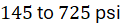 ]) to ensure continuous physical contact across electrode-electrolyte boundaries.
Technical Data Specifications of Solid-State Electrolyte Parameters
| Solid-State Electrolyte Parameter | Engineering Specification Standard |
|---|---|
Bulk Ionic Conductivity ( ) |  at room temperature (  [  ]) |
Activation Energy ( ) for Migration | 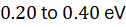 for sulfide and oxide conductors |
| Garnet Oxide Electrolyte Composition | 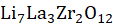 (LLZO) cubic crystal phase |
| Sulfide Electrolyte Composition |  argyrodite structure |
| Required External Stack Pressure |  to  ( 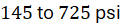 ) mechanical preload |
| Lithium Critical Current Density (CCD) |  dendrite suppression threshold |
| Volumetric Energy Density Target |  cell-level density |
Lithium Dendrite Suppression and Critical Current Density Mechanics
A primary objective of solid-state battery engineering is suppressing lithium dendrite penetration through solid electrolyte membranes during high-rate charging. In liquid electrolyte systems, lithium dendrites pierce polymer separators and cause internal short circuits. In solid-state cells, rigid ceramic and sulfide electrolytes possess high shear moduli, leading researchers to theorize complete dendrite immunity.
However, operational data indicates that lithium dendrites propagate along microscopic grain boundaries, pore defects, and electronic leakage paths within solid electrolytes when charging current densities exceed specific thresholds. The critical current density (CCD) defines the maximum localized ionic flux a solid electrolyte can withstand before lithium metal nucleates inside internal micro-cracks. When applied current exceeds the CCD, localized stress concentrations surpass the yield strength of the solid electrolyte material, causing mechanical fracture and catastrophic short-circuiting.
Volumetric Energy Density and Anode-Free Architecture
Replacing heavy graphite or silicon anodes with an unhosted lithium metal foil anode dramatically enhances solid-state battery volumetric and gravimetric energy densities. Lithium metal possesses a high theoretical specific capacity (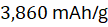 ) and the lowest negative electrochemical redox potential (
 vs. standard hydrogen electrode).
Solid-state cells eliminate bulky thermal management safety margins required for volatile liquid organic solvents, allowing engineers to pack cell components tightly within bipolar stacking configurations. According to IEA energy storage assessments, commercializing solid-state batteries projects cell-level volumetric energy densities of  —a 40% to 60% improvement over conventional liquid lithium-ion cells—substantially extending electric vehicle driving range.



Comments (0)
Login to leave a comment.
No comments yet. Be the first to share your thoughts!