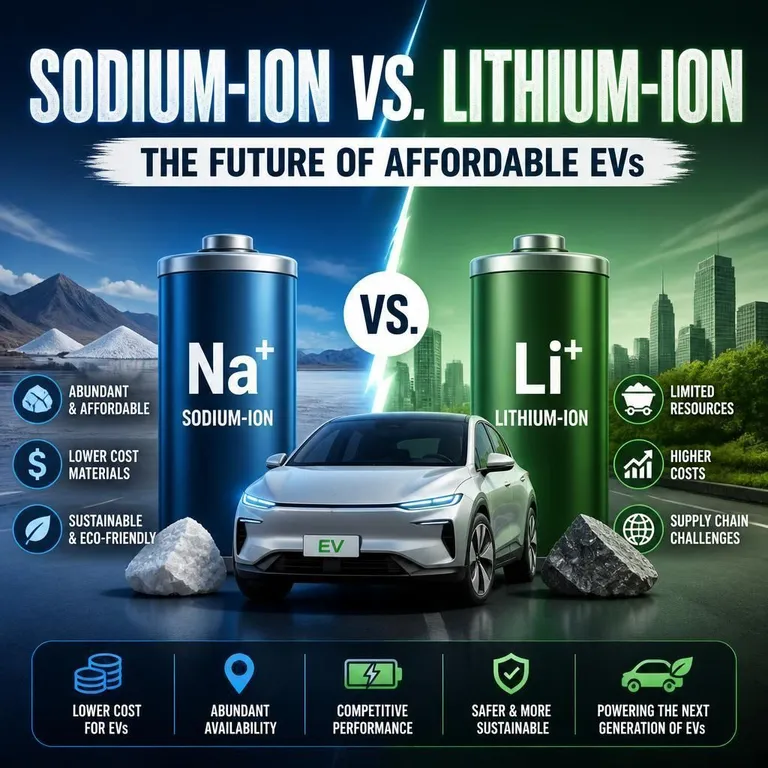
But there is a problem. Lithium is hard to find. It comes from just a few places on Earth. So its price jumps up and down a lot. This makes EVs more expensive to build. As a result, many buyers still cannot afford one. Prices have stayed high for years, even as demand keeps growing.
This is where sodium-ion batteries come in. Sodium comes from ordinary salt. It is cheap. It is everywhere, found in oceans and salt flats across the world. So car makers are now asking a big question. Could sodium-ion replace lithium-ion, at least for some cars?
In this guide, we compare sodium-ion vs lithium-ion in simple terms. We will look at cost, range, safety, manufacturing, and cold weather power. By the end, you will understand why this battery shift matters so much for the future of affordable EVs.
Why This Battery Shift Is Happening Now
Car companies want to build millions of electric vehicles. But there is a limit. Lithium, cobalt, and nickel are hard to mine. These materials are also tied up in global politics. So supply can be slow and unstable.
This keeps EV prices high. Many everyday drivers get priced out. So the industry needed a new option. That option is sodium-ion.
When we talk about sodium-ion vs lithium-ion, cost is the biggest reason for the shift. Sodium is cheap. It is one of the most common elements on Earth. You can pull it from regular rock salt. This changes everything about how batteries get made.
The Cost Advantage of Sodium-Ion
Let's start with money, since this is the main driver behind sodium-ion vs lithium-ion debates. Lithium mining is expensive. It also needs costly metals like cobalt and nickel. These metals raise ethical concerns too, since mining them is not always done safely or fairly.
Sodium skips all of that. It does not need rare mining sites. It does not need cobalt or nickel at all. Because of this, sodium-ion cells cost about 30% to 40% less to make than lithium-ion cells.
There is another big saving too. Lithium-ion batteries use copper foil inside their cells. Copper is expensive. Sodium-ion batteries can use aluminum foil instead. Aluminum is much cheaper. So the total cost drops even further.
Put together, these savings could bring EV prices way down. A basic city car with a sodium-ion battery could soon cost close to a regular gas car. That is a big deal for everyday drivers who cannot afford a premium EV.
Where Lithium-Ion Still Wins: Energy Density
Now let's talk about range, because this is where lithium-ion still leads. In the sodium-ion vs lithium-ion contest, energy density is lithium's biggest strength.
Energy density means how much power fits into a small space. A sodium ion is bigger and heavier than a lithium ion. So it simply cannot pack in the same amount of energy.
Right now, sodium-ion batteries reach about 150 to 160 watt-hours per kilogram. Lithium-ion batteries reach 250 to 300 watt-hours per kilogram. That is a big gap.
What does this mean in real life? If you built a large SUV using only sodium-ion cells, it would be heavy. It would also have much less range. So sodium-ion is not ready to replace lithium-ion in every car just yet.
Because of this gap, lithium-ion will likely stay the top choice for luxury cars. It will also stay strong in long-range vehicles and high-performance sports cars. These cars need every bit of range they can get, so the sodium-ion vs lithium-ion trade-off still favors lithium here.
Sodium-Ion Shines in Cold Weather
Here is where sodium-ion fights back hard. Cold weather is a huge weakness for lithium-ion batteries. In freezing temperatures, chemical reactions inside the battery slow down. This can cause an EV to lose 30% or more of its range in winter.
Sodium-ion batteries do not have this problem. They perform very well in the cold. Tests show sodium-ion cells keep over 90% of their power even at -20°C. That is a massive advantage for drivers in cold climates.
So when comparing sodium-ion vs lithium-ion for winter driving, sodium-ion clearly wins. This matters a lot for countries with long, harsh winters. A car that loses less range in the cold is simply more useful and more reliable.
Which Battery Is Safer?
Safety is another key part of the sodium-ion vs lithium-ion story. Lithium-ion batteries can be risky under certain conditions. If damaged or overheated, they can enter something called thermal runaway. This is a fast chain reaction that can cause fires.
Sodium-ion batteries are much more stable. They resist thermal runaway far better than lithium-ion cells. This lowers the risk of dangerous battery fires.
There's another safety bonus too. Sodium-ion batteries can be fully discharged to zero volts for shipping. This is not safe to do with most lithium-ion batteries. Because of this, sodium-ion cells are easier and safer to transport across the world. Fewer fire risks during shipping means fewer accidents and delays.
Real-World Uses: Where Each Battery Fits Best
So, where does each battery type make the most sense? Let's break down the sodium-ion vs lithium-ion divide by use case.
Lithium-ion battery uses:
- Long-range electric cars
- Luxury and performance vehicles
- Heavy-duty electric trucks that need to haul serious weight
Sodium-ion battery uses:
- Affordable city cars for daily commuting
- Delivery vans and fleet vehicles that do short trips
- Grid energy storage systems that store solar and wind power
This split makes sense. Long trips and heavy loads need high energy density. That is lithium's strength. Meanwhile, short trips, city driving, and stationary storage do not need as much range. That is where sodium shines.
What This Means for Everyday Drivers
For most people, this shift is great news. Right now, EVs can feel out of reach for average buyers. Prices stay high because of costly materials. Sodium-ion could change that fast.
Imagine a small electric car built for city use. It does not need 300 miles of range. It just needs to get you to work, the store, and back home. A sodium-ion battery is perfect for this kind of car. It is cheaper to build. So the final price to you, the buyer, drops too.
This also helps places with cold winters. Instead of losing range every time it snows, drivers get a battery that holds strong in freezing weather. That means fewer worries about getting stranded in the cold.
The Bigger Picture: A Dual Battery Future
So, will sodium-ion completely replace lithium-ion? Probably not. Instead, experts expect both battery types to work side by side. This is often called a dual-track strategy.
Lithium-ion will stay strong in premium and long-range vehicles. It will also power large electric trucks that need serious range and power. On the other hand, sodium-ion will grow fast in affordable cars, delivery fleets, and grid storage systems.
This balance actually makes sense. Not every vehicle needs the same kind of battery. A luxury SUV and a small city car have very different needs. So it makes sense to match the right battery to the right job.
In the sodium-ion vs lithium-ion race, there may not be one single winner. Instead, both chemistries could grow together. Each one fills a gap the other cannot fill as well.
How Manufacturing Changes With Sodium-Ion
Building a battery is not just about the raw materials inside it. The whole factory process matters too. This is another layer of the sodium-ion vs lithium-ion story that often gets missed.
Lithium-ion factories need very controlled conditions. Moisture must stay low. Certain steps need clean rooms. This raises the cost of every battery that rolls off the line.
Sodium-ion production is a bit more forgiving. Because sodium is less reactive with air and moisture than lithium in some stages, factories can sometimes skip a few of these strict steps. This does not mean sodium-ion is easy to make. It still takes skill and precision. But it can be slightly cheaper and faster to scale up.
This matters for the big picture. If factories can build sodium-ion cells faster, more cars can reach the market sooner. Faster production also means shorter wait times for buyers. So the sodium-ion vs lithium-ion gap is not just about the battery itself. It is also about how fast and how cheaply each one can be built at scale.
Environmental Impact: A Cleaner Supply Chain
There is also an environmental side to this story. Lithium mining can damage land and use large amounts of water. Some lithium comes from salt flats in dry regions, where water is already scarce. Cobalt mining raises even bigger concerns, since it is often tied to unsafe working conditions in certain parts of the world.
Sodium avoids most of these problems. It can be pulled from seawater or common salt deposits. These sources are spread out across the globe, not locked into a few regions. This means less strain on any single ecosystem.
Fewer harmful mining practices also mean a cleaner supply chain overall. Car makers who care about their environmental record may lean toward sodium-ion for this reason alone. So beyond cost and safety, the sodium-ion vs lithium-ion choice can also shape how clean the entire EV industry becomes.
What Comes Next for Battery Technology
Battery technology is moving fast. Companies around the world are racing to improve sodium-ion energy density. Even small gains could open the door to more vehicle types.
Some labs are already testing new sodium-ion designs. These designs aim to close the gap with lithium-ion, even if just a little. If sodium-ion density keeps rising, it could someday power mid-size cars too, not just small city vehicles.
At the same time, lithium-ion technology keeps improving as well. Engineers are working on safer designs and lower-cost versions of lithium batteries. So this is not a race that will stop anytime soon. Both sides are pushing forward, which is good news for drivers everywhere.
Final Thoughts
The sodium-ion vs lithium-ion debate is really about balance, not replacement. Lithium-ion still wins on raw range and power. It remains the top pick for long trips and premium vehicles.
However, sodium-ion wins on cost, safety, and cold weather strength. It opens the door to cheaper EVs for millions of people. It also brings new options for cold climates and large-scale energy storage.
Together, these two technologies could push the entire EV industry forward. Cheaper cars mean more people can switch away from gas. Safer batteries mean fewer risks on the road and during shipping. Better cold weather performance means EVs work well almost everywhere, not just in mild climates.
So the next time you hear about sodium-ion vs lithium-ion, remember this: it is not a fight with one clear loser. It is a team effort. Both battery types, working together, could finally make electric vehicles affordable and practical for everyone, everywhere.

Comments (0)
Login to leave a comment.
No comments yet. Be the first to share your thoughts!