
Inverter Grid Synchronization and Phase-Locked Loop Mechanics
The foundational prerequisite for microgrid stability is precise inverter grid synchronization. Grid-tied inverters utilize phase-locked loop (PLL) algorithms to track the frequency and phase angle of the point of common coupling (PCC) voltage waveform. Under islanded or microgrid operating conditions, conventional grid-following inverters cannot establish voltage references independently, necessitating the deployment of grid-forming inverters.
Grid-forming inverters establish an independent voltage and frequency reference, regulating microgrid voltage magnitude ( nominal) and frequency (
 ) through internal voltage source control loops. These inverters emulate the inertial response of synchronous generators by injecting virtual synchronous inertia, preventing rapid frequency collapse during sudden load steps or utility disconnection events.
Droop Control Algorithms and Autonomous Power Sharing
To achieve autonomous power sharing among parallel-connected distributed generation units without requiring high-speed communication lines, smart microgrids implement droop control algorithms. Active power-frequency ( ) and reactive power-voltage (
 ) droop equations simulate the self-regulating behavior of synchronous generators:




where  and
 represent nominal frequency and voltage,
 and
 denote baseline active and reactive power outputs, and
 and
 define the active and reactive droop coefficients. These algorithms adjust inverter output frequency and voltage magnitude dynamically in response to real-time local load variations, ensuring stable proportional load sharing across decentralized microgrid nodes.
Bidirectional Power Conversion and Wide-Bandgap Semiconductors
Managing bidirectional power flows across residential microgrids requires high-frequency pulse-width modulation (PWM) power electronic converters. Bidirectional hybrid inverters convert direct current (DC) power from photovoltaic arrays and lithium-ion battery storage systems into synchronized alternating current (AC) power at standard distribution voltages ( single-phase or
 three-phase line-to-line,
 or
 ).
Utilizing advanced wide-bandgap semiconductor devices—such as silicon carbide (SiC) MOSFETs and gallium nitride (GaN) switches—elevates inverter switching frequencies above  to
 , reducing total harmonic distortion (THD) below 3% and enhancing power conversion efficiency (
 ) above 98%. High-frequency switching minimizes passive filter component sizes and improves dynamic transient response during rapid load switching.
Technical Data Specifications of Microgrid Control Parameters
| Microgrid & Power Flow Parameter | Engineering Specification Standard |
|---|---|
| Grid Voltage Regulation Bandwidth |  of nominal voltage ( 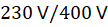 ) |
| System Frequency Tolerance Limits |  islanded microgrid stability band |
| Inverter Switching Frequency Range |  to  (SiC / GaN topology) |
| Total Harmonic Distortion (THD) |  voltage and current waveform distortion |
Inverter Power Conversion Efficiency ( ) |  peak DC-AC conversion efficiency |
Active Power Droop Slope ( ) | Proportional  frequency droop adjustment |
Reactive Power Droop Slope ( ) | Proportional  voltage droop adjustment |
Phase Imbalance Mitigation and Multi-Phase Load Balancing
Residential distribution networks frequently suffer from severe phase imbalances caused by uneven distribution of single-phase loads across multi-phase service drops. Phase imbalance induces excessive neutral current flow, transformer overheating, and negative-sequence voltage components that degrade motor efficiency and trip protective relays.
Smart microgrid controllers execute active phase imbalance mitigation by deploying three-phase, four-leg inverter topologies or modular power routers. These active balancing systems inject compensating quadrature currents into underloaded phases, neutralizing negative-sequence currents and balancing voltage magnitudes across all three phases within a variance threshold of less than 1%. Continuous real-time monitoring of phase currents prevents localized thermal overloads on distribution transformers and extends electrical asset lifespans.
The Final Take
Mastering residential smart microgrid power flow control ensures the resilient operation of distributed energy systems under high renewable penetration. Citing IEA smart grid reports and electrical engineering literature, implementing droop control algorithms, phase-locked loop synchronization, and active phase balancing stabilizes distribution networks. By deploying high-efficiency bidirectional inverters and automated power routing, smart home microgrids deliver an indispensable technical foundation for decentralized clean energy distribution.


Comments (0)
Login to leave a comment.
No comments yet. Be the first to share your thoughts!