
Automated Demand Response and Time-Varying Tariff Optimization
The foundational operational objective of a modern home energy management system is automated demand response (ADR) coupled with time-varying electricity tariff optimization. Wholesale electricity markets and retail utility providers increasingly deploy dynamic pricing structures—such as time-of-use (TOU) tariffs, critical peak pricing (CPP), and real-time locational marginal pricing—to incentivize consumers to curtail consumption during periods of high grid stress.
Fixed-rate tariff structures provide no economic incentive for consumers to modulate power usage. In contrast, dynamic pricing exposes residential loads to steep price differentials, where peak-hour electricity costs can exceed off-peak rates by 300% to 500%. HEMS controllers communicate directly with smart meters and utility communication protocols (such as OpenADR) to ingest real-time price signals. The onboard optimization engine computes optimal operational schedules across all connected electrical loads, shifting energy-intensive deferrable tasks—such as electric vehicle charging, domestic water heating, and space conditioning—away from high-tariff peak windows toward low-cost off-peak or solar generation intervals.
Battery Scheduling Algorithms and Electrochemical Storage Cycling
Deploying residential battery energy storage systems (BESS) alongside photovoltaic arrays provides the physical capacity required for effective residential peak load shifting, but maximizing asset lifespan requires sophisticated battery scheduling algorithms. Lithium-ion battery packs—predominantly lithium iron phosphate ( ) or nickel-manganese-cobalt (
 )—degrade under thermal stress, extreme state-of-charge (SoC) extremes, and high C-rate cycling.
HEMS optimization algorithms utilize dynamic programming and mixed-integer linear programming (MILP) to solve daily battery dispatch schedules. The mathematical objective function minimizes total electricity procurement costs subject to physical and operational constraints:


where  represents net power drawn from the utility grid at hour
 , and degradation cost models quantify battery capacity fade as a function of depth of discharge (DoD) and operating temperature.
Battery scheduling algorithms restrict operating SoC within an optimal window (typically 20% to 90%), charge the battery using excess photovoltaic generation during mid-day hours, and discharge stored energy precisely during high-tariff peak evening intervals. This automated cycling reduces household utility bills by 20% to 40% while preserving battery round-trip efficiencies exceeding 90%.
Smart Home Energy Optimization and Deferrable Load Disaggregation
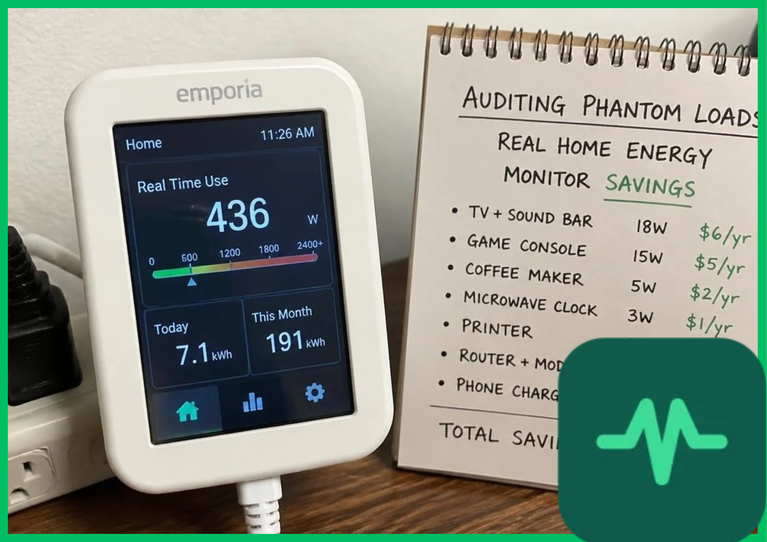
Achieving comprehensive smart home energy optimization requires disaggregating total household electrical loads into two distinct categories: non-deferrable critical loads (such as refrigeration, lighting, and medical devices) and deferrable flexible loads (such as laundry appliances, dishwashers, and electric vehicle supply equipment).
HEMS controllers utilize non-intrusive load monitoring (NILM) and machine learning classifiers to identify individual appliance operating signatures from high-frequency current and voltage telemetry measured at the main electrical panel. Once deferrable loads are identified, the optimization algorithm schedules their activation based on user-defined operational deadlines and dynamic tariff structures. For instance, an electric vehicle plugged into a Level 2 charger at  with a departure time requirement of
 the following morning is not charged immediately at peak rates. Instead, the HEMS delays charging initiation until
 , when wind generation surges and utility tariffs drop to off-peak baseline levels, completing the full
 charge cycle before morning departure.
Technical Data Specifications of HEMS Optimization Parameters
| HEMS & Grid Parameter | Engineering Specification Standard |
|---|---|
Battery Round-Trip Efficiency ( ) | 85% to 95% charge-discharge conversion efficiency |
| Optimal Battery State-of-Charge Window | 20% to 90% SoC operational boundary |
| HEMS Optimization Horizon | 24-hour predictive rolling window (hourly/sub-hourly intervals) |
| Electric Vehicle Charging Power Level |  (Level 1) to  (Level 2 AC) |
| Household Peak Load Reduction Metric | 30% to 50% maximum demand charge suppression |
| Communication Protocol Standard | OpenADR 2.0b, IEEE 2030.5, Zigbee, Matter |
| Data Sampling Latency (NILM) |  to  high-frequency electrical telemetry |
Thermodynamic and Power Flow Coordination in Residential Microgrids
Advanced home energy management systems operate as microgrid central controllers, coordinating bidirectional power flows between the residential distribution transformer, solar photovoltaic inverters, battery storage systems, and thermal appliances. When solar generation exceeds household electrical load, the HEMS commands the hybrid inverter to export surplus power or store it locally rather than curtailing photovoltaic output.
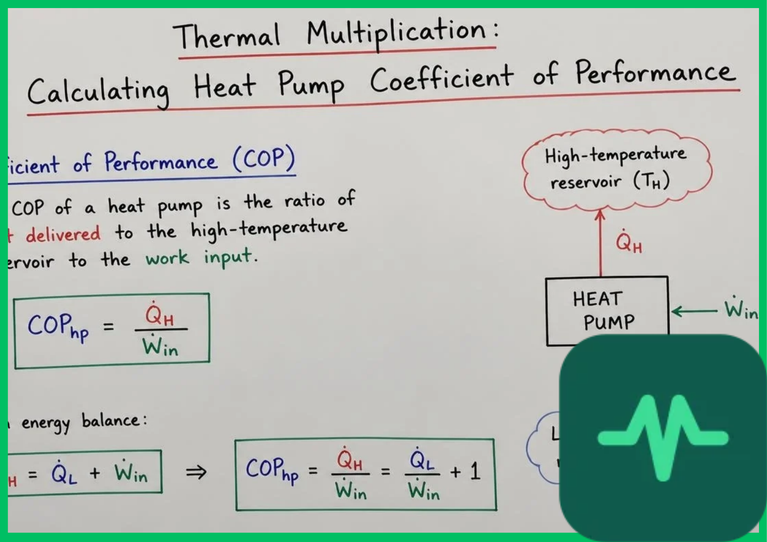
Furthermore, HEMS algorithms coordinate thermal loads—such as heat pump water heaters and smart thermostats—to act as thermal energy storage assets. By executing pre-heating or pre-cooling protocols during intervals of abundant solar generation, thermal appliances store energy in building structural mass or domestic water tanks, reducing electrical resistance heating or compressor loads during subsequent peak pricing intervals. This multi-domain coordination optimizes electrical and thermal energy vectors simultaneously.
The Final Take
Mastering home energy management systems load shifting algorithms modernizes residential energy consumption through automated demand response and predictive optimization. Citing IEA smart grid assessments and academic electrical engineering literature, intelligent scheduling of battery storage, electric vehicles, and deferrable appliances slashes household utility costs and suppresses peak grid demand. By integrating real-time tariff signals with advanced mixed-integer linear programming, HEMS optimization delivers an indispensable technical foundation for low-carbon residential microgrids.

Comments (0)
Login to leave a comment.
No comments yet. Be the first to share your thoughts!