Vapor-Compression Thermodynamics and Ambient Air Heat Extraction
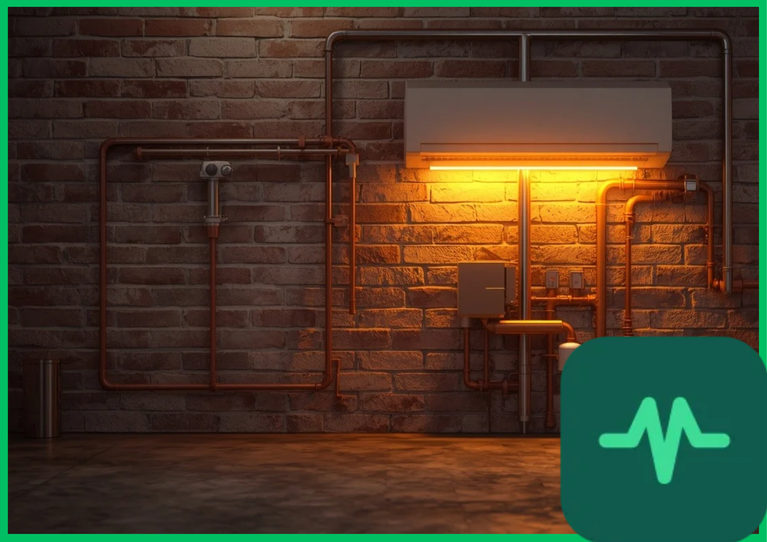
The foundational thermodynamic mechanism governing heat pump water heaters is the vapor-compression cycle, comprising four primary components: an evaporator, a compressor, a condenser, and an expansion valve. Ambient air is drawn across the evaporator coil by an integrated variable-speed fan. The evaporator contains a liquid refrigerant—such as hydrofluorocarbon R-134a or eco-friendly carbon dioxide R-744—boiling at low pressure and low temperature. Because the refrigerant saturation temperature is maintained below the ambient air temperature, thermal energy flows spontaneously from the surrounding air into the refrigerant via convective heat transfer.
The absorbed thermal energy vaporizes the liquid refrigerant into a low-pressure gas. This low-pressure vapor enters an electrically driven compressor, where mechanical work ( ) is applied to compress the gas, sharply elevating its temperature and pressure. The high-temperature, high-pressure refrigerant vapor then circulates through a condenser coil wrapped around or immersed within the domestic water storage tank. As thermal energy transfers from the hot refrigerant gas to colder stored water, the refrigerant condenses back into a high-pressure liquid. Finally, the liquid passes through an expansion valve, experiencing an instantaneous pressure drop and cooling down before re-entering the evaporator to repeat the thermodynamic cycle.
Coefficient of Performance (COP) and Uniform Energy Factor Ratings
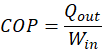
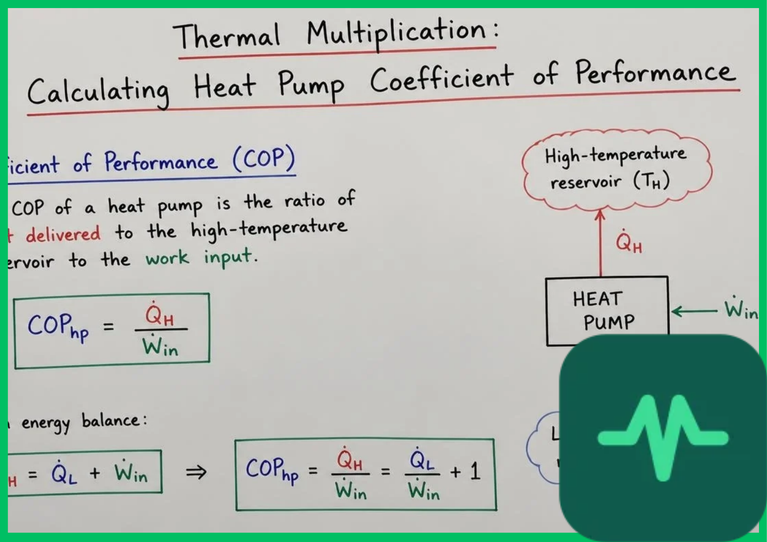
Evaluating the energy efficiency of heat pump water heaters requires analyzing the coefficient of performance ( ), which measures the ratio of useful thermal energy delivered to the water storage tank (
 ) relative to the electrical work input required by the compressor and fan (
 ):
While standard electric resistance water heaters are bound by Joule heating physics to a maximum  of 1.0, commercial heat pump water heaters achieve steady-state
 values between 2.5 and 4.0 under optimal ambient conditions (
 [
 ] ambient air temperature and 50% relative humidity). This means that for every 1 kilowatt-hour (
 ) of electrical energy consumed by the compressor, the system pumps 2.5 to 4.0 kilowatt-hours of thermal energy into the domestic water tank.
Regulatory bodies and engineering standards quantify annual efficiency using the Uniform Energy Factor (UEF). While standard electric resistance tanks achieve UEF ratings between 0.90 and 0.95, advanced heat pump water heaters attain UEF ratings ranging from 3.0 to 4.0, slashing annual water heating electricity consumption by up to 70%.
Technical Data Specifications of Heat Pump Water Heater Parameters
| Thermodynamic & Performance Parameter | Engineering Specification Standard |
|---|---|
Operating Coefficient of Performance ( ) | 2.5 to 4.0 (ambient air mode) |
| Uniform Energy Factor (UEF) Rating | 3.0 to 4.0 annual efficiency metric |
| Ambient Air Operational Temperature Window |  to  (  to  ) |
| Refrigerant Chemical Classification | R-134a, R-410A, or R-744 ( ) working fluids |
| Storage Tank Capacity Range |  to  (  ) |
| Compressor Electrical Power Input |  to  running load |
| Backup Electric Resistance Rating |  to  supplemental elements |
Hybrid Operational Modes and Backup Resistance Heating
While heat pump water heaters deliver exceptional energy efficiency under moderate ambient conditions, their thermodynamic performance is constrained by ambient air temperatures and recovery rates during high-volume hot water draws. When ambient air temperatures drop below  to
 (
 to
 ), the capacity of the vapor-compression system decreases due to reduced refrigerant density and lower heat extraction rates.
To maintain reliable hot water delivery during high-demand intervals or low-temperature environments, modern hybrid heat pump water heaters integrate dual electric resistance heating elements located at the top and bottom of the storage tank. Operating modes are managed by microprocessors executing automated control algorithms:
- Heat Pump Only Mode: Operates exclusively on the vapor-compression refrigeration cycle, maximizing energy efficiency and achieving the highest
 ratings.
- Hybrid / Auto Mode: Utilizes the heat pump as the primary thermal source, automatically energizing backup electric resistance elements during high-draw depletion events when hot water recovery rates require supplemental heating power.
- High Demand / Vacation Modes: Adjusts setpoints and staging thresholds to optimize performance based on occupancy patterns or recovery speed requirements.
When electric resistance elements engage, instantaneous efficiency drops back to a  of 1.0, highlighting the importance of sizing tank capacities to minimize resistance element activation.
Indoor Climate Interaction and Dehumidification Co-Benefits
Operating a heat pump water heater introduces significant thermodynamic interactions with the indoor environment where the unit is installed, typically unconditioned spaces like basements, utility rooms, or garages. Because the evaporator extracts thermal energy from surrounding air, the unit discharges chilled, dehumidified air as a byproduct.
This thermodynamic side-effect provides dual benefits: active structural dehumidification and auxiliary air cooling. In humid residential climates, an operating heat pump water heater removes up to 1.0 to 2.0 liters ( to
 ) of water per day from the surrounding air via condensation on the evaporator coils, preventing mold growth and dampness in basements. However, in cold winter climates, extracting heat from indoor spaces can impose a minor heating penalty on the surrounding residential envelope if the appliance is installed within heated living areas, necessitating strategic installation in semi-conditioned or garage zones where waste ambient heat from furnaces or water heaters can be reclaimed.
The Final Take
Mastering ambient heat pump water heater efficiency metrics transforms residential energy management by shifting from inefficient Joule heating to advanced vapor-compression thermodynamics. Citing IEA energy efficiency assessments and ENERGY STAR performance data, heat pump water heaters elevate operational  ratings to 4.0 and deliver Uniform Energy Factors exceeding 3.0. By extracting thermal energy from ambient air, leveraging hybrid control modes, and capturing dehumidification co-benefits, heat pump water heaters establish an indispensable technical foundation for low-carbon residential buildings.

Comments (0)
Login to leave a comment.
No comments yet. Be the first to share your thoughts!