
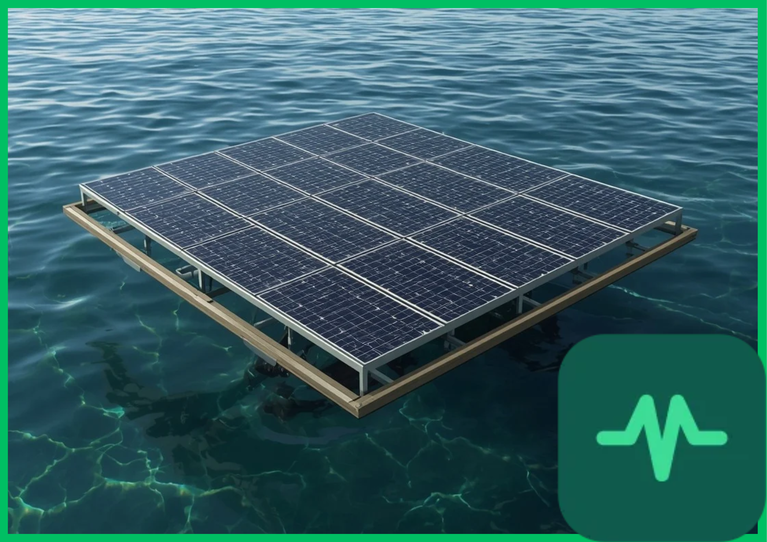
Evaporative Cooling Physics and Photovoltaic Temperature Coefficients
The foundational thermodynamic principle governing floating photovoltaic efficiency is the reduction of operating cell temperature via aquatic thermal coupling. Standard crystalline silicon photovoltaic modules possess a negative temperature coefficient of maximum power ( ), typically ranging from
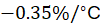 to
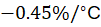 relative to Standard Test Conditions (
 [
 ] cell temperature). When terrestrial solar panels absorb high-intensity solar irradiance, absorbed infrared radiation heats module junction temperatures to
 to
 (
 to
 ), degrading power conversion efficiency by 15% to 25%.
In contrast, floating photovoltaic systems deployed across hydroelectric reservoirs, wastewater treatment lagoons, and artificial lakes benefit from natural evaporative cooling and conductive heat dissipation. The underlying water body acts as a massive thermal sink. Convective heat transfer between the water surface, ambient air, and the underside of the floating pontoon structure maintains operating photovoltaic cell temperatures  to
 (
 to
 ) lower than terrestrial equivalents.
The convective heat transfer rate ( ) across the water-air-module boundary is governed by turbulent forced and natural convection equations:

where  represents the combined convective-evaporative heat transfer coefficient (
 ),
 is module surface area,
 is photovoltaic cell temperature, and
 is bulk water temperature. Suppressing cell operating temperatures directly preserves nominal voltage output and elevates annual energy yield metrics.
High-Density Polyethylene Structural Pontoons and Mooring Mechanics
Deploying multi-megawatt photovoltaic arrays across open aquatic surfaces requires robust structural engineering to withstand dynamic wind loads, wave action, and water level fluctuations. Floating photovoltaic platforms utilize modular high-density polyethylene (HDPE) pontoons engineered with high tensile strength, ultraviolet (UV) stabilization additives, and high resistance to environmental stress cracking.
The structural integrity of floating solar arrays depends entirely on mooring and anchoring systems designed to restrict lateral drift and torsional flexing during extreme meteorological events. Mooring lines—fabricated from corrosion-resistant galvanized steel wire ropes or high-modulus polyethylene (HMPE) synthetic fibers—anchor the floating platform to shoreline concrete blocks or submerged deadweight anchors.
Engineers utilize dynamic finite element analysis (FEA) to model wave-structure interactions, ensuring that mooring tension tolerances withstand severe wind speeds exceeding  (
 ) while accommodating vertical water level variations of up to
 (
 ) in hydroelectric reservoirs without placing mechanical stress on photovoltaic module glass frames.
Technical Data Specifications of Floating Photovoltaic Parameters
| Floating Photovoltaic Parameter | Engineering Specification Standard |
|---|---|
| Annual Energy Yield Enhancement | 5% to 15% higher generation vs. terrestrial arrays |
| Photovoltaic Cell Temperature Reduction |  to  (  to  ) lower operating temp |
Power Temperature Coefficient ( ) | 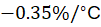 to 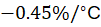 standard c-Si metric |
| Pontoon Material Composition | UV-stabilized High-Density Polyethylene (HDPE) |
| Mooring Line Tensile Strength | Galvanized steel or HMPE synthetic fiber cables |
| Maximum Wind Load Withstand Limit | Up to  (  ) sustained velocity |
| Aquatic Surface Area Coverage Ratio | 30% to 50% maximum reservoir surface utilization |
Water Evaporation Suppression and Aquatic Microclimate Dynamics
Beyond direct photovoltaic generation efficiency, floating solar installations generate significant ecological and hydrological co-benefits by suppressing water evaporation across arid and semi-arid water storage reservoirs. Covering a water surface with floating photovoltaic arrays shades the liquid expanse, reducing solar radiation absorption and lowering vapor pressure deficits at the water-air interface.
According to UNEP and International Renewable Energy Agency (IRENA) water-energy nexus assessments, covering 30% to 50% of a reservoir's surface area with floating solar arrays can suppress up to 70% of open-water evaporation losses, conserving millions of cubic meters of fresh water annually in drought-prone regions. Furthermore, reduced water temperatures inhibit harmful algal blooms, improving raw water quality for downstream municipal drinking water treatment plants and agricultural irrigation networks.
Electrical Balance of System (BoS) and Subsea Cabling Engineering
Integrating floating photovoltaic power plants into municipal electrical grids requires specialized balance of system (BoS) architecture that withstands high humidity, saline corrosion, and continuous mechanical motion. Unlike land-based installations, floating inverters and transformer substations are mounted either upon reinforced central pontoon platforms or positioned onshore.
Subsea and floating alternating current (AC) cables must feature specialized water-blocking tape, armored double-sheathed insulation, and flexible copper stranded conductors to accommodate continuous micro-movements induced by wave ripples and wind shear without incurring fatigue failure or insulation micro-cracking. Furthermore, grounding systems must utilize marine-grade stainless steel bonding jumpers to prevent galvanic corrosion between dissimilar metallic components operating in humid aquatic environments.
The Final Take
Mastering floating photovoltaic solar panel efficiency physics accelerates clean energy generation by uniting water-mediated evaporative cooling with robust aquatic structural engineering. Citing IEA renewable energy assessments and engineering literature, maintaining lower cell operating temperatures yields 5% to 15% more annual electricity than terrestrial equivalents while conserving vital water resources via evaporation suppression. By optimizing HDPE pontoon stability and advanced mooring mechanics, floating photovoltaic systems establish an indispensable foundation for scalable renewable energy infrastructure.
Comments (0)
Login to leave a comment.
No comments yet. Be the first to share your thoughts!