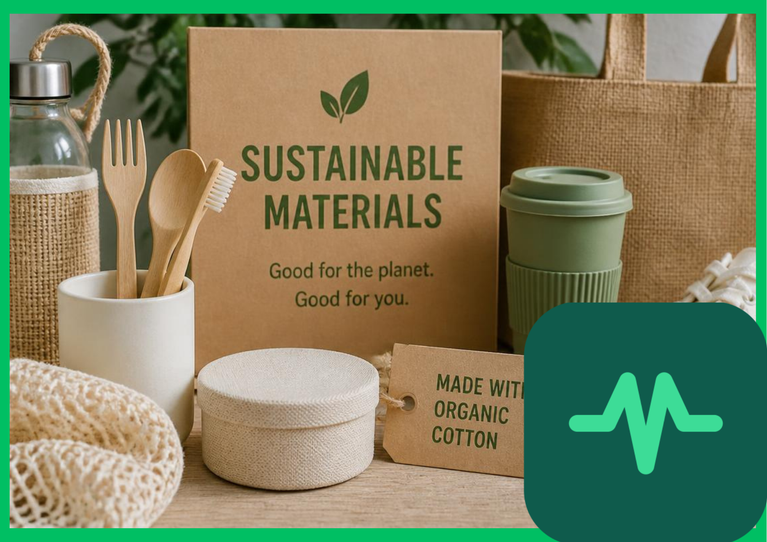
Before a product ever reaches a store shelf, materials are needed to make it. A phone needs metals and plastics. A car needs steel, aluminum, and a range of other materials. A package needs paper, plastic, or some other material to hold it all together.
Sustainability, in other words, begins long before consumers actually purchase a product. That's exactly why sustainable materials are becoming increasingly important across nearly every industry.
What Are Sustainable Materials?
There's no single, universal definition here, and that's worth acknowledging honestly. The term can refer to materials that use fewer resources, contain recycled content, come from renewable sources, or simply carry a lower environmental impact overall.
The important point to remember is that material choices genuinely affect the entire life of a product, from manufacturing all the way through disposal.
Recycled Materials
Recycled materials come from products that have already served their first purpose. Recycled aluminum, for instance, can go straight into brand-new products without losing quality.
Recycled plastics can also get turned into new materials for future use. This helps keep valuable resources genuinely in circulation, rather than extracting fresh raw materials every single time.
Renewable Materials
Some materials come from renewable sources by nature. Wood is one clear example, when it's responsibly sourced and harvested. Plant-based materials show up in certain products too, offering an alternative to petroleum-based options.
Renewable doesn't automatically mean sustainable, though, and that distinction genuinely matters. Production methods still play a real role in the overall environmental picture, regardless of where the raw material originally came from.
Sustainable Packaging
Packaging is one area where consumers can genuinely see material changes happening firsthand. Companies are actively exploring alternatives to traditional packaging materials.
Some are increasing recycled content in their boxes and wrapping. Others are simply reducing unnecessary packaging altogether. Both approaches genuinely reduce overall material use, just through different strategies.
Sustainable Materials in Cars
Electric vehicles are driving increased demand for advanced materials across the auto industry. Manufacturers are actively looking for ways to reduce overall vehicle weight.
Lower weight genuinely improves efficiency, letting a battery go further on the same charge. Recycled materials help here too, reducing the demand for entirely new raw materials with every vehicle built.
Electronics
Electronics present a genuinely difficult challenge in this space. They contain many different materials packed into a small space. Some of these materials are genuinely valuable. Others are difficult to recover once a device reaches the end of its life.
Designing electronics specifically for easier repair and recycling, right from the start, becomes genuinely important here, shaping what's even possible once a device eventually wears out.
The Problem With "Eco-Friendly"
Be genuinely careful with vague environmental claims when shopping. A product simply described as "eco-friendly" often doesn't provide enough real information to actually judge it.
Look for specific, concrete claims instead. Is recycled material actually used? How much of it? Is the product genuinely recyclable when you're done with it? Can it be repaired if something breaks? Clear, specific information is always more useful than vague, feel-good marketing language.
Sustainable Materials and Cost
New materials often start out expensive when they first hit the market. As production scales up over time, though, costs frequently decline.
Economies of scale can genuinely make new technologies more affordable as adoption grows. This pattern has played out across many different clean technologies already, and sustainable materials appear to be following a genuinely similar path.
Durability Matters
A sustainable material isn't especially useful if the product built from it breaks quickly anyway. Durability genuinely matters just as much as the material itself.
A longer-lasting product reduces the need for replacement down the road. Consider both the material's impact and the product's expected lifespan together, not one without the other.
Materials and the Circular Economy
The circular economy aims to keep resources genuinely in use for as long as possible. Sustainable materials directly support this larger goal.
Products can be designed for genuine reuse from the start. Components can be repaired rather than discarded. Materials can eventually be recycled once a product truly reaches the end of its life. Together, this creates a genuinely more circular product system, one that doesn't simply end in a landfill.
What Consumers Can Do
When buying a product, it's worth considering a few key factors:
- Durability
- Repairability
- Recycled content
- Packaging
- Recycling options
- Manufacturer information
These factors together help you make genuinely more informed choices, rather than relying on a single vague label to guide the whole decision.
EcoGreenPulse View
Sustainable materials may not receive as much attention as electric cars or solar panels in the headlines. They're genuinely fundamental to almost every product we use, though, quietly shaping outcomes behind the scenes.
The materials chosen today directly influence the waste and resource needs of tomorrow, whether anyone's paying close attention or not.
Conclusion
A more sustainable economy will genuinely need better materials to get there. That means using resources more efficiently from the start. It means designing genuinely durable products built to last.
It means recovering materials after use, rather than treating everything as disposable. And it means giving consumers better, clearer information to actually make informed choices. Material innovation could quietly transform the everyday products people use, often without most people ever noticing the shift happening around them.
Sources: United Nations Environment Programme resources on sustainable consumption and production; International Energy Agency resources on materials and clean-energy technologies.



Comments (0)
Login to leave a comment.
No comments yet. Be the first to share your thoughts!