You slip your arms through the sleeves, zip it up, and step out into the crisp morning air.
That fabric keeps you warm. It shields you from the wind and light rain. It feels comfortable against your skin.
Have you ever wondered what that garment is actually made of?
Check the small tag sewn inside the collar.
You will likely see words like polyester, nylon, acrylic, or spandex.
Those fabrics are not grown in fields or sheared from sheep. They are spun from petroleum.
Every time you wash synthetic clothing, millions of microscopic plastic fibers break free from the weave. They wash down your drain, slip straight through water treatment plants, and empty into our rivers and oceans.
Marine life eats them. Plastic pollution spreads through our global food web.
The fashion and textile industry is one of the heaviest polluting sectors on Earth.
We cannot keep dressing ourselves in fossil fuels.
A quiet, brilliant textile revolution is growing across agricultural fields and materials laboratories.
According to global industrial reports from the International Energy Agency (IEA), textile circularity frameworks from the United Nations Environment Programme (UNEP), efficiency benchmarks from ENERGY STAR, and academic materials science research, bio-based composite textiles are transforming what we wear.
By turning agricultural crop waste and natural plant polymers into high-performance technical fabrics, we are replacing synthetic plastics with living innovation.
Here is how bio-based textiles work, why plant-derived fibers beat petrochemicals, and how sustainable fashion secures our global future.
The Hidden Plastic in Our Wardrobes
To understand why bio-based composite textiles matter so much, you have to look at the massive environmental footprint of conventional fashion.
For decades, the global textile industry became hooked on cheap synthetic fibers.
Polyester—derived straight from crude oil—now accounts for over half of all global fiber production.
It is cheap to manufacture, durable, and versatile.
It also locks our clothing economy into fossil fuel extraction.
Extracting oil, refining petrochemicals, and spinning plastic yarn consumes immense amounts of energy and pumps millions of metric tons of greenhouse gases into our shared atmosphere.
Worse still, synthetic garments do not break down when discarded. They linger in landfills for centuries, shedding persistent microplastics every step of the way.
Natural fibers like cotton and wool offer an alternative, but traditional cotton farming requires heavy irrigation, synthetic pesticides, and vast tracts of fertile land.
We needed a completely new category of materials.
We needed fabrics that offer the high performance of synthetic technical gear without the toxic legacy of crude oil.
What Are Bio-Based Composite Textiles?
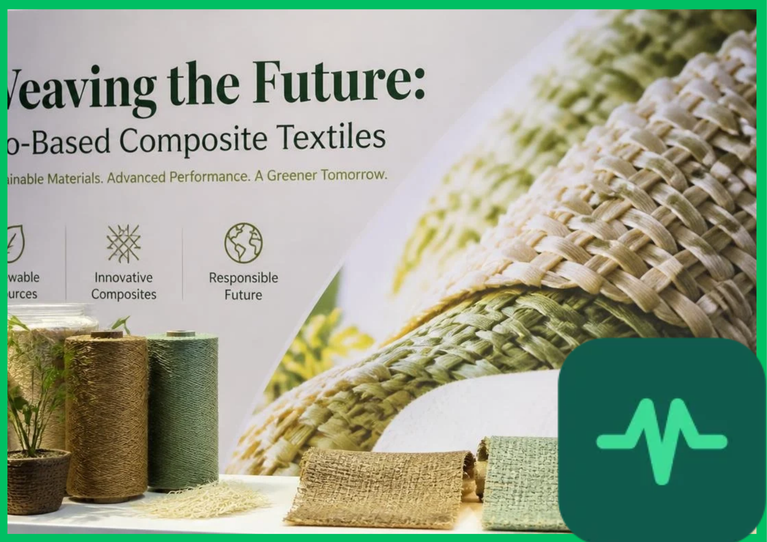
Bio-based composite textiles are technical fabrics engineered from renewable plant matter, agricultural crop residues, and natural polymers rather than petrochemicals.
Instead of drilling for oil, material scientists look to the harvest.
They extract natural cellulose, lignin, and plant proteins from materials that would otherwise be discarded:
- Agricultural Crop Waste: Leftover stalks, husks, and leaves from food production—like hemp, flax, pineapple leaves, and banana stems—are processed into strong, flexible natural fibers.
- Cellulose Derivatives: Fast-growing wood pulps and agricultural byproducts are dissolved and spun into silky, high-performance filament yarns.
- Bio-Based Polymers: Plant sugars and starches are fermented into flexible, durable bioplastics that can be blended directly with natural fibers to create waterproof, high-strength technical composites.
When these components are woven together, they create breathable, durable fabrics that perform brilliantly under extreme conditions.
The Science of Plant-Based Technical Performance
Can a jacket made from agricultural waste really protect you from harsh weather as well as petroleum-based nylon?
Academic materials science research proves that bio-based composite textiles match or exceed synthetic performance.
Plants have evolved over millions of years to build structures that withstand howling winds, heavy rains, and intense ultraviolet sunlight.
Tree bark, hemp stalks, and flax fibers possess natural tensile strength that rivals high-grade industrial plastics.
When engineers reinforce these natural fibers with bio-based resins, the resulting composite fabrics offer exceptional tear resistance, moisture wicking, and flexibility.
Furthermore, these fabrics can be engineered to be completely waterproof and breathable.
According to ENERGY STAR and international textile evaluations, manufacturing bio-based fabrics consumes significantly less thermal energy than refining petrochemical polymers, slashing greenhouse gas emissions right at the factory door.
Closing the Loop Through Complete Biodegradability
The most profound difference between synthetic clothes and bio-based textiles reveals itself at the end of a garment's life.
When a traditional polyester jacket wears out after years of use, throwing it away means adding permanent plastic waste to a landfill.
When a bio-based composite garment reaches the end of its functional life, its disposal story changes entirely.
Because the fibers and binding polymers are derived from natural plant matter, the fabric is fully biodegradable.
You can return the garment to industrial composting systems, where soil microorganisms break down the organic matrix completely within months, turning old clothing into rich, nourishing soil compost.
According to UNEP textile circularity frameworks, shifting to bio-based materials stops marine microplastic pollution at the source.
IEA industrial transition assessments highlight that replacing petrochemical feedstocks with renewable plant polymers decouples the fashion industry from fossil fuel extraction.
Weaving a Sustainable Future
Bio-based composite textiles prove that human ingenuity can reinvent everyday products in harmony with nature.
We no longer have to accept that wearing durable technical clothing requires wrapping ourselves in crude oil derivatives and shedding microplastics into our oceans.
By harnessing agricultural waste, plant-based polymers, and advanced material science, we create fabrics that protect our bodies without harming our planet.
We step away from fossil-fuel dependence, embracing a circular textile economy inspired by the resilience of the natural world.
Through scientific innovation, thoughtful design, and deep respect for our global biosphere, bio-based composite textiles weave a clean, green, and sustainable future for us all.


Comments (0)
Login to leave a comment.
No comments yet. Be the first to share your thoughts!