You look down at the wet sand near the surf line.
A bright blue bottle cap glints in the morning sun.
You walk over, pick it up, and toss it into your recycling bag.
Then you look out at the crashing waves.
You know an invisible tide of plastic waste swirls across every ocean on our planet.
Discarded bottles, broken fishing nets, and plastic packaging drift across the open sea, washing up on remote shores and choking marine life.
For generations, human civilization treated plastic as a disposable convenience.
We molded cheap containers, used them once, and tossed them away without a second thought.
That throwaway habit filled our oceans with floating garbage patches and buried millions of tons of synthetic waste in giant landfills.
We cannot build a clean, sustainable future while leaving our planet buried under mountains of plastic waste.
What if we could scoop that ocean waste out of the sea and transform it into the walls of our homes and offices?
What if discarded marine plastics became durable, beautiful architectural panels that protect our buildings instead of polluting our biosphere?
A quiet, brilliant material revolution is transforming construction sites across the globe.
According to global resource efficiency reports from the International Energy Agency (IEA), marine protection frameworks from the United Nations Environment Programme (UNEP), efficiency benchmarks from ENERGY STAR, and academic materials science research, recycled ocean plastic architectural panels are changing our building landscape.
By cleaning up marine waste and compressing it into high-strength structural cladding, we turn environmental pollution into lasting architectural beauty.
Here is how marine plastic building materials work, why upcycled ocean waste panels change manufacturing economics, and how turning waves to walls secures our sustainable future.
The Floating Crisis of Global Plastic Waste
To understand why recycled ocean plastic architectural panels matter so much, you have to look at the staggering scale of our global plastic addiction.
Every single year, millions of tons of plastic waste escape municipal collection systems and end up drifting into rivers, estuaries, and open oceans.
Sunlight and wave action break those floating plastics down into tiny, toxic fragments called microplastics that poison fish, seabirds, and fragile coral reefs.
For decades, construction companies relied on virgin petrochemicals to manufacture building panels, wall claddings, and interior partitions, consuming massive amounts of fossil fuel while ignoring the floating waste accumulating in our seas.
Skeptics once argued that trash collected from beaches and oceans was too degraded, mixed, and contaminated to ever be recycled into high-performance building products.
Materials scientists and circular economy pioneers proved those skeptics wrong.
Trash is only garbage if you refuse to see its potential.
What Is a Recycled Ocean Plastic Architectural Panel?
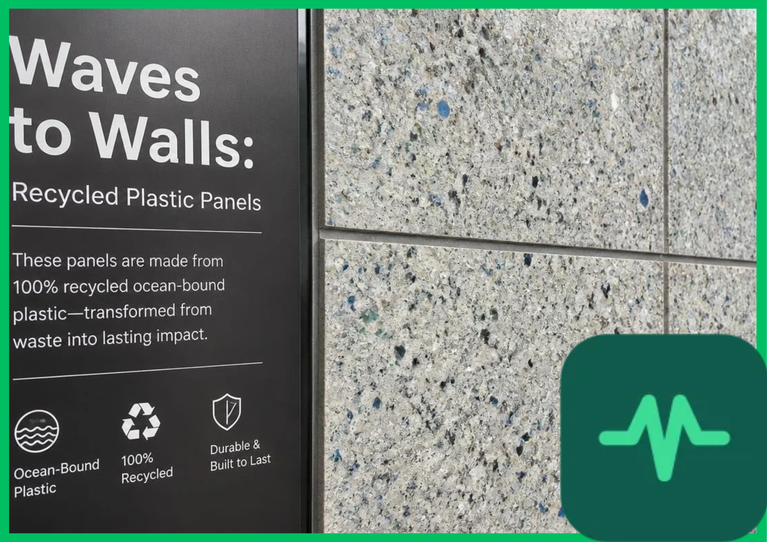
A recycled ocean plastic architectural panel is an eco-friendly building board manufactured by collecting waste plastics from coastal cleanups and marine environments, sorting and cleaning the debris, and compressing the polymers under intense heat into dense, high-strength structural cladding designed for interior walls and exterior facades.
Instead of melting virgin oil to make plastic boards, manufacturers gather what the ocean rejected.
The process operates through rigorous circular engineering:
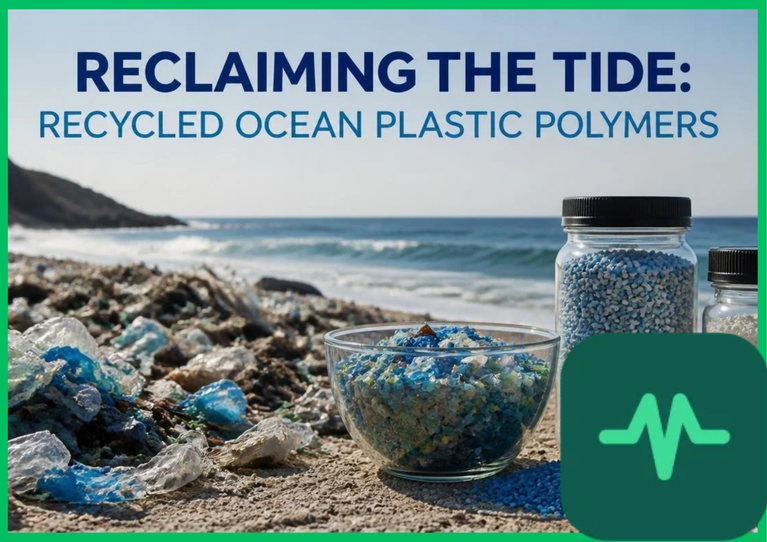
- Collection & Cleanup: Coastal communities and marine conservation groups pull discarded nets, bottles, and packaging containers from beaches and coastal waters.
- Washing & Sorting: Technicians shred the collected plastic debris into flakes, washing away salt, sand, and organic contaminants.
- Thermal Compression: Clean plastic flakes are fed into massive presses, where heat and pressure fuse the polymers into solid, load-bearing architectural boards without adding chemical glues or toxic resins.
The resulting panel is waterproof, incredibly tough, and patterned with unique swirls of color born from the mixed plastics saved from the sea.
The Science of Polymer Upcycling and Structural Strength
How can building panels made from discarded ocean trash match the strength and durability of traditional construction materials?
It comes down to polymer physics and high-density material bonding.
Academic materials science research shows that polyethylene and polypropylene plastics recovered from marine waste possess remarkable tensile strength when compressed into dense, uniform panels.
Unlike wood panels that rot when exposed to moisture or drywall that crumbles under water damage, recycled plastic panels are completely impervious to water, mold, and insects.
They require zero chemical sealants or paint over their long operational lifespans.
According to ENERGY STAR and international building efficiency evaluations, upcycled plastic cladding provides excellent thermal and acoustic insulation while slashing embodied carbon footprints by up to 75% compared to manufacturing virgin plastic boards.
Waste becomes strength. Trash becomes shelter.
Environmental Integrity and Marine Ecosystem Protection
The environmental benefits of recycled ocean plastic architectural panels extend far beyond saving energy or reducing landfill crowding.
They provide a direct lifeline to heal our fragile marine ecosystems.
According to UNEP resource governance frameworks, removing plastic debris from coastal waters prevents deadly entanglement hazards for sea turtles, marine mammals, and nesting seabirds, restoring biological health to polluted shorelines.
When coastal communities earn steady income by collecting and selling marine plastic waste to recycling manufacturers, cleaning the ocean becomes a self-sustaining local economy.
According to IEA circular economy roadmaps, scaling up upcycled polymer manufacturing is an essential pillar to decouple the construction industry from virgin fossil fuel extraction.
When our buildings are clad in the very plastics we pulled from the sea, human habitation begins to heal the planet.
Overcoming Collection and Standardization Realties
Scaling recycled ocean plastic architectural panels from experimental design showcases into mainstream construction involves navigating real-world supply chain hurdles.
Gathering plastic waste from remote beaches requires organized local cleanup networks and reliable sorting infrastructure to separate different polymer types.
Innovative clean-tech enterprises and architectural supply firms are partnering with coastal municipalities worldwide to build automated sorting facilities, securing consistent raw material streams and certifying panels to meet strict global fire and structural building codes.
As green building standards embrace circular materials, ocean plastic panels are transitioning successfully from niche artistic installations into commercial construction supplies across the globe.
Turning Waves Toward a Sustainable Future
Recycled ocean plastic architectural panels prove that human ingenuity can transform environmental disasters into lasting architectural solutions.
We no longer have to accept that building our homes requires stripping virgin oil from the earth while choking our oceans with plastic waste.
By scooping discarded plastics from the sea and compressing them into durable wall panels, we close the loop on modern manufacturing.
We step away from single-use pollution, embracing a smart, clean, and enduring standard of building design.
Through brilliant materials science, rigorous academic research, and a deep respect for our planetary waters, turning waves to walls secures a clean, beautiful, and sustainable future for every building on Earth.

Comments (0)
Login to leave a comment.
No comments yet. Be the first to share your thoughts!