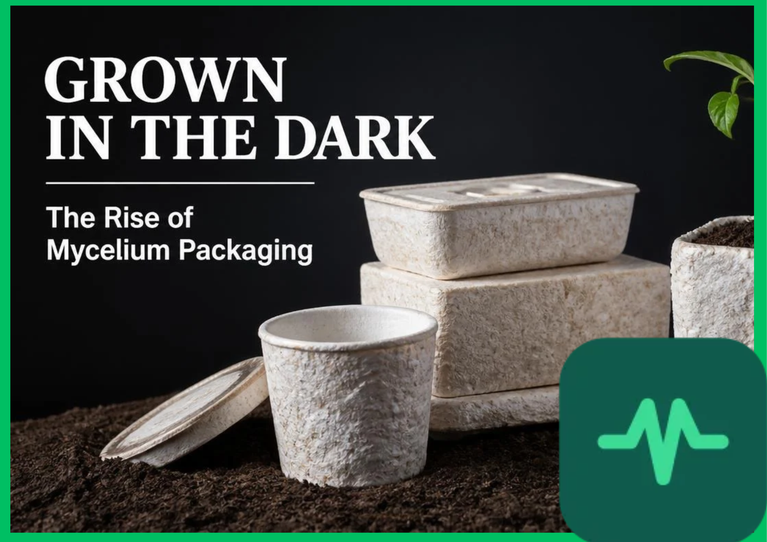
You pull out your new purchase, sliding away the protective cushioning material inside.
For decades, that protective padding was made of expanded polystyrene—better known as plastic foam.
You know that foam block well. It squeaks when you touch it. It crumbles into millions of tiny, static-charged white pellets that stick stubbornly to your clothes, float away on the wind, and refuse to break down.
That foam will sit in a landfill or drift across the ocean for hundreds of years.
Every time we buy something online, we generate a mountain of plastic packaging waste that poisons our natural environment.
We cannot keep protecting fragile products by trashing our fragile planet.
A quiet, organic revolution is sprouting in warehouses and laboratories across the globe.
According to global resource reports from the International Energy Agency (IEA), circular economy frameworks from the United Nations Environment Programme (UNEP), packaging efficiency standards from ENERGY STAR, and academic materials science research, mycelium-based packaging materials are transforming modern logistics.
By harnessing the power of fungal roots to grow custom-molded, biodegradable packaging from agricultural waste, we are replacing fossil-fuel plastics with living technology.
Here is how mycelium composites work, why fungal networks make superior cushioning, and how compostable packaging secures our sustainable future.
The Toxic Legacy of Plastic Foam
To understand why mycelium matters, you have to look at the immense ecological cost of traditional packaging.
For over half a century, plastic foam dominated global shipping.
It was lightweight, cheap, and absorbed shock effectively.
It was also completely indestructible in natural ecosystems.
When plastic foam packaging gets thrown into the trash, it does not biodegrade. It simply breaks down into smaller and smaller toxic microplastics that blow into our soils, wash into our rivers, and enter the food chain.
Recycling plastic foam is notoriously difficult and expensive, so the vast majority ends up buried in landfills or burned in incinerators that release harmful pollutants.
For years, consumers and manufacturers felt trapped. How could we protect delicate electronics, glassware, and heavy appliances during transit without choking the Earth in plastic?
We needed a material that offered the strength of plastic without the permanence of pollution.
We needed to look toward nature's ultimate recycler.
What Is Mycelium Packaging?
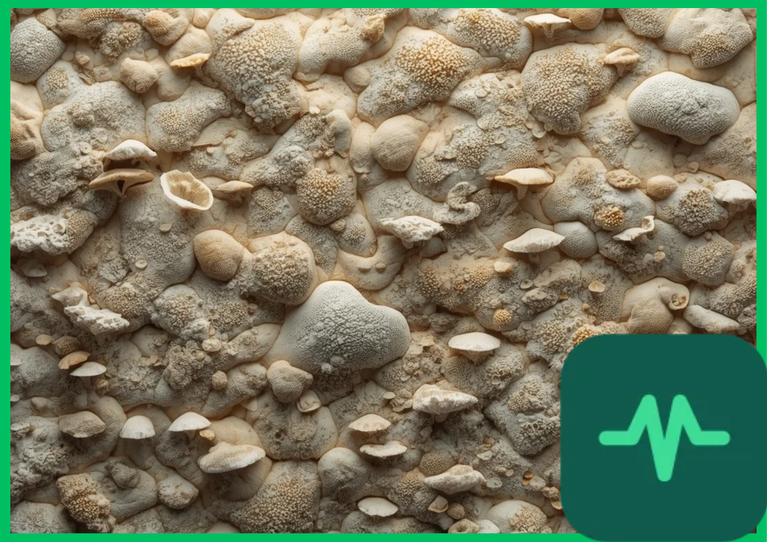
Mycelium is the vegetative root structure of fungi.
Think of mushrooms as the fruit of an organism. Beneath the soil or inside decaying logs, an extensive, thread-like network of microscopic white fibers spreads out silently in the dark.
That hidden web is mycelium.
Its job in nature is to break down dead organic matter, recycling nutrients back into the earth.
Material scientists realized we can direct that natural growth process to manufacture custom packaging materials.
The production process is wonderfully simple and clean:
- Agricultural Byproducts: Local farmers gather clean agricultural waste—like leftover corn husks, hemp stalks, or wood chips that would otherwise be burned or thrown away.
- Fungal Inoculation: The waste is cleaned and mixed with living fungal spores. The mycelium is added to custom-shaped molds that match the exact contours of the product being shipped.
- Natural Binding: Kept in a warm, dark room, the fungal threads grow rapidly over a few days, digesting the agricultural waste and weaving themselves into a dense, solid composite matrix.
- Thermal Drying: Once the shape is fully formed, the material is gently heated to stop further growth, leaving a rigid, lightweight, and completely natural packaging block.
No harsh chemicals. No petroleum refining. Just biology doing what it does best.
The Science of Fungal Composites and Cushioning
How well does a block of mushroom roots protect a fragile item during global shipping?
Academic materials science research shows that mycelium composites possess exceptional shock-absorbing and compressive strength properties that rival or exceed traditional plastic foam.
The microscopic fungal threads wrap tightly around the agricultural particles, creating an elastic, cellular structure that cushions impacts effectively.
When a box is dropped during transit, the mycelium matrix flexes and absorbs the kinetic energy, protecting the product inside from damage.
Furthermore, because the growth molds are completely customizable, manufacturers can grow protective corners, inserts, and shells tailored to any product shape.
According to ENERGY STAR and international packaging evaluations, bio-based containers maintain structural integrity under standard shipping loads while offering superior thermal insulation compared to synthetic plastics.
Closing the Loop Through Complete Biodegradability
The most remarkable characteristic of mycelium packaging reveals itself after delivery.
When you unpack your item, you do not need to throw the protective padding into a landfill or stress over recycling bins.
You can break the mycelium block into small pieces and toss it straight into your backyard compost bin or flower garden.
Within a few weeks, soil microbes finish the job the fungi started. The packaging biodegrades completely, turning into rich, organic compost that nourishes new plant life.
According to UNEP circular economy frameworks, shifting to biodegradable packaging materials eliminates marine microplastic pollution at the source.
IEA industrial decarbonization assessments highlight that growing materials biologically consumes a fraction of the energy required to manufacture petrochemical plastics, slashing greenhouse gas emissions from the very start of the supply chain.
Growing a Sustainable Future
Mycelium-based packaging materials prove that the most advanced technology is often found growing quietly in the natural world.
We no longer have to accept that delivering goods around the planet requires poisoning our environment with indestructible plastic foam.
By harnessing fungal root networks, agricultural waste, and biological manufacturing, we create packaging that is strong enough to protect our products and gentle enough to feed our soil.
We step away from fossil-fuel dependence, embracing a circular economy inspired by nature's wisdom.
Through scientific innovation, biological design, and deep respect for our shared biosphere, mycelium packaging grows a clean, green, and sustainable future for our world.
Comments (0)
Login to leave a comment.
No comments yet. Be the first to share your thoughts!