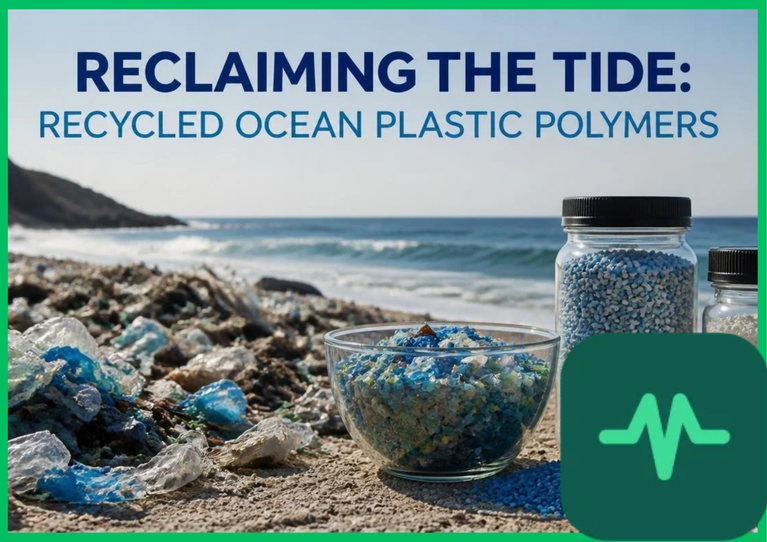
Gulls cry overhead as gentle waves lap against the shore. You take a deep breath of salty air and look down at the sand.
Among the shells and smooth stones, something bright catches your eye.
A fragment of blue plastic bottle, a tangled piece of synthetic fishing net, and a colorful bottle cap wash ashore.
That scene plays out on coastlines across every continent on Earth.
Our oceans are choking on plastic waste. Millions of metric tons of discarded packaging, synthetic gear, and consumer goods drift across open waters, breaking down into toxic microplastics that poison marine life and enter our global food web.
For decades, we treated the sea as an endless dumping ground.
We manufactured billions of plastic items designed for single use, watched them drift away, and ignored the devastating cost.
We cannot keep turning our oceans into a plastic wasteland.
A powerful cleanup and manufacturing movement is turning marine debris into valuable raw materials.
According to global marine conservation reports from the International Energy Agency (IEA), resource governance frameworks from the United Nations Environment Programme (UNEP), energy efficiency standards from ENERGY STAR, and academic polymer chemistry research, recycled ocean plastic polymers are transforming manufacturing.
By gathering ocean-bound waste and processing it into high-strength structural plastics, we pull pollution from the water and build a cleaner future.
Here is how marine plastic upcycling works, why polymer chemistry gives old trash a second life, and how circular manufacturing protects our global waters.
The Floating Crisis in Our Global Waters
To understand why recycling ocean plastic matters so much, you have to look at the sheer scale of marine debris.
Every year, millions of metric tons of plastic waste slip off coastlines, wash down rivers, and blow off crowded shores into the open sea.
Currents gather this debris into massive oceanic gyres—vast swirling vortexes of trash trapped far from land.
Marine animals mistake brightly colored plastic fragments for food. Sea turtles, fish, and seabirds swallow indigestible debris or become hopelessly entangled in discarded synthetic fishing lines and nets.
The damage goes deeper than visible trash.
Under the relentless power of ultraviolet sunlight and crashing waves, plastic fragments break down into microscopic particles.
Those microplastics absorb toxic chemicals, float suspended in the water column, and pass upward through the marine food chain.
For years, society viewed this pollution as an impossible tragedy.
People assumed plastic floating in salt water for months became degraded, brittle, and completely useless for manufacturing.
Industrial chemists and environmental innovators refused to accept that dead-end.
They realized that trash floating in the ocean could become the raw material for our next generation of sustainable products.
What Are Recycled Ocean Plastic Polymers?
Recycled ocean plastic polymers are high-grade plastic resins salvaged directly from coastal communities, river mouths, and marine debris collection drives, then processed into durable manufacturing materials.
The journey from floating waste to useful product requires rigorous engineering:
- Collection and Sorting: Coastal cleanup teams and local recycling cooperatives gather plastic waste before it drifts out to the open sea, separating items by polymer type like polyethylene terephthalate and high-density polyethylene.
- Washing and Decontamination: Salt, sand, organic algae, and chemical residues are scrubbed away using specialized cleaning systems designed to handle degraded marine plastics.
- Shredding and Compounding: The cleaned plastic is shredded into small flakes, melted down, filtered to remove impurities, and blended with stabilizing additives to restore its structural integrity.
- Pelletizing: The purified polymer is extruded into uniform resin pellets, ready to be fed into standard injection molding machines for manufacturing.
When manufacturers buy these recycled pellets, they bypass virgin petrochemical extraction completely.
The Science of Polymer Upcycling and Strength
Can plastic that spent months baking in the sun and soaking in salt water really perform as well as brand-new material?
Academic polymer chemistry research shows that while environmental exposure weakens raw plastics, modern recycling technology successfully restores their structural strength.
Chemists use advanced compounding techniques to cross-link polymer chains and add reinforcing agents during the melting phase.
This process repairs microscopic damage caused by ultraviolet radiation and saltwater degradation.
The resulting recycled polymers exhibit high tensile strength, impact resistance, and durability.
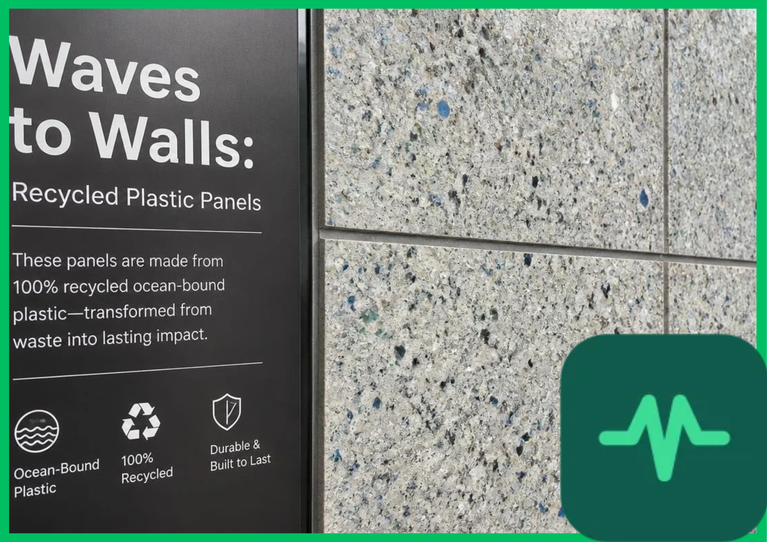
Manufacturers use these recovered resins to mold everything from durable consumer goods, luggage, and footwear to high-strength structural components and outdoor furniture.
According to ENERGY STAR and international industrial evaluations, processing recycled ocean plastics consumes significantly less energy than refining crude oil into virgin plastic polymers, cutting manufacturing greenhouse gas emissions drastically.
Closing the Loop Through Circular Infrastructure
Cleaning the oceans requires more than occasional volunteer beach collections. It requires building reliable economic loops in coastal communities.
In many developing coastal regions, lack of formal waste management infrastructure drives the heavy flow of plastic pollution into local rivers and seas.
UNEP resource governance frameworks highlight that successful ocean plastic initiatives create stable, fair-wage economies for local waste collectors.
When coastal residents can sell recovered plastic waste to recycling centers for a dependable income, trash is collected before it ever reaches the water.
According to IEA industrial decarbonization assessments, integrating recycled marine polymers into global supply chains decouples modern manufacturing from fossil fuel extraction, turning pollution into a valuable economic commodity.
Reclaiming Our Oceans for a Sustainable Future
Recycled ocean plastic polymers prove that human ingenuity can heal the damage we inflicted upon our planet.
We no longer have to accept that plastic waste floating in our seas is destined to sit in a gyre or break down into toxic microplastics forever.
By gathering marine debris, washing away salt and sand, and applying advanced polymer chemistry, we transform ocean trash into durable, high-performance manufacturing materials.
We step away from virgin fossil extraction, embracing a circular economy that cleans our waters while building our world.
Through dedicated cleanup efforts, brilliant recycling science, and global collaboration, recycled ocean plastics reclaim the tide and secure a breathable, thriving, and plastic-free future for our oceans.

Comments (0)
Login to leave a comment.
No comments yet. Be the first to share your thoughts!