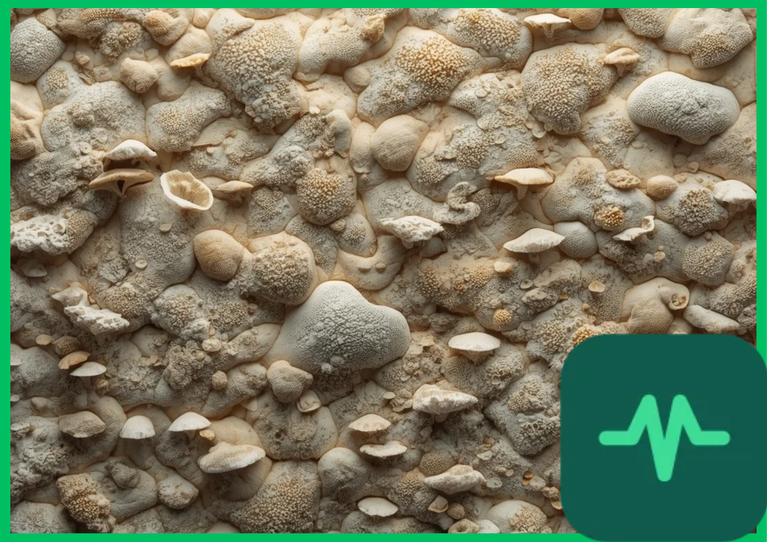
You run your hand across the smooth, sturdy wall panels lining the interior room.
The material feels solid, reassuring, and completely natural.
You would never guess that this structural insulation was never manufactured in a smoky industrial factory.
It was grown.
Living fungi built it in the dark, feeding quietly on agricultural crop waste until it formed a tough, fire-resistant board.
For generations, human construction relied on heavy, synthetic materials.
We baked petrochemical foam boards in giant industrial ovens, consuming staggering amounts of energy and filling our landfills with plastic insulation that will never break down.
When those buildings reach the end of their lifespan, their insulation is tossed into giant garbage heaps where it sits for centuries.
We cannot build a sustainable future while insulating our homes with toxic plastics and synthetic foams.
What if we could partner with nature to grow our building materials instead of manufacturing them from oil?
What if your wall insulation was completely biodegradable, carbon-negative, and grown from farm waste?
A quiet, brilliant biological revolution is transforming architecture across the globe.
According to global resource efficiency reports from the International Energy Agency (IEA), sustainable building frameworks from the United Nations Environment Programme (UNEP), efficiency benchmarks from ENERGY STAR, and academic materials science research, mycelium insulation panels for buildings are changing our construction landscape.
By cultivating fungal networks inside agricultural crop residue, we grow high-performance, eco-friendly building materials that lock carbon away permanently.
Here is how fungal-based building materials work, why biodegradable home insulation changes architectural economics, and how growing our panels secures our sustainable future.
The Toxic Trap of Synthetic Building Foams
To understand why mycelium insulation panels matter so much, you have to look at the hidden environmental cost of traditional construction insulation.
For decades, petroleum-based plastic foams anchored the global building industry.
Materials like expanded polystyrene and extruded foam board insulate buildings effectively, but they carry a heavy ecological burden.
Producing those synthetic foams requires refining fossil fuels, releasing toxic blowing agents, and consuming massive amounts of thermal energy.
When those plastic boards get demolished during a building renovation, they break into tiny fragments that pollute soil and waterways for generations.
Skeptics once argued that natural building materials could never match the thermal and fire-retardant performance of petrochemical foams.
Materials scientists and forward-thinking architects proved those skeptics wrong.
Nature spent millions of years perfecting complex composite structures that beat synthetic plastics at their own game.
We just had to learn how to cultivate them.
What Is a Mycelium Insulation Panel?
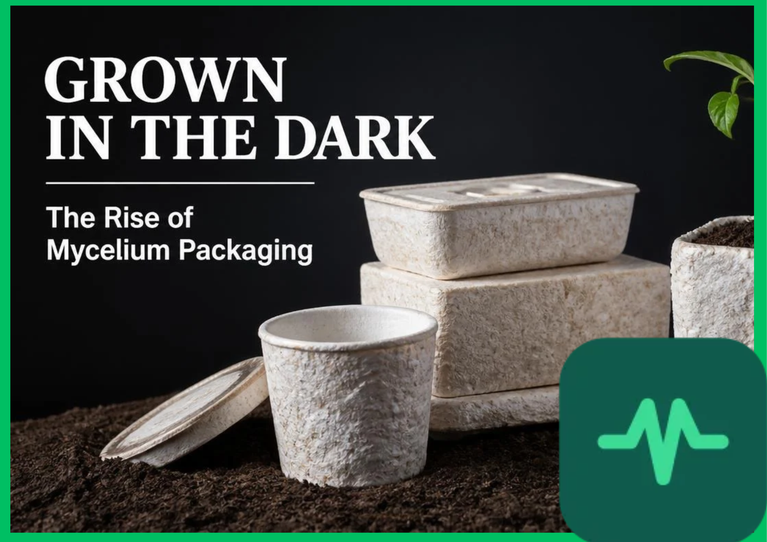
A mycelium insulation panel is a high-performance, bio-based building board manufactured by inoculating agricultural crop waste—such as rice husks, flax hurds, or straw—with live fungal spores, allowing the thread-like mycelium network to bind the loose plant matter together into a solid, lightweight composite before drying the panel with heat to stop all biological activity.
Instead of melting plastic in a factory, you grow a structure.
The process operates through natural biological growth:
- Preparation: Farmers gather leftover agricultural waste from cereal crops that would otherwise be burned or thrown away.
- Inoculation: Technicians mix the clean crop residue with live fungal mycelium spores in a controlled, humid environment.
- Bio-Binding: Over the course of several days, the fungal threads spread rapidly through the pile, digesting the plant material and weaving it together into a dense, interconnected matrix.
- Thermal Drying: Once the panel reaches its final shape inside a custom mold, gentle heat is applied to dry the material completely, locking the structure in place and rendering it inert.
The resulting panel is light, durable, and ready to install in walls, ceilings, or partitions.
The Science of Fungal Composites and Thermal Performance
How can a board grown from mushrooms and straw insulate a building as effectively as petroleum plastic?
It comes down to cellular structure and microscopic air pockets.
Academic materials science research shows that mycelium composites consist of a dense web of chitin-reinforced cell walls filled with trapped air pockets.
Those trapped air pockets stop thermal energy from passing through the panel, giving mycelium boards exceptional thermal insulation properties that rival commercial glass fiber and foam.
Furthermore, fungal cell walls possess natural fire-retardant qualities.
When exposed to extreme heat, mycelium charrs rather than melting or releasing toxic smoke.
According to ENERGY STAR and international building efficiency evaluations, bio-based insulation panels maintain stable indoor temperatures while slashing embodied carbon footprints by up to 80% compared to traditional foam manufacturing.
The building breathes naturally, regulates indoor humidity, and insulates with zero petroleum waste.
Environmental Integrity and Closed-Loop Architecture
The environmental benefits of mycelium insulation panels extend far beyond lowering embodied carbon in building walls.
They provide a powerful blueprint for circular, zero-waste construction.
According to UNEP resource governance frameworks, utilizing agricultural byproducts prevents open-field burning of crop stubble, stopping massive regional air pollution spikes.
When a building insulated with mycelium reaches the end of its useful life, the wall panels can be unscrewed, chipped up, and tossed directly into garden soil where they biodegrade harmlessly within weeks, enriching the earth instead of filling a landfill.
According to IEA sustainable building roadmaps, scaling up bio-based materials is an essential pillar to decarbonize the global construction sector over the coming decades.
When architecture integrates with biological cycles, our buildings become regenerative extensions of nature.
Overcoming Manufacturing and Standardization Realties
Scaling mycelium insulation panels from artisanal laboratory prototypes into mainstream construction involves navigating real-world manufacturing hurdles.
Producing fungal boards requires strict moisture control during the growth phase and standardized molding equipment to ensure uniform panel dimensions for commercial builders.
Innovative bio-material startups and large agricultural cooperatives are collaborating to build automated growing facilities, scaling up production lines and securing international fire and structural safety certifications.
As building codes evolve to embrace bio-based products, mycelium insulation is transitioning successfully from experimental architectural exhibits into commercial construction supplies worldwide.
Growing Our Way Toward a Sustainable Future
Mycelium insulation panels prove that human engineering can partner with living biology to reinvent how we build our homes.
We no longer have to accept that insulating a building requires toxic plastic foams that pollute our planet for centuries.
By cultivating fungal networks through agricultural crop waste, we grow high-performance, biodegradable building boards that lock carbon away permanently.
We step away from petrochemical waste, embracing a smart, natural, and enduring standard of modern architecture.
Through brilliant materials science, rigorous academic research, and a deep respect for our planetary biosphere, growing our panels secures a clean, beautiful, and sustainable future for every building on Earth.
Comments (0)
Login to leave a comment.
No comments yet. Be the first to share your thoughts!