
Capital Write-Down Economics and Asset Depreciation Mechanics
Traditional accounting frameworks evaluate capital asset values based on historical acquisition costs minus accumulated depreciation over expected operational lifespans. However, stranded asset risk introduces sudden economic impairment, rendering long-lived physical assets unprofitable before their engineered amortization schedules conclude.
The core economic mechanism governing capital write-downs is rooted in Net Present Value (NPV) recalculations. The valuation of an industrial asset equals the discounted sum of future net cash flows generated over its remaining operational life:
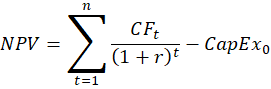
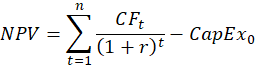
where  represents annual operating cash flow,
 denotes the risk-adjusted discount rate, and
 is initial capital expenditure. When regulatory carbon constraints, falling wholesale electricity prices, or collapsing fossil fuel demand depress future cash flows (
 ), or when transition risks inflate the discount rate (
 ), the fundamental asset value drops below its book value. Under international accounting standards (IFRS and GAAP), corporations must execute immediate asset impairment tests, recognizing massive non-cash capital write-downs that erode corporate balance sheets, depress equity valuations, and restrict access to debt capital.
Fossil Infrastructure Depreciation and Unburnable Carbon Reserves
Upstream exploration assets, petroleum refineries, liquefied natural gas (LNG) terminals, and subsea pipelines represent highly illiquid physical capital designed to operate across multi-decade time horizons ( to
 years). Academic climate research and carbon budget assessments demonstrate that burning the entirety of proven fossil fuel reserves held on corporate balance sheets would release carbon dioxide volumes exceeding global carbon emission budgets required to limit warming to
 (
 above pre-industrial baseline anomaly thresholds).
Consequently, a substantial fraction of global oil, gas, and coal reserves constitutes "unburnable carbon." Upstream extraction projects authorized under historical pricing assumptions face catastrophic economic devaluation. For example, deepwater offshore oil fields and Arctic drilling leases require high oil price breakeven thresholds ( to
 per barrel) to recover multi-billion-dollar upfront capital expenditures. When future demand curves shift downward due to electric vehicle adoption and industrial electrification, these capital investments fail to recover initial expenditures, triggering premature asset retirement and abandonment liabilities.
Energy Market Transition Risk and Levelized Cost Convergence
Energy market transition risk accelerates stranded asset depreciation by altering wholesale dispatch economics. Historically, fossil fuel generation assets enjoyed structural advantages in dispatch reliability and marginal cost parity. However, levelized cost of energy (LCOE) trajectories for utility-scale solar photovoltaic installations ( to
 per
 ) and onshore wind farms (
 to
 per
 ) have fallen below the short-run marginal operating costs of aging coal and gas steam turbine plants.
When variable renewable energy penetration surges across regional grids, wholesale electricity prices plummet during peak solar or wind generation intervals. Fossil fuel assets experience severe capacity factor erosion, operating only during peak evening demand windows. This intermittent operation reduces annual revenue generation while fixed maintenance, insurance, and labor expenses remain constant. As capacity factors drop below economic break-even thresholds (typically 35% to 45% for combined-cycle gas turbines), plant operators face involuntary mothballing or permanent decommissioning, transforming productive generation assets into financial liabilities.
Technical Data Specifications of Stranded Asset Parameters
| Financial & Economic Parameter | Industry Specification Range |
|---|---|
| Upstream Reserve Depreciation Horizon | 10 to 30 years accelerated write-down window |
| Coal Plant Economic Utilization Threshold | Below 35% to 40% annual capacity factor |
| Deepwater Oil Breakeven Threshold |  to  per barrel production cost |
| Global Unburnable Reserve Fraction | 60% to 80% of known fossil reserves |
| Impairment Accounting Write-Downs | Multi-billion-dollar non-cash balance sheet charges |
| Asset Lifespan Curtailment | 50% to 70% reduction in active operating years |
Transition Discount Rate Premium ( ) | +200 to +500 basis points for fossil assets |
Valuation Modeling and Financial Portfolio Stress Testing
Institutional investors and central banks utilize advanced stochastic valuation models and climate scenario stress testing to quantify transition risk exposure. Integrated Assessment Models (IAMs)—such as those developed by the IEA under Net Zero Emissions by 2050 (NZE) pathways—simulate future carbon pricing trajectories, energy demand elasticities, and commodity price collapse scenarios.
Portfolio stress testing applies these transition scenarios across equity and bond holdings to measure systemic vulnerability. When carbon prices escalate to  to
 per metric ton of
 , unmitigated fossil-fuel-dependent utilities, steel manufacturers, and chemical refineries experience severe cash flow contractions. Financial institutions holding debt issued by these carbon-intensive entities face credit rating downgrades and rising non-performing loan ratios, threatening broader systemic financial stability.
Macroeconomic Resilience and Capital Reallocation
Mitigating stranded asset risk requires proactive capital reallocation away from fossil fuel extraction and toward zero-carbon infrastructure. Corporate transition strategies involve retiring high-emission assets ahead of schedule while writing off residual book values through structured amortization buffers.
Quantitative economic analyses published by academic research consortia indicate that orderly capital reallocation minimizes systemic financial shocks, whereas delayed climate policy implementation increases the probability of sudden, disorderly market corrections and widespread corporate insolvencies. By aligning financial valuation models with physical decarbonization realities, global capital markets neutralize stranded asset exposure, securing long-term economic stability.




Comments (0)
Login to leave a comment.
No comments yet. Be the first to share your thoughts!