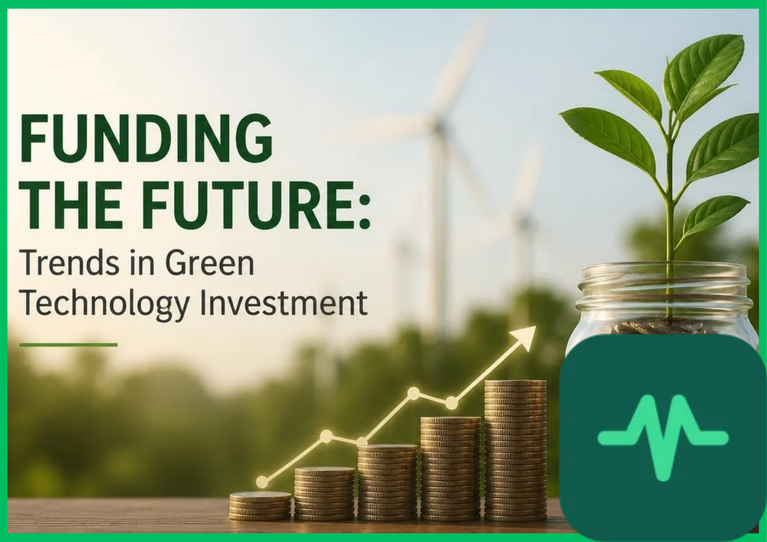
You see clean solar panels gleaming on rooftops, electric cars gliding silently down city streets, and massive wind turbines spinning gracefully against the horizon.
None of these breakthroughs happened by accident.
Every single clean technology, advanced battery, and renewable grid upgrade exists because someone took a financial risk. Someone backed an early-stage startup, funded a laboratory experiment, or poured capital into a multi-megawatt sustainable infrastructure project.
For decades, traditional financial markets treated environmental protection as a charitable afterthought or a minor corporate compliance cost.
Wall Street and global financial centers chased short-term profits in fossil fuels, mining, and linear industrial production.
That old financial mindset is shifting rapidly.
According to global energy finance data from the International Energy Agency (IEA), sustainable finance tracking from the United Nations Environment Programme (UNEP), energy efficiency guidelines from ENERGY STAR, and academic economic research, capital is moving with unprecedented speed.
Green technology venture capital and sustainable infrastructure funds are rewriting the rules of global finance.
By directing trillions of dollars toward renewable energy, grid modernization, and early-stage climate innovators, global financial markets are actively funding our collective future.
Here is how clean tech investment trends work, why venture capital is backing early-stage climate innovators, and how financial markets drive the global transition.
The Great Financial Pivot
To understand why green technology investment is surging, you have to look at the massive reallocation of capital happening across international markets.
For generations, energy investments flowed overwhelmingly into oil, gas, and coal. Fossil fuels offered predictable, well-understood financial returns backed by a century of established infrastructure.
Clean energy technologies, by contrast, were often dismissed as risky, expensive, and unproven.
That wall of skepticism has crumbled.
As climate impacts intensify and clean technologies outcompete fossil fuels on pure economics, global investors are reading the writing on the wall.
According to IEA energy investment reports, global clean energy spending has climbed past historic milestones, reaching trillions of dollars annually and outpacing fossil fuel investments by nearly two to one.
Money is no longer drifting toward green projects out of a sense of moral obligation. Capital is moving because clean technology is the most dynamic, profitable, and essential growth sector in the modern global economy.
Venture Capital and Early-Stage Climate Innovation
The financial engine of the green transition starts far away from massive utility-scale solar farms. It begins in small, high-tech startup laboratories.
Green technology venture capital trends show a massive influx of early-stage funding directed toward radical innovation.
Venture capitalists and climate tech investors search the globe for brilliant founders working on frontier solutions:
- Next-generation solid-state battery chemistry
- Direct air capture materials and industrial carbon removal
- Green hydrogen production catalysts and advanced electrolyzers
- Circular economy hardware design and modular electronics recycling
These early-stage startups carry high technological risk. Many fail.
The ones that succeed, however, disrupt entire industries.
Academic startup research shows that early venture backing allows breakthrough concepts to scale past the dangerous "valley of death"—the difficult phase where a lab-tested prototype needs millions of dollars in capital to build a commercial pilot factory.
When early-stage investors provide that vital bridge, brilliant scientific ideas turn into real-world industrial solutions.
Shifting From Venture to Infrastructure Scale
Once a clean technology proves it works in the real world, the nature of the investment shifts dramatically.
Venture capital funds hand the baton over to massive infrastructure funds, pension funds, and institutional asset managers.
Building utility-scale battery storage facilities, laying high-voltage regional transmission lines, and constructing deep geothermal power plants requires immense amounts of capital.
Institutional investors love these projects because they offer long-dated, stable cash flows.
When a multi-megawatt wind park or a grid-scale battery storage facility begins operating, it generates predictable revenue through energy arbitrage and long-term power purchase agreements.
According to UNEP sustainable finance frameworks, channeling institutional pension funds into green infrastructure creates a virtuous circle.
Everyday savers and retirees earn safe, steady financial returns while their money builds the zero-emission power grids and sustainable cities of tomorrow.
Overcoming Global Financing Hurdles
Despite this massive surge in capital, green technology investment faces real-world friction.
Academic economic studies and IEA financial analyses highlight several structural challenges that global markets must still overcome:
- High Interest Rates: Capital-intensive clean energy assets are sensitive to borrowing costs. High interest rates increase upfront construction expenses for capital-heavy projects like nuclear plants or offshore wind parks.
- Permitting and Sourcing Bottlenecks: Delays in government permitting and concentrated supply chains for critical minerals can slow down how quickly committed capital translates into physical infrastructure.
- Geographic Disparities: While advanced economies attract trillions in green funding, developing regions often struggle to access affordable capital due to perceived sovereign and financial risks.
Solving these hurdles requires ongoing collaboration between international policy bodies, development banks, and private financial institutions.
When governments establish clear, predictable carbon pricing and stable regulatory frameworks, investment risk premiums drop, unlocking even larger waves of private capital for emerging markets.
Investing in a Thriving Tomorrow
Green technology investment proves that financial markets can be a powerful force for global healing.
We no longer have to choose between economic prosperity and ecological survival.
By channeling venture capital into early-stage climate innovators and directing institutional funds toward renewable infrastructure, we build the physical foundation of a sustainable world.
Every dollar invested in clean tech, smart grids, and circular systems is a vote of confidence in our collective future.
Through smart financial strategy, international market coordination, and unwavering human vision, green investing funds a resilient, breathable, and thriving planet for generations to come.



Comments (0)
Login to leave a comment.
No comments yet. Be the first to share your thoughts!