
 ), carbon monoxide (
 ), and multi-carbon hydrocarbons without fossil feedstock inputs. According to International Energy Agency (IEA) clean energy innovation roadmaps and academic photoelectrochemistry literature, scaling artificial leaf technology is essential for decarbonizing heavy transport, industrial chemical synthesis, and long-term energy storage. Unlike traditional photovoltaic-electrolysis setups that couple solar panels to separate water electrolyzers, integrated photoelectrochemical (PEC) devices combine light absorption and electrochemical catalysis within a single monolithic semiconductor-electrolyte interface. Engineering these solar fuel generators requires precise control over semiconductor bandgap alignment, charge carrier transfer kinetics, catalytic overpotentials, and solar-to-hydrogen (STH) conversion efficiencies.
Semiconductor Physics and Bandgap Engineering
The primary thermodynamic requirement for solar-driven water splitting is overcoming the standard Gibbs free energy change ( ) of water dissociation, which corresponds to a thermodynamic potential of
 per mole under standard temperature and pressure (
 or
 [
 ],
 ). To drive both the oxygen evolution reaction (OER) at the photoanode and the hydrogen evolution reaction (HER) at the photocathode, a semiconductor material must absorb photons with energies exceeding its bandgap (
 ) and possess conduction and valence band edges that straddle the water reduction and oxidation potentials (
 and
 vs. Reversible Hydrogen Electrode, respectively).
Single-bandgap semiconductors face a fundamental thermodynamic trade-off governed by the Shockley-Queisser limit. Materials with narrow bandgaps ( ) absorb a broad spectrum of the solar spectrum—including near-infrared wavelengths up to
 to
 —but generate insufficient photovoltage to split water molecules. Conversely, wide-bandgap semiconductors (
 ) generate high photovoltages but capture only a minor fraction of high-energy ultraviolet and visible photons. To overcome this limitation, advanced artificial photosynthesis architectures utilize dual-bandgap tandem photoelectrochemical cells. In a tandem configuration, a wide-bandgap top photoanode absorbs high-energy blue and green photons, transmitting lower-energy red and near-infrared photons to a narrow-bandgap bottom photocathode, maximizing total solar-to-chemical conversion efficiency.
Photoelectrochemical (PEC) Cell Architectures and Protection
Photoelectrochemical cells immerse semiconductor light absorbers directly into aqueous electrolyte solutions containing dissolved electrolytes or sacrificial reagents. While direct immersion minimizes electrical resistance losses, it exposes vulnerable semiconductor surfaces—such as silicon, gallium arsenide, and indium phosphide—to severe photo-corrosion and chemical oxidation under illumination.
To prevent degradation, industrial PEC architectures integrate ultrathin protective overlayers onto the semiconductor surface:
- Metal Oxide Passivation Layers: Atomic layer deposition (ALD) applies pinhole-free titanium dioxide (
 ), aluminum oxide (
 ), or nickel oxide (
 ) films ranging from
 to
 in thickness. These transparent passivation layers conduct photogenerated charge carriers via quantum tunneling while shielding the underlying semiconductor from corrosive aqueous electrolytes.
- Catalyst Co-facings: Noble metal or earth-abundant transition metal catalysts are deposited directly onto the protective oxide layer, reducing interfacial charge transfer resistance and accelerating surface reaction kinetics.
Catalytic Reaction Kinetics and Overpotential Losses
Splitting water into hydrogen and oxygen involves two multi-electron transfer half-reactions characterized by sluggish reaction kinetics and significant activation overpotentials ( ).
The oxygen evolution reaction (OER) is a complex four-electron oxidation process occurring at the photoanode:


Because the OER involves forming an oxygen-oxygen double bond and transferring four protons and electrons sequentially, it exhibits high kinetic barriers, requiring substantial catalytic overpotentials ( to
 ) even on advanced metal oxide catalysts like cobalt oxide (
 ), nickel-iron layered double hydroxides (
 ), and iridium oxide (
 ).
Conversely, the hydrogen evolution reaction (HER) at the photocathode is a relatively fast two-electron reduction process:


While platinum remains the benchmark HER catalyst with near-zero overpotential, earth-abundant alternatives—such as molybdenum sulfides ( ), nickel phosphides (
 ), and tungsten carbides—achieve high exchange current densities, minimizing voltage losses and maximizing operational conversion efficiency.
Technical Data Specifications of Solar Fuel Parameters
| Technical Parameter | Engineering Specification Range |
|---|---|
| Thermodynamic Water Splitting Potential |  at standard temperature and pressure (  /  ) |
Optimal Semiconductor Bandgap ( ) |  to  for single-junction cells |
| Solar-to-Hydrogen (STH) Efficiency | 10% to 19% laboratory benchmark records |
| Protective Oxide Layer Thickness |  to  via atomic layer deposition |
OER Overpotential Losses ( ) |  to  at  |
Faraday Efficiency ( ) |  for optimized catalytic hydrogen evolution |
Solar-Driven Carbon Dioxide Reduction ( )
Beyond generating hydrogen, advanced artificial photosynthesis systems execute solar-driven carbon dioxide reduction ( ) to synthesize carbon-neutral liquid hydrocarbons and chemical precursors. Feeding captured
 into specialized photoelectrochemical reduction cells enables multi-electron reduction pathways driven by solar electricity and catalytic surfaces.
Depending on the specific electrocatalyst—such as copper-based nanoparticles, gold foils, or molecular metal complexes— reduction yields diverse chemical products:
- Carbon Monoxide (
 ) and Syngas: Two-electron reduction producing carbon monoxide, which is subsequently paired with hydrogen to synthesize synthetic liquid fuels via Fischer-Tropsch catalysis.
- Formic Acid (
 ): Two-electron reduction yielding liquid formic acid, serving as a stable hydrogen storage medium and chemical feedstock.
- Multi-Carbon Hydrocarbons: Complex reduction pathways synthesizing ethylene (
 ), ethanol (
 ), and propanol, directly displacing fossil-derived petrochemicals.
Controlling faradaic selectivity—minimizing competing hydrogen evolution side reactions—remains a primary metallurgical and chemical engineering challenge in solar fuel synthesis.
Efficiency Metrics and Scalability Challenges
Evaluating artificial photosynthesis performance relies strictly on Solar-to-Hydrogen (STH) conversion efficiency, defined as the chemical energy stored in the produced hydrogen (calculated using higher heating value) divided by the total solar irradiance power incident on the active device area under standard AM 1.5G solar illumination (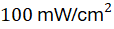 or
 ):


While laboratory-scale tandem photoelectrochemical devices achieve STH efficiencies approaching 19%, scaling these systems to industrial gigawatt-scale production faces significant engineering hurdles. Long-term operational stability remains a critical bottleneck, as aqueous electrolytes, high current densities, and continuous illumination induce catalyst degradation and microstructural delamination over thousands of operational hours.
Quantitative clean-tech assessments published by the IEA and academic research consortia emphasize that overcoming materials degradation, scaling large-area module fabrication, and integrating gas separation membranes will establish artificial photosynthesis as a cornerstone technology for global carbon-neutral energy economies.



Comments (0)
Login to leave a comment.
No comments yet. Be the first to share your thoughts!