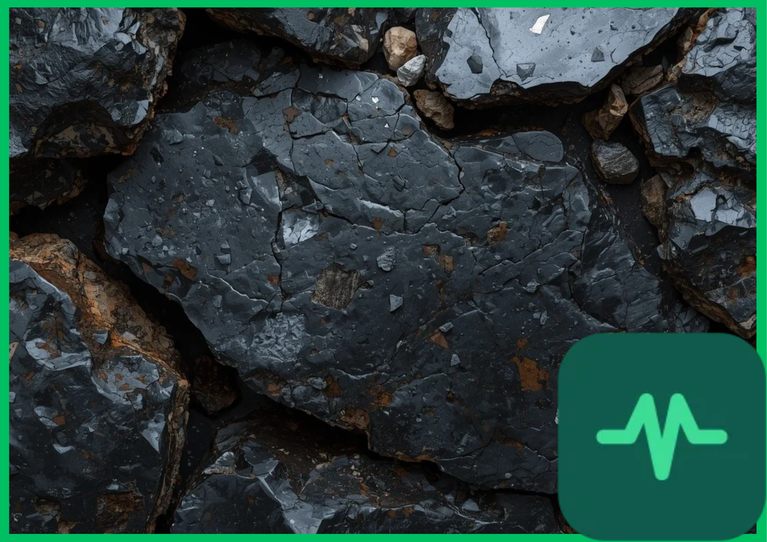
You look down at the dark, rugged volcanic rock beneath your hiking boots.
It feels solid, permanent, and completely inert.
You take a deep breath of fresh air and look up at the wide sky.
You know an invisible blanket of heat-trapping carbon pollution wraps around our entire planet.
For generations, human civilization burned coal, oil, and gas without counting the cost.
We pumped billions of tons of carbon dioxide into the air.
Cutting emissions is no longer enough to save our shared climate.
Centuries of past pollution linger in the atmosphere, warming our oceans and disrupting weather patterns across the globe.
We need to stop adding new carbon.
We also need to pull carbon out of the air and lock it away so securely that it can never escape back into the sky.
How do you store billions of tons of gas permanently?
You do not store it as a gas.
You turn it into rock.
A quiet, brilliant geological revolution is unfolding deep beneath the earth's crust.
According to global climate reports from the International Energy Agency (IEA), resource protection frameworks from the United Nations Environment Programme (UNEP), efficiency benchmarks from ENERGY STAR, and academic geoscience research, direct air capture mineral carbonation is changing our environmental horizon.
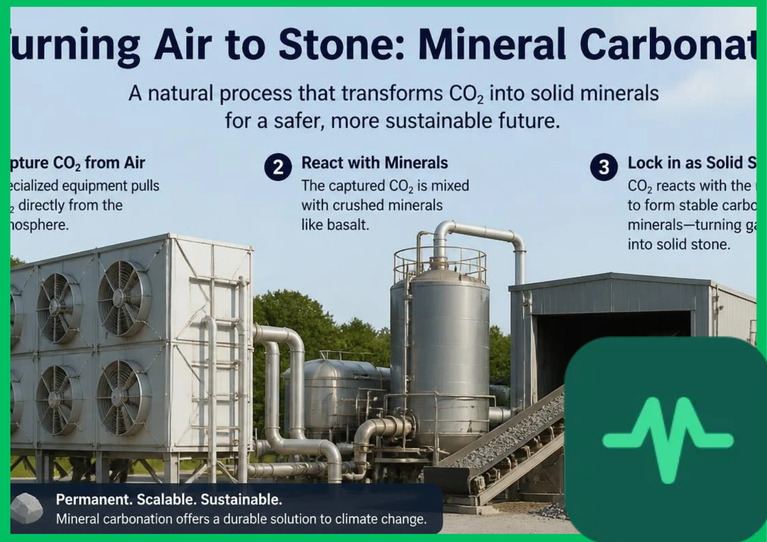
By dissolving captured carbon dioxide in water and injecting it deep into underground basalt formations, we trigger a natural chemical reaction that transforms greenhouse gas into solid stone within months.
Here is how mineral carbonation works, why permanent mineral trapping changes climate math, and how turning air to stone secures our sustainable future.
The Fragile Illusion of Underground Gas Storage
To understand why mineral carbonation matters so much, you have to look at the risks of traditional carbon storage.
Early carbon capture projects pumped gaseous or liquid carbon dioxide directly into deep underground sedimentary basins or depleted oil reservoirs.
Those underground spaces held the gas through physical containment alone.
It was like filling a giant underground balloon.
Critics worried about leaks.
What if an earthquake ruptured the caprock?
What if high pressure forced the gas back up through old oil wells over the coming centuries?
Geoscientists and chemists shared those safety concerns.
They realized that physical containment always carried a small risk of leakage.
If we wanted absolute permanence, we had to stop trapping carbon as a fluid.
We had to lock it away using chemical bonds.
We had to turn the gas into solid rock.
What Is Direct Air Capture Mineral Carbonation?
Direct air capture mineral carbonation is an advanced geological sequestration process that dissolves captured atmospheric carbon dioxide into water and injects the solution deep underground into volcanic basalt formations, where a rapid chemical reaction binds the carbon to calcium, magnesium, and iron ions, turning the fluid permanently into solid carbonate minerals.
Instead of sitting in a underground cavern as a pressurized fluid, the carbon undergoes a radical physical transformation.
The process operates through natural geochemical laws:
- Dissolution: Captured carbon dioxide mixes with water at the surface, creating a bubbly mixture similar to carbonated sparkling water.
- Deep Injection: Pumps force that carbonated water thousands of meters or feet down into porous basalt rock layers rich in calcium and magnesium.
- Mineral Precipitation: Deep underground, the acidic carbonated water reacts with the reactive volcanic rock.
Within two years, the dissolved carbon bonds permanently with metal ions in the basalt.
It precipitates out of the water as solid white carbonate crystals—effectively limestone.
The gas is gone forever.
It cannot leak, it cannot expand, and it cannot return to the atmosphere.
The air is turned straight into stone.
The Science of Basalt Reactions and Geochemical Permanence
How does volcanic rock react with carbonated water to form solid stone faster than nature normally takes?
It comes down to mineralogy and reaction kinetics.
Academic geoscience research shows that basalt is the ideal geological host for carbon storage because it contains high concentrations of divalent cations like calcium, magnesium, and iron.
When carbonated water flows through the microscopic pores of underground basalt, the chemical reaction happens surprisingly fast.
While geologists once assumed mineral formation took thousands of years, field trials prove that over 95% of injected carbon turns into solid stone in less than two years.
Furthermore, basalt formations are globally abundant on every continent and deep beneath the ocean floor, offering virtually limitless storage capacity.
According to ENERGY STAR and international industrial efficiency evaluations, mineral carbonation requires minimal ongoing energy input once the water is injected, making it one of the most energy-efficient permanent carbon disposal methods ever discovered.
Nature does the heavy lifting.
Environmental Integrity and Global Climate Safety
The environmental benefits of mineral carbonation extend far beyond achieving permanent, leak-proof carbon storage.
They provide the ultimate safety guarantee for industrial carbon removal.
According to UNEP resource governance frameworks, permanent mineral trapping eliminates long-term monitoring liabilities, because once carbon turns into solid rock, it requires zero human supervision for millions of years.
When industrial carbon removal facilities pair up with basalt storage sites, they offer true net-negative emissions with absolute scientific certainty.
According to IEA climate roadmaps, scaling up mineral carbonation is an essential pillar to neutralize hard-to-abate industrial emissions and draw down excess atmospheric carbon over the coming decades.
When humanity locks past pollution safely inside the earth's crust as solid stone, our planetary climate begins a permanent recovery.
Overcoming Infrastructure and Water Realties
Scaling direct air capture mineral carbonation from pioneering pilot projects into global gigaton-scale operations involves navigating real-world logistical hurdles.
Injecting carbonated water deep underground requires reliable access to water resources and suitable basalt geology.
Engineers and hydrogeologists solve these challenges by using treated wastewater, brackish groundwater, or seawater for the dissolution process, ensuring that freshwater supplies remain untouched.
As pipeline networks expand and regional basalt basins get mapped with high-precision seismic surveys, mineral carbonation is transitioning successfully from experimental geological test wells into operational climate infrastructure worldwide.
Turning Our Air Toward a Sustainable Future
Mineral carbonation proves that human science can partner with Earth's natural chemistry to solve our greatest planetary challenges.
We no longer have to accept that carbon pollution must remain floating in our atmosphere or trapped precariously as a pressurized gas underground.
By dissolving captured carbon dioxide in water and injecting it into volcanic basalt, we turn greenhouse gases into solid stone.
We step away from climate uncertainty, embracing an permanent, scientific, and enduring standard of carbon removal.
Through brilliant geoscience, rigorous academic research, and a deep respect for our planetary crust, turning air to stone secures a clean, breathable, and sustainable future for every person on Earth.


Comments (0)
Login to leave a comment.
No comments yet. Be the first to share your thoughts!