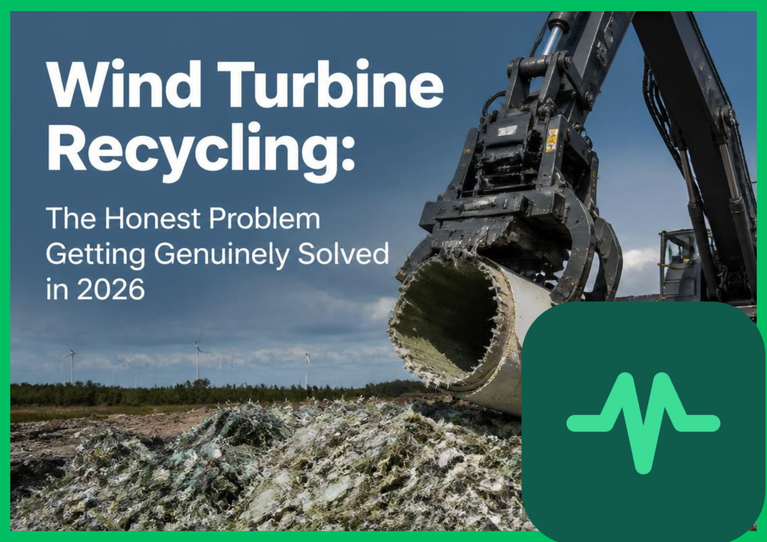
Let's talk honestly about this quiet problem, and the real progress happening now.
Why Turbine Blades Genuinely Created Such a Real Problem
Wind turbine blades are genuinely built from composite materials, strong, lightweight, and durable, but genuinely difficult to break down or recycle using traditional methods. For years, retired blades genuinely had nowhere to go except landfills, creating an honest, uncomfortable contradiction for an industry built on sustainability.
What's Genuinely Different in 2026
New recycling technologies have genuinely emerged this year, specifically designed to break down these composite blade materials into reusable components. Several facilities have genuinely moved from experimental testing into real, operational recycling capacity.
This shift genuinely matters. It's the difference between an industry acknowledging a problem and genuinely solving it.
How Wind Turbine Recycling Actually Works Now
New processes genuinely use specialized techniques to separate and recover materials from old blades, turning them into raw components usable in new products, from construction materials to genuinely new turbine parts themselves.
This creates a genuinely more complete lifecycle for wind energy infrastructure, rather than a clean beginning followed by a genuinely dirty ending.
Why This Genuinely Matters for the Industry's Credibility
Critics have genuinely pointed to blade waste as a real, valid weakness in wind energy's environmental story. Solving this problem genuinely strengthens the industry's credibility, addressing honest criticism rather than dismissing it.
Why Manufacturers Are Genuinely Designing for This Now
Beyond fixing old blades, manufacturers have genuinely started designing new turbines with recycling in mind from the very start. This forward-thinking approach genuinely means future retirement will be far easier than what older turbines genuinely face today.
Why This Feels Like Genuine, Honest Accountability
There's something genuinely reassuring about watching an industry confront its own real weaknesses rather than ignoring them. Wind turbine recycling progress in 2026 reflects genuine accountability, not just convenient marketing.
The Honest Scale Challenge Still Remaining
Let's be fair about real hurdles. Thousands of turbines built years ago genuinely still need retirement and recycling solutions. New technology genuinely helps, but processing this existing backlog will genuinely take continued, sustained effort.
Why This Matters for Communities Near Wind Farms
Local communities living near aging wind farms genuinely benefit from knowing retired turbines won't simply become permanent landfill waste. This genuinely eases legitimate concerns some residents have voiced for years.
What Comes Next for This Effort
Expect recycling capacity to genuinely expand further as more facilities come online, gradually working through the backlog of aging turbines while newer, recyclable-by-design models genuinely enter service.
Common Questions
Why couldn't wind turbine blades genuinely be recycled before?
Their composite materials were genuinely difficult to break down using older recycling methods.
Has this problem genuinely been solved now?
Real progress has genuinely happened in 2026, though processing the full backlog of older turbines remains ongoing work.
Are new turbines genuinely designed differently?
Yes, many manufacturers now genuinely design with future recycling in mind from the start.
Final Thoughts
Wind turbine recycling in 2026 represents genuine, honest progress on a real weakness the industry has long faced. Solving this problem genuinely strengthens wind energy's claim to being a truly sustainable technology.

Comments (0)
Login to leave a comment.
No comments yet. Be the first to share your thoughts!