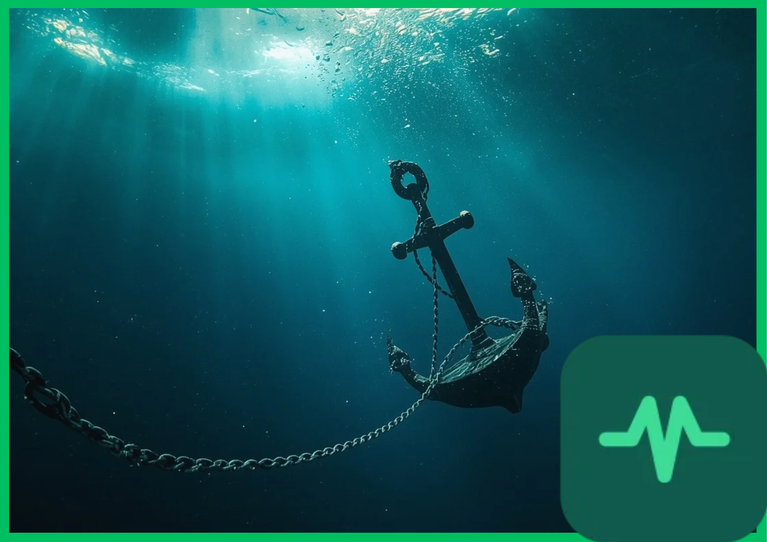
You look out across the endless blue expanse of the open ocean.
Whitecaps roll across the water under a stiff, howling gale.
You feel the raw, untamed power of the sea.
Far out on the horizon, powerful winds sweep across deep waters with breathtaking force.
Those deep-sea winds are stronger, steadier, and more reliable than any breeze blowing near the shoreline.
For generations, offshore wind energy faced a stubborn physical limit.
Traditional wind turbines were bolted directly to the seabed.
Engineers could only build fixed-foundation turbines in shallow coastal waters where the ocean floor sat less than 60 meters or 200 feet deep.
As soon as the continental shelf dropped off into deep water, building fixed steel towers became impossible.
We left vast, windy ocean territories completely untapped.
We cannot build a fully decarbonized energy future while ignoring the richest wind resources on our planet simply because the water is too deep.
What if a giant wind turbine could float on the open ocean like a giant ship?
What if heavy-duty mooring lines could anchor that floating tower securely against ferocious deep-sea storms?
A quiet, brilliant maritime revolution is riding the waves across the globe.
According to global renewable energy reports from the International Energy Agency (IEA), marine protection frameworks from the United Nations Environment Programme (UNEP), efficiency benchmarks from ENERGY STAR, and academic ocean engineering research, floating offshore wind turbine moorings are changing our clean energy horizon.
By anchoring massive floating turbine platforms deep out at sea using high-strength tension lines, we capture powerful winds in deep waters previously out of reach.
Here is how floating wind moorings work, why deep-water energy extraction changes maritime economics, and how anchoring the deep secures our sustainable future.
The Shallow-Water Trap of Fixed Wind Foundations
To understand why floating wind moorings matter so much, you have to look at the physical limits of traditional offshore wind farms.
For decades, offshore wind pioneers drove massive steel monopiles straight down into the sandy ocean floor in shallow coastal waters.
That fixed approach worked well near shore.
Yet shallow coastal waters are often crowded with shipping lanes, fishing grounds, and coastal communities that object to visible turbines on the horizon.
Furthermore, shallow winds are often weaker and more turbulent than deep-ocean gales.
Physics reveals an exciting truth.
Over 80% of total offshore wind energy potential sits in deep waters where the ocean floor drops beyond the reach of fixed towers.
Skeptics once argued that placing multi-megawatt wind turbines on floating ocean platforms was too dangerous, claiming that ocean waves and hurricane-force gales would snap the towers in half.
Marine engineers and naval architects proved the skeptics wrong.
You do not need to bolt a turbine to the seabed if you design a floating platform that rides the waves like a resilient ship.
What Is a Floating Wind Mooring System?
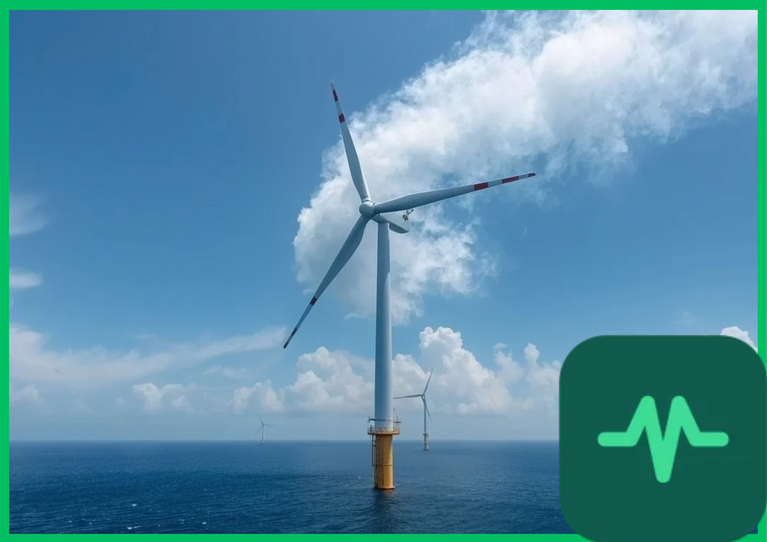
A floating wind mooring system is an advanced marine engineering network of buoyant subsea platforms, massive steel or concrete ballast hulls, and high-strength synthetic or steel tether lines anchored securely to the ocean floor, holding a multi-megawatt wind turbine upright against ferocious deep-sea winds and waves.
Instead of resting on a rigid steel tower fixed to the sea floor, the turbine floats.
The system operates through brilliant maritime physics:
- Buoyant Hull: The massive wind turbine mounts on top of a large triangular or cylindrical floating platform filled with air and water ballast to keep its center of gravity low.
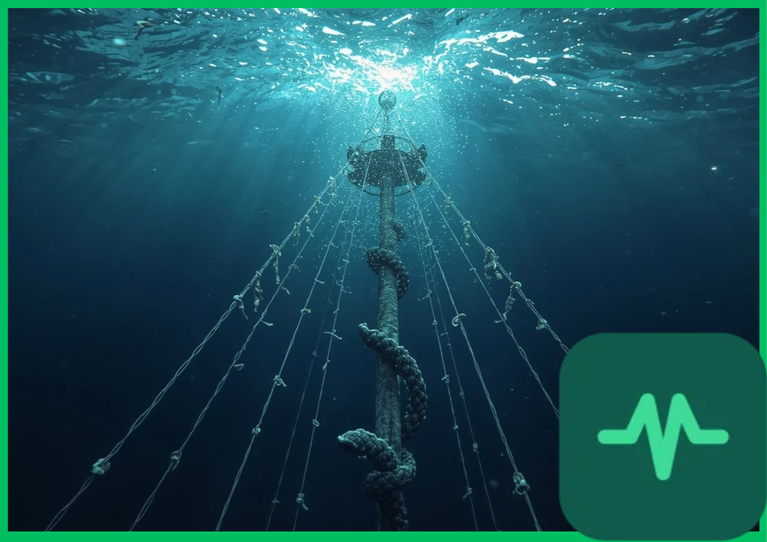
- Subsea Tethers: Heavy synthetic fiber ropes or steel chain lines connect the floating corners of the platform down to heavy suction anchors or pile anchors driven deep into the seabed.
- Wave Compliance: When ocean waves roll past, the floating platform moves slightly with the water, absorbing the brutal dynamic forces rather than fighting them rigidly.
- Electrical Transmission: Flexible submarine power cables snake down from the floating platform along the seabed, transmitting clean electricity back to shore.
The turbine stays upright, spinning smoothly while riding the deep ocean swells.
The Science of Hydrodynamics and Tension Dynamics
How can a towering wind turbine stay stable and generate clean electricity while floating on top of rolling ocean waves?
It comes down to hydrodynamics, ballasting physics, and tension leg mechanics.
Academic ocean engineering research shows that floating platforms use three main stabilization designs: spar buoys that act like heavy vertical pendulums, semi-submersible platforms with wide water-plane footprints, and tension-leg systems held down by taut vertical lines.
When gale-force winds push against the spinning blades high above the water, the subsea mooring lines maintain steady counter-tension, preventing the platform from tipping over.
Furthermore, because deep-sea winds blow faster and smoother than shallow coastal breezes, floating turbines generate up to 40% more electricity than fixed-bottom turbines of the same capacity.
According to ENERGY STAR and international marine efficiency evaluations, advanced electrical power management systems on floating platforms optimize generation efficiency while enduring millions of grueling wave cycles.
Engineering tames the open sea.
Environmental Integrity and Marine Ecosystem Protection
The environmental benefits of floating offshore wind turbine moorings extend far beyond generating massive amounts of clean electricity in deep waters.
They offer a surprisingly gentle touch on marine ecosystems.
According to UNEP marine protection frameworks, because floating platforms are installed far offshore away from delicate coastal fish nurseries and bird migration lanes, they minimize ecological disruption.
In fact, the underwater subsea anchor structures and mooring lines often act as artificial reefs, providing safe shelter for fish, coral growth, and marine life.
According to IEA clean energy roadmaps, scaling up floating wind technology is an absolute necessity to achieve global net-zero carbon targets and supply clean electricity to coastal nations worldwide.
When humanity learns to harvest the boundless winds of the deep ocean safely, our clean energy supply becomes limitless.
Overcoming Installation and Deep-Water Maintenance Realties
Scaling floating offshore wind turbine moorings from pioneering deep-water prototypes into massive commercial power farms involves navigating real-world maritime hurdles.
Building and towing giant floating platforms out to deep-water sites requires specialized heavy-lift crane vessels, experienced offshore marine crews, and durable corrosion-resistant materials that survive decades in salty seawater.
Naval architects and offshore energy developers solve these challenges by assembling floating wind platforms inside sheltered coastal harbors before towing them out to sea using tugboats, reducing costly offshore construction labor.
As maritime supply chains mature and global port facilities upgrade to handle floating wind assembly, moorings are transitioning successfully from experimental deep-sea test sites into operational commercial power plants worldwide.
Anchoring Our Future Toward a Sustainable Planet
Floating offshore wind turbine moorings prove that human engineering can conquer the deepest, wildest waters on Earth to power our clean energy transition.
We no longer have to accept that harvesting wind energy requires shallow coastal waters and rigid fixed towers.
By anchoring buoyant floating platforms securely to the seabed with high-strength mooring lines, we tap powerful deep-sea winds that were once completely out of reach.
We step away from geographical limits, embracing a resilient, deep-water standard of renewable power generation.
Through brilliant naval architecture, rigorous academic research, and a deep respect for our planetary oceans, anchoring the deep secures a clean, boundless, and sustainable future for every community on Earth.
Comments (0)
Login to leave a comment.
No comments yet. Be the first to share your thoughts!