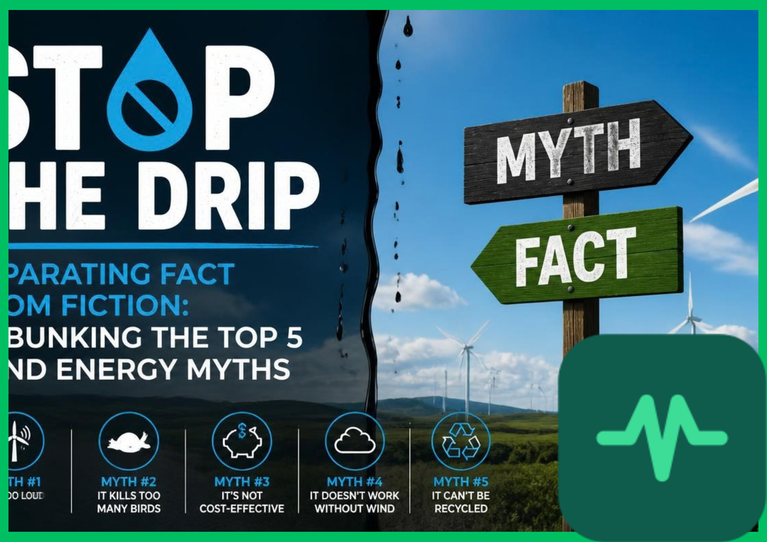
Yet, despite their growing popularity, wind turbines are still surrounded by a storm of controversy.
If you spend any time browsing social media or talking with neighbors about renewable energy, you have likely run across some terrifying claims. You might have heard that turbines make people sick with low-frequency noise, that they destroy local bird populations, or that they completely fail the moment the breeze stops blowing. These stories spread quickly because fear is highly contagious.
For everyday consumers trying to understand their energy future, separating genuine environmental concerns from fiction can feel impossible. Let us peel back the rumors and look directly at the real engineering and scientific data to bust the top five myths surrounding wind energy.
Myth 1: Wind Turbines Are Intolerably Loud
One of the most persistent concerns for people living near potential wind projects is the fear of constant, maddening noise. Critics often paint a picture of turbines sounding like jet engines roaring directly over your house, destroying the peace and quiet of rural life.
The reality of wind turbine noise reality is much quieter than the rumors suggest.
Modern wind engineering has made massive leaps forward over the last few decades. The aerodynamic design of turbine blades is highly sophisticated, shaped specifically to slice through the air with minimal friction and noise.
If you stand directly beneath a commercial wind turbine, you will hear a soft, steady whishing sound as the blades pass by. However, nobody lives directly underneath a commercial turbine. By the time you move back to a standard residential distance—typically about 300 meters or 1,000 feet away—the sound of the turbine drops to roughly 40 decibels.
To put that into perspective, 40 decibels is quieter than the hum of a modern kitchen refrigerator. It is softer than a quiet conversation in a library. In most environments, the natural sound of the wind blowing through nearby trees and grass is completely loud enough to mask the turbine entirely.
Myth 2: They Are a Leading Threat to Birds and Wildlife
It is a painful image to consider: pristine, green energy machines cutting down birds and destroying local ecosystems. This argument is frequently used by opponents to claim that wind power actually harms the environment more than it helps.
While it is true that birds occasionally collide with spinning blades, looking at the data reveals that this concern is heavily distorted.
According to comprehensive wildlife studies, wind turbines are responsible for a tiny fraction of human-caused bird deaths. Statistically, for every single bird killed by a wind turbine, thousands die from colliding with standard glass windows on houses and skyscrapers. Domestic cats, vehicles, and traditional fossil-fuel power plants pose vastly larger threats to bird populations.
Furthermore, the industry is not sitting idle. Engineers and biologists are actively working together to build safer infrastructure. Many modern wind farms now use advanced camera systems and radar technology to scan the skies. If a large flock of migratory birds approaches the area, the system automatically slows down or pauses the turbines until the birds pass safely. Simple tweaks, like painting a single turbine blade black, have also been shown to help birds see the moving structures much better, reducing collisions significantly.
Myth 3: Wind Power is Unreliable Because the Wind Stops
The core argument against wind power usually focuses on weather variability. Critics love to say, "What happens when the wind stops blowing? Do our lights simply turn off?" They argue that a power source dependent on the weather can never support a modern society.
This myth stems from a basic misunderstanding of how wind turbines work on a macro level.
No energy grid relies entirely on a single wind turbine in a single backyard. Wind networks are spread out across massive geographical areas, spanning hundreds of miles or kilometers. While the air might be completely still in one valley, a storm could be creating intense breezes over a mountain range or out at sea just an hour away. By linking these diverse regions together through a shared electrical grid, the system balances itself out smoothly.
Additionally, the clean energy grid of today is incredibly smart. Wind power works hand-in-hand with large-scale battery storage facilities, hydroelectric power, solar arrays, and other reliable baseload energy sources. When the wind blows hard, excess energy is captured and stored inside massive grid batteries. When the air settles, that stored power is fed back into the system instantly, ensuring your refrigerator stays cold and your lights stay on without a single hiccup.
Myth 4: Turbines Consume More Energy to Build Than They Ever Produce
This is a classic piece of green energy misinformation. The claim states that the massive amount of steel, concrete, and energy required to mine, manufacture, transport, and install a giant turbine outweighs any clean electricity the machine will generate during its lifespan.
Engineers have studied this exact life-cycle math extensively, and the results are incredibly clear.
A typical commercial wind turbine pays off its entire carbon footprint and manufacturing energy investment within six to nine months of continuous operation. Once that brief initial investment period is cleared, the turbine spends the remaining 20 to 25 years of its operational life producing entirely emission-free, clean electricity. Very few industrial machines can boast such a massive net-positive return on energy investment.
Myth 5: Wind Power is Only Viable in a Few Rare Places
Many people assume that wind energy is a niche technology that only works on distant mountain peaks or stormy coastal cliffs. They believe it is impractical for the vast majority of communities around the world.
Thanks to modern technology, this assumption is completely outdated.
Early wind turbines needed incredibly strong, predictable gales to generate power efficiently. Today’s machines are completely different. Modern turbines are much taller, allowing them to reach high into the atmosphere where wind currents are significantly stronger and more consistent. Their longer, lighter blades can harvest energy from incredibly gentle breezes that older models would have ignored entirely.
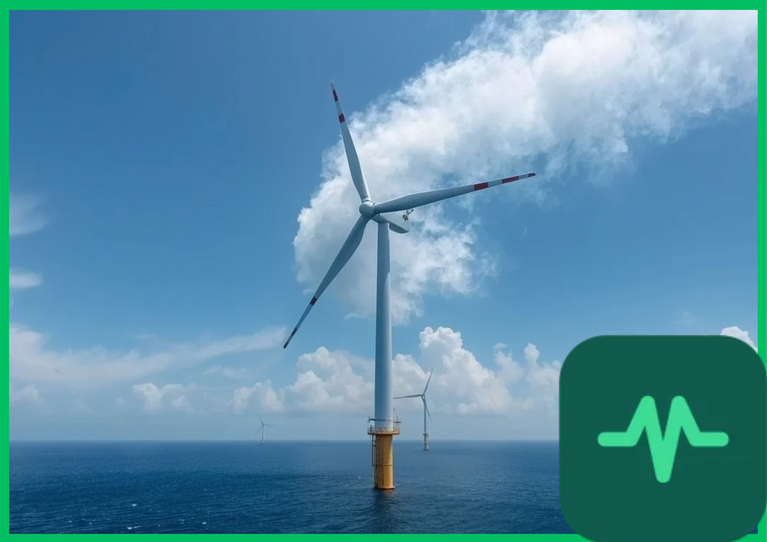
This technological evolution means that wind power is expanding rapidly into regions that were once considered completely unviable. From flat agricultural plains to deep offshore ocean installations, wind energy is proving to be a highly versatile global asset.
Embracing a Fact-Based Future
Confronting green energy misconceptions with hard data is essential for moving forward together. Wind energy isn't perfect, and every infrastructure project requires careful planning and community input. But dragging along old myths only holds us back from building a cleaner world. By understanding the real science behind these machines, we can make informed choices that protect our planet, lower our bills, and secure our energy future
Comments (0)
Login to leave a comment.
No comments yet. Be the first to share your thoughts!