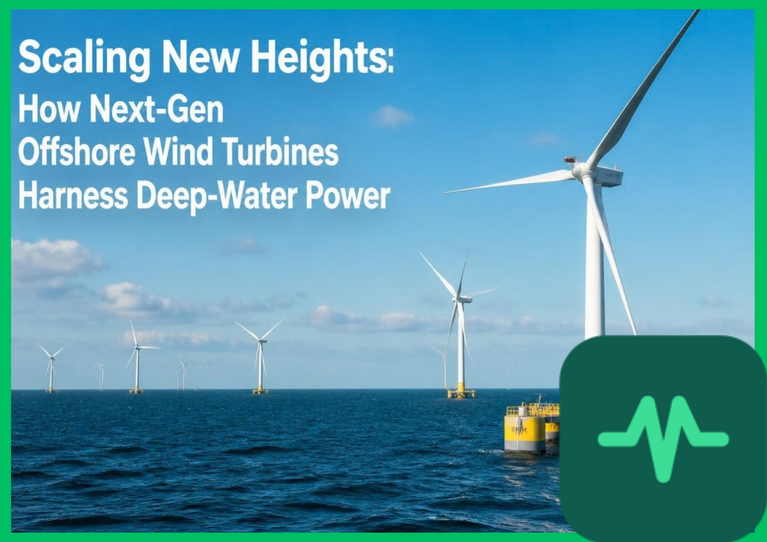
You feel the steady, powerful ocean breeze whipping past your face.
Out on the open ocean, winds blow stronger, steadier, and more reliably than they ever do over land.
For decades, wind energy generation was restricted to shallow coastal waters where massive steel towers could be driven directly into the seabed.
That geographic limitation is vanishing.
Wind energy engineering is scaling up rapidly with taller towers, larger rotors, and groundbreaking floating foundation technologies.
Modern offshore wind turbines are unlocking vast clean energy potential in deep waters.
Here is how next-generation offshore wind technology is harnessing deep-water power to feed global grids.
The Advantage of Open-Ocean Winds
To understand the push toward deep-water wind, you have to look at atmospheric physics.
Land-based wind turbines face friction as wind blows across hills, forests, and buildings, creating turbulence and slowing wind speeds down.
On the open ocean, there are zero physical obstacles to slow the wind down.
Ocean winds blow with incredible consistency and strength, turning offshore turbines into high-capacity power generators.
Furthermore, offshore wind farms avoid the land-use conflicts and zoning hurdles that frequently slow down onshore renewable projects.
However, building wind turbines in the middle of the ocean introduces extreme engineering challenges.
Overcoming Depth with Floating Foundations
Traditional offshore wind turbines are fixed-bottom structures. Construction workers drive massive steel monopiles deep into the ocean floor in shallow coastal waters—typically depths under 60 meters (200 feet).
Over 80% of the world's offshore wind potential sits in deep waters exceeding that depth, where fixed-bottom foundations are physically and economically impossible.
To tap into that deep-water potential, engineers developed floating wind technology.
A floating offshore wind turbine mounts a massive multi-megawatt turbine onto a buoyant steel or concrete platform.
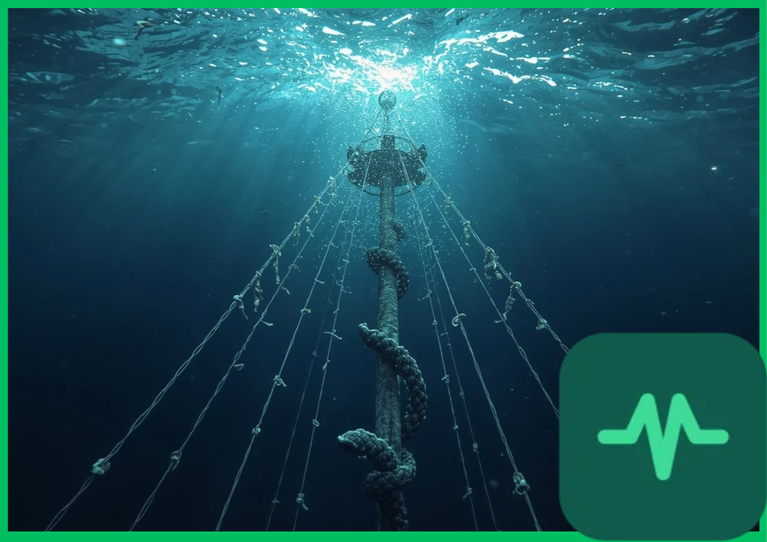
That floating platform is anchored securely to the ocean floor using heavy taut synthetic mooring lines and massive drag-embedment anchors, allowing the turbine to ride safely atop deep ocean swells while generating clean power.
Scaling Up: Taller Towers and Wider Rotors
Next-generation offshore turbines are engineering behemoths.
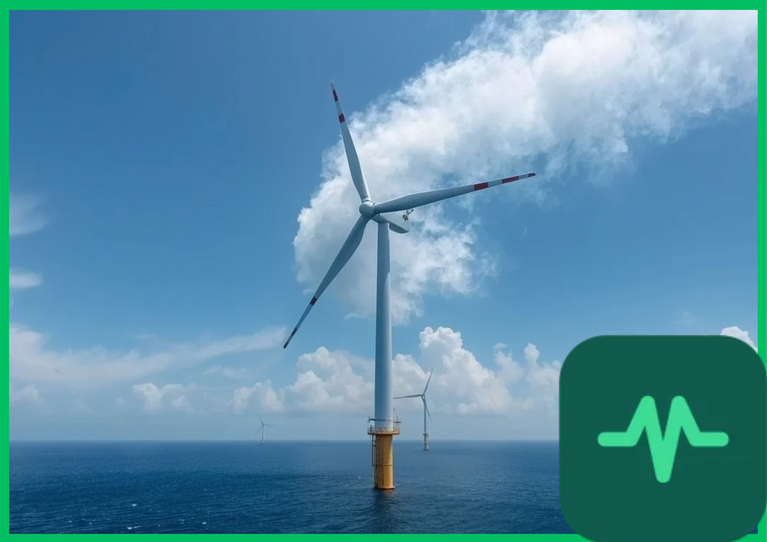
Modern offshore blades stretch longer than a standard football field, sweeping across massive areas of open air to capture every possible unit of kinetic wind energy.
Towers stand taller than 200 meters (650 feet) above sea level, reaching high into the atmosphere where wind speeds are strongest.
This massive physical scaling increases individual turbine capacity significantly, with single offshore units generating up to 15 to 20 megawatts of clean electricity.
Fewer turbines are needed to power entire cities, driving down the levelized cost of offshore wind energy globally.
Powering Coastal Megacities
Offshore wind energy provides a vital energy source for coastal megacities worldwide.
By placing massive clean power generation sites directly offshore, transmission losses are minimized as electricity flows straight into coastal population centers.
As floating foundation technology matures and manufacturing scales up globally, deep-water offshore wind is emerging as a cornerstone of our zero-carbon future.
Comments (0)
Login to leave a comment.
No comments yet. Be the first to share your thoughts!