You tilt your head back and look up at the horizon.
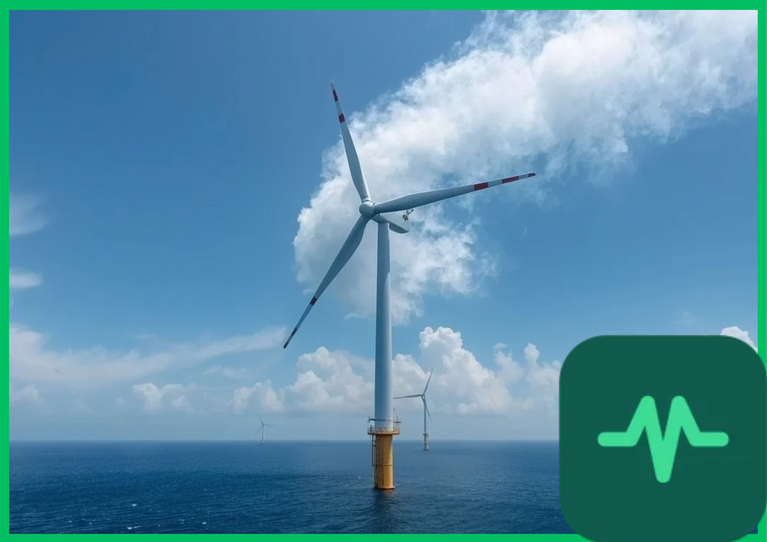
Towering white wind turbines spin slowly against the clouds, their massive blades slicing through the air with a steady, low hum.
They look like giants guarding the landscape.
Those giant steel towers generate incredible amounts of clean electricity, helping power our homes and businesses without burning a single drop of fossil fuel.
Yet ground-based wind turbines face a frustrating physical limit.
They are bolted to the ground.
As you climb higher into the atmosphere, winds blow stronger, steadier, and faster.
Traditional towers can only reach heights of roughly 150 meters to 200 meters or 500 feet to 650 feet.
Billions of kilowatt-hours of clean wind energy rush overhead every single day, completely out of reach.
We cannot build a fully decarbonized energy future while leaving the vast majority of sky-high wind power untouched.
What if we could send our wind generators flying into the upper atmosphere like kites?
What if tethered wings could tap the powerful, constant winds high above the clouds?
A quiet, brilliant technological revolution is soaring into the skies across the globe.
According to global renewable energy reports from the International Energy Agency (IEA), resource protection frameworks from the United Nations Environment Programme (UNEP), efficiency benchmarks from ENERGY STAR, and academic aerospace research, airborne wind energy systems tethered kites are changing our clean energy horizon.
By flying automated tethered gliders high into the atmosphere where winds blow twice as fast, we capture clean energy that traditional towers can never reach.
Here is how airborne wind power works, why high-altitude wind generation changes energy economics, and how flying turbines secure our sustainable future.
The Height Limit of Traditional Wind Towers
To understand why airborne wind energy matters so much, you have to look at the engineering limits of conventional wind turbines.
Building a ground-based turbine taller than 200 meters or 650 feet becomes exponentially expensive and structurally difficult.
Giant steel towers require massive concrete foundations sunk deep into the earth.
Transporting blades the length of football fields across rural roads demands specialized trucks and massive cranes.
Meanwhile, physics reveals a secret about the atmosphere.
Wind speed increases dramatically the higher you go.
At altitudes between 300 meters and 500 meters or 1,000 feet and 1,600 feet, winds blow with triple the energy density found near the ground.
Skeptics once argued that flying tethered generators was too risky, complicated, and vulnerable to stormy weather.
Aerospace engineers and renewable energy pioneers proved the skeptics wrong.
You do not need massive steel towers to catch the wind if you let the wind turbine fly.
What Is an Airborne Wind Energy System?
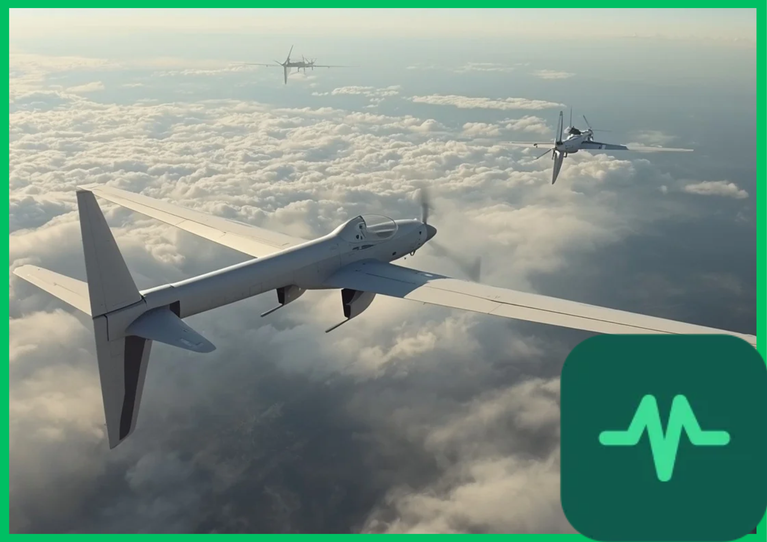
An airborne wind energy system is an advanced renewable power generator that uses a tethered aircraft, kite, or flying wing to capture high-altitude winds, converting aerodynamic lift into electricity either through onboard turbines or by pulling a ground-based tether drum.
Instead of anchoring a heavy turbine to a concrete tower, the system operates through smart aerial flight:
- Launch: The autonomous flying wing lifts off from a small ground station using its own onboard propellers or a mechanical launcher.
- Crosswind Flight: Once it reaches cruising altitude—typically 300 meters to 500 meters or 1,000 feet to 1,600 feet—the aircraft flies fast, looping figure-eight patterns across the sky.
- Energy Generation: The strong high-altitude wind pulls fiercely against the ultra-strong tether, spinning a ground-based generator drum or driving small onboard turbine propellers.
- Landing & Storage: When wind conditions calm or weather turns severe, the autonomous system reels itself back down to its ground station for safe storage.
The entire flight path is controlled by automated onboard computers that adjust wing angles in real time to maximize electrical output.
The Science of Atmospheric Physics and Material Efficiency
How can a lightweight tethered kite generate as much electricity as a massive steel wind turbine tower?
It comes down to aerodynamic lift and cube-law wind physics.
Academic aerospace research shows that wind power scales with the cube of wind speed, meaning that if wind velocity doubles, the available energy multiplies eightfold.
Because high-altitude winds blow much faster and steadier than ground-level breezes, airborne systems harvest immense amounts of power from a fraction of the physical material.
An airborne wind turbine uses up to 90% less steel and concrete than a traditional ground-based turbine of equivalent capacity.
Furthermore, ENERGY STAR and international industrial efficiency evaluations show that modular, transportable ground stations pack easily into standard shipping containers, allowing energy developers to deploy wind power to remote islands, mountainous terrain, and offshore waters where building massive towers is impossible.
Technology goes light. Energy production goes high.
Environmental Integrity and Global Land Stewardship
The environmental benefits of airborne wind energy systems extend far beyond lowering manufacturing costs or capturing high-altitude breezes.
They offer a remarkably gentle footprint on the natural landscape.
According to UNEP resource governance frameworks, because airborne kites occupy the open sky rather than massive tracts of land, farming and grazing can continue uninterrupted directly beneath operating systems.
When wind energy requires minimal concrete foundations and zero heavy earth-moving equipment, local ecosystems remain undisturbed.
According to IEA clean energy roadmaps, scaling up high-altitude wind generation is a vital pillar to diversify global renewable portfolios and balance variable solar generation.
When humanity learns to harvest the boundless winds of the upper atmosphere, our entire civilization gains access to clean, limitless power.
Overcoming Airspace and Autonomy Realties
Scaling airborne wind energy systems from pioneering flight tests into commercial power grids involves navigating real-world airspace and regulatory hurdles.
Flying tethered aircraft requires close coordination with aviation authorities to ensure skies remain safe for commercial air traffic.
Engineers and aviation regulators solve this challenge by establishing restricted geo-fenced airspace zones, equipping flying wings with redundant backup power supplies, and programming fail-safe emergency landing protocols that reel kites home instantly if communication fails.
As autonomous flight software matures and global aviation standards adapt to clean technology, airborne wind power is transitioning successfully from experimental aviation test sites into operational renewable energy plants worldwide.
Flying Our Way Toward a Sustainable Future
Airborne wind energy systems prove that human engineering can look beyond traditional boundaries to unlock the true power of our natural world.
We no longer have to accept that harvesting wind energy requires building gigantic steel towers anchored heavily to the earth.
By sending automated tethered wings soaring high into the upper atmosphere, we tap steady, powerful winds that traditional turbines can never reach.
We step away from structural limitations, embracing a light, agile, and enduring standard of renewable energy generation.
Through brilliant aerospace engineering, rigorous academic research, and a deep respect for our planetary atmosphere, flying turbines secure a clean, high-reaching, and sustainable future for every community on Earth.

Comments (0)
Login to leave a comment.
No comments yet. Be the first to share your thoughts!