Leaves swirl across the grass. Your hair blows across your face as a strong gust sweeps through the trees.
You look up at the sky and feel the kinetic energy rushing past.
Suddenly, a hopeful thought crosses your mind.
What if you could capture that invisible wind right here at home?
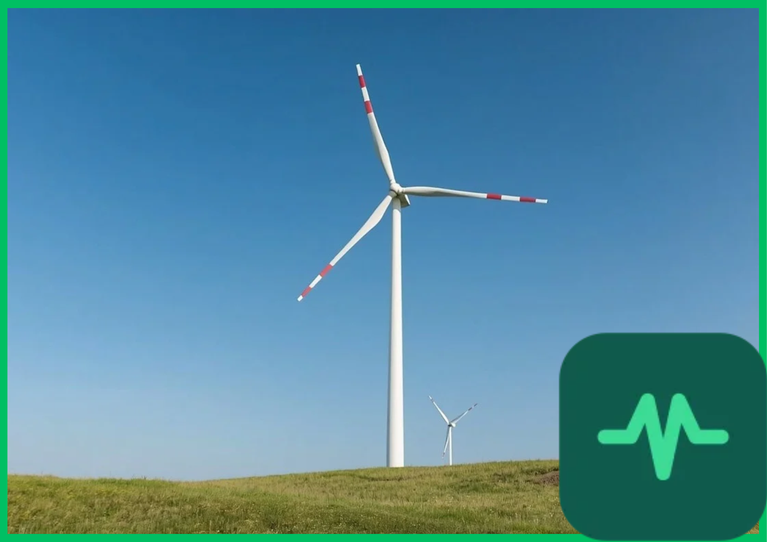
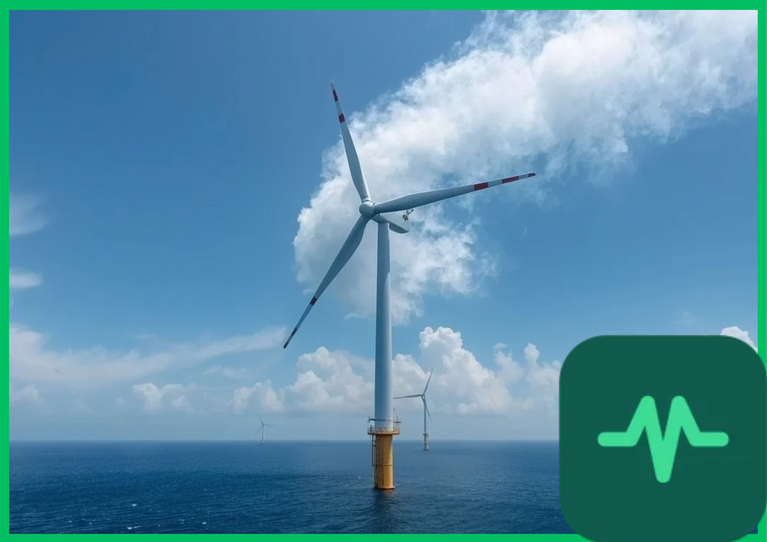
You have likely seen pictures of massive industrial wind turbines towering over rural hillsides or stretching out across the open ocean.
Those giant machines power entire towns.
Now, imagine a miniature version of that technology spinning quietly on a slender mast next to your garage or mounted securely on your roof.
The promise sounds incredible. You generate your own clean electricity, slash your monthly utility bills, and gain energy independence right from your own property.
Dreams of backyard power generation captivate homeowners across the globe.
Yet, the reality of residential wind power involves complex physics, tricky aerodynamics, and hard financial truths.
What is the actual performance of small-scale residential wind turbines?
According to global renewable energy reports from the International Energy Agency (IEA), resource protection frameworks from the United Nations Environment Programme (UNEP), appliance efficiency standards from ENERGY STAR, and academic micro-generation research, understanding urban wind dynamics cuts through the marketing hype.
By analyzing how buildings disrupt airflow, why tower height dictates success, and how micro-wind generators perform in real-world settings, we can separate attractive myths from cold facts.
Here is how small-scale wind turbines work, why backyard turbulence changes the math, and how micro-generation shapes our sustainable future.
The Dream of Domestic Wind Power
To understand why small-scale wind turbines hold such powerful emotional appeal, you have to look at the desire for personal sustainability.
Millions of homeowners install rooftop solar panels. They watch their utility meters run backward on sunny days, taking pride in producing their own clean electricity.
When people look at a windy backyard, they naturally wonder why they cannot do the same with the wind.
Manufacturers feed that desire. Sales brochures feature sleek, compact wind generators spinning effortlessly in a steady breeze, promising years of free electricity and complete grid independence.
You buy a unit, mount it to your roof or a short pole in the garden, and wait for the magic to happen.
Then, the wind blows hard, but your electrical meter barely moves.
The turbine hums quietly, yet the power output stays stubbornly low.
You feel disappointed and frustrated.
The turbine is not necessarily broken. The fundamental physics of near-surface wind just ruined the promise.
The Brutal Physics of Low-Level Wind Shear
To understand why residential wind turbines struggle, you have to look at how wind moves across the surface of the Earth.
High up in the atmosphere or out on flat open plains, wind flows smoothly and fast.
Down in suburban and urban neighborhoods, the landscape is cluttered.
Trees, houses, fences, and garages block the path of moving air.
As the wind hits these obstacles, it slows down dramatically and tumbles into chaotic, swirling patterns known as turbulence.
Academic micro-generation research proves that wind speed drops off a cliff the closer you get to the ground.
Worse still, power output does not scale linearly with wind speed; it scales cubically.
That means if wind speed drops by half, the available power drops to one-eighth of its original value.
If your backyard breeze moves at 5 meters per second (approx. 11 miles per hour) instead of the 10 meters per second (approx. 22 miles per hour) found high in the open air, your turbine generates a tiny fraction of its rated capacity.
Mounting a small wind turbine directly to a rooftop makes the problem worse.
The roof acts like a ramp, creating turbulent eddies that shake the mounting brackets, generate annoying low-frequency vibrations, and starve the turbine blades of clean airflow.
What Is a Small-Scale Residential Wind Turbine?
A small-scale residential wind turbine—often called a micro-wind generator—is a compact renewable energy system designed to produce electricity on a property scale rather than an industrial grid scale.
These units typically range in power capacity from 400 watts to 10 kilowatts, featuring either horizontal-axis blades or vertical-axis designs that catch wind from any direction.
The physical components mirror their giant industrial cousins:
- Rotor Blades: Engineered composite blades that capture kinetic energy from moving air and convert it into rotational motion.
- Generator: An internal alternator or generator that transforms mechanical rotation into electrical current.
- Tailing Vane: A directional fin that steers horizontal-axis turbines directly into shifting wind currents.
- Inverter and Battery Bank: Power electronics that convert variable generator output into stable household electricity or store excess charge in batteries.
When placed in a clean, unobstructed wind stream, these systems operate reliably.
The challenge lies entirely in finding that clean wind stream near human settlements.
Overcoming Obstacles: Height, Zoning, and Economics
Can a small-scale wind turbine ever make economic and energetic sense for a residential property?
Yes, but only under specific, demanding conditions.
According to ENERGY STAR and international micro-generation evaluations, residential wind turbines succeed only when installed on tall towers reaching at least 9 meters to 15 meters (approx. 30 feet to 50 feet) above all surrounding obstructions—well clear of rooflines and tall trees.
Achieving that height requires heavy guy-wires, secure concrete foundations, and careful navigation of local zoning laws that often restrict tall structures in residential neighborhoods.
Furthermore, the initial purchase and installation cost of a proper tower setup is substantial.
According to IEA renewable energy assessments, solar photovoltaic panels almost always deliver a higher return on investment than small-scale wind turbines in typical residential settings because solar photons are far more accessible at ground level than smooth wind currents.
UNEP resource efficiency guidelines highlight that micro-turbines excel primarily in remote, off-grid locations where utility power lines cannot reach and open, unobstructed coastal or plains winds blow consistently.
Harvesting Breezes Toward a Sustainable Future
Small-scale residential wind turbines teach us a vital lesson about matching technology to physical reality.
We no longer have to accept misleading marketing claims about rooftop power generation.
By understanding how surface friction slows the wind, why urban turbulence disrupts blade efficiency, and why proper tower height dictates success, we make informed energy choices.
We step away from disappointing rooftop experiments, embracing efficient solar and wind solutions that match our true environmental conditions.
Through honest engineering, smart site evaluation, and deep respect for atmospheric physics, small-scale wind turbines find their proper place in our global sustainable future.


Comments (0)
Login to leave a comment.
No comments yet. Be the first to share your thoughts!