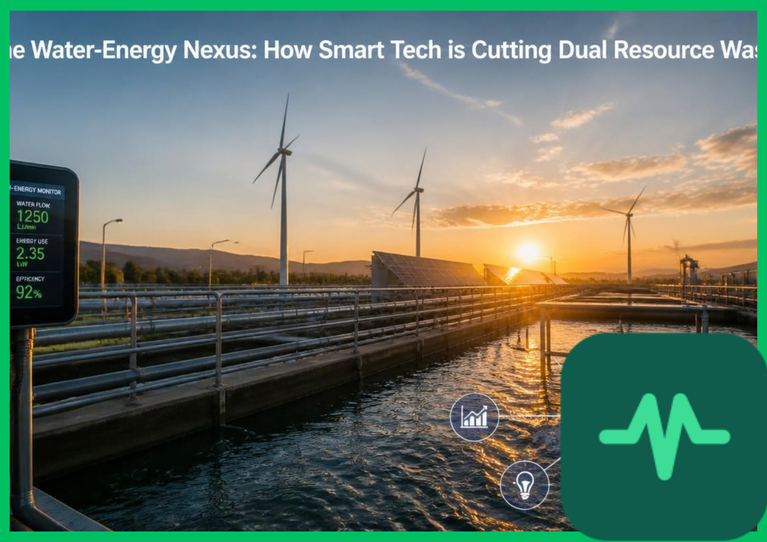
You wash your hands, brush your teeth, and walk away.
To your eyes, that clean water is simple and free-flowing. You rarely think about what it took to bring it to your home.
Behind the scenes, getting clean water out of the ground and pushing it through municipal pipes requires a staggering amount of electrical power. At the same time, generating electricity requires immense volumes of water for cooling and processing.
This hidden loop is called the water-energy nexus.
For decades, we treated water systems and energy grids as entirely separate challenges. That old separation is failing.
According to tracking data from the International Energy Agency (IEA) and the United Nations Environment Programme (UNEP), traditional water and wastewater treatment processes are intensely energy-intensive, consuming roughly 3% of global electricity.
As global water scarcity intensifies, smart technology is stepping in to cut dual resource waste and bridge the gap between water and power.
Here is how smart water-energy efficiency tech is transforming municipal infrastructure worldwide.
The Hidden Energy Cost of Clean Water
To understand why smart technology matters, you have to look at what happens inside a municipal water treatment plant.
Pumping water from deep underground aquifers, treating raw river water to make it safe for drinking, pushing it through miles of pressurized distribution pipes, and scrubbing wastewater before it returns to nature requires heavy industrial machinery.
Conventional municipal wastewater treatment processes consume approximately 0.5 to 2.0 kilowatt-hours of electricity per cubic meter of treated water (roughly 2 to 8 kilowatt-hours per 264 gallons).
When you multiply that energy footprint across millions of homes worldwide, water systems become some of the largest municipal electricity consumers on Earth.
Furthermore, energy demand for water desalination—turning seawater into drinkable fresh water—is projected to double globally over the coming years.
If we rely on legacy equipment to pump and treat water, we burn massive amounts of fossil fuels, accelerating the very climate change that causes droughts in the first place.
The Dual Crisis: Water Scarcity and Power Strains
The connection between water and energy works in both directions.
Traditional thermoelectric power plants—burning coal, natural gas, or splitting atoms in nuclear facilities—withdraw massive quantities of freshwater from rivers and lakes for cooling.
During severe summer heatwaves and droughts, water levels drop while water temperatures rise.
When cooling water gets too warm, power plants must reduce their electricity generation or shut down completely to prevent environmental damage to local ecosystems.
Water shortages literally trigger power blackouts.
Conversely, power grid failures knock out water pumping stations, leaving communities high and dry.
Protecting our quality of life requires integrated management that treats water and energy as a single, interdependent system.
Smart Tech Solutions: Sensors, AI, and Variable Speed Pumps
Modern engineering is transforming water management through digital innovation and smart automation.
Forward-thinking municipalities are deploying advanced technologies to slash resource waste:
- Smart Pressure Management: Traditional water networks operate under constant high pressure, causing aging pipes to leak millions of liters of treated water underground. Smart pressure sensors adjust pump speeds dynamically based on real-time demand, reducing leaks and saving electricity.
- Variable Frequency Drives (VFDs): Replacing legacy constant-speed water pumps with smart inverter-driven pumps allows facilities to match motor speeds precisely to water flow needs, cutting electrical energy consumption by up to 30%.
- AI-Driven Leak Detection: Acoustic sensors and machine learning algorithms monitor underground pipeline vibrations continuously, locating silent pipe ruptures before thousands of gallons of treated water escape.
Transforming Wastewater into a Clean Energy Resource
Perhaps the most exciting shift in the water-energy nexus involves rethinking wastewater entirely.
According to UNEP analyses, wastewater is no longer viewed merely as a sanitation burden; it is recognized as a valuable resource.
Modern treatment facilities capture biogas from decomposing organic sewage sludge, converting waste streams into clean thermal energy that powers the treatment plant itself.
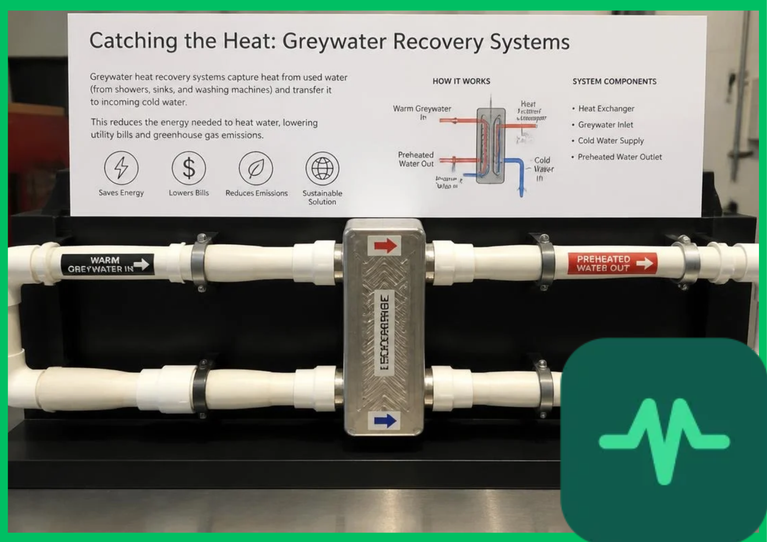
Advanced facilities also extract heat directly from raw sewage using wastewater heat exchangers, using ambient thermal energy to heat nearby residential buildings with zero fossil fuel combustion.
By recovering nutrients, generating biogas, and cutting pumping energy waste, wastewater treatment plants are transforming from net energy consumers into self-sustaining energy producers.
Securing a Resilient Resource Future
The water-energy nexus proves that we can no longer solve resource crises in isolation.
Every drop of water saved conserves electricity; every kilowatt of energy saved protects our water supplies.
By investing in smart water technologies, upgrading municipal infrastructure, and embracing integrated resource planning, we can eliminate dual waste and secure a resilient, sustainable future for communities across the globe.
Comments (0)
Login to leave a comment.
No comments yet. Be the first to share your thoughts!