The hot water washes over your shoulders. You close your eyes and feel the stress of the day melt away.
Water cascades down your body, pools around your feet, and rushes straight down the drain.
With it goes a massive amount of thermal energy.
Water that took precious electricity or gas to heat up is washed down the sewer pipe while it is still warm.
You never think twice about it.
Every single time you take a shower, run your dishwasher, or wash a load of laundry in warm water, you literally flush valuable heat down the toilet.
It flows out through your pipes and warms up underground municipal sewers.
That heat represents wasted energy and wasted money.
We work hard to make our homes energy-efficient. We seal our windows, add insulation to our attics, and install LED light bulbs.
Yet, we let gallons of warm wastewater escape every single day without capturing a single ounce of its thermal value.
That hidden waste hurts our wallets and strains our global energy resources.
We cannot build a truly sustainable home if we ignore the heat hiding in our wastewater.
A quiet, brilliant plumbing revolution is changing how we view household drainage.
According to global energy reports from the International Energy Agency (IEA), resource protection frameworks from the United Nations Environment Programme (UNEP), efficiency benchmarks from ENERGY STAR, and academic plumbing research, greywater heat recovery systems are transforming home efficiency.
By capturing thermal energy from shower drains before it escapes, we preheat incoming cold water and slash our water-heating energy consumption.
Here is how greywater recovery works, why drain water heat exchangers change household thermodynamics, and how wastewater recycling secures our sustainable future.
The Hidden Heat Flowing Down Your Drain
To understand why greywater recovery matters so much, you have to look at the daily thermodynamics of a typical household.
Water heating accounts for a massive chunk of your total monthly utility bill.
Your water heater works constantly, taking incoming water straight from cold municipal supply pipes at roughly 10°C or 50°F and heating it up to 50°C or 120°F for your shower.
That requires a major surge of energy.
The moment that hot water hits your skin in the shower, its temperature drops slightly as it washes down the drain.
By the time it disappears into the floor drain, it is still sitting at a warm 35°C or 95°F.
You paid good money to heat that water, only to watch it carry its heat straight out of your house.
Traditional plumbing treats wastewater as pure garbage to be dumped immediately.
Eco-friendly plumbing treats that wastewater as a thermal battery waiting to be tapped.
We needed a way to intercept the heat before it leaves the building.
What Is a Greywater Heat Recovery System?
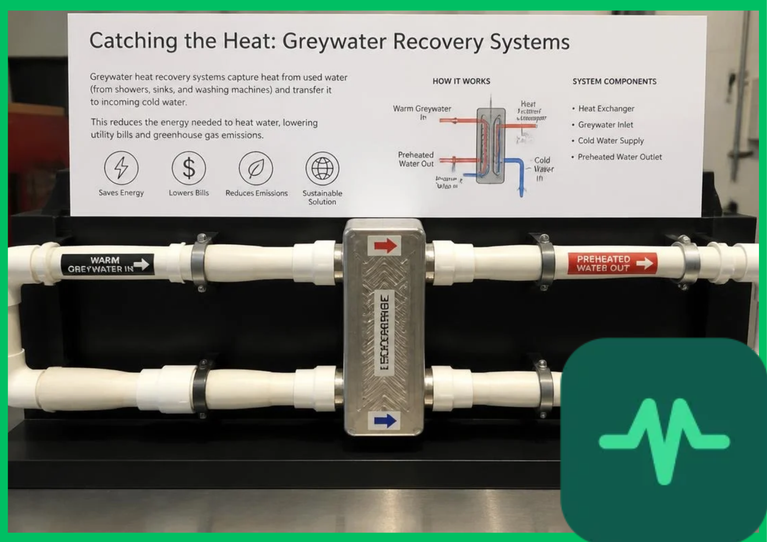
A greywater heat recovery system—often called a drain water heat exchanger—is a specialized plumbing device installed directly into the vertical waste pipes of your home, usually right beneath your shower drain.
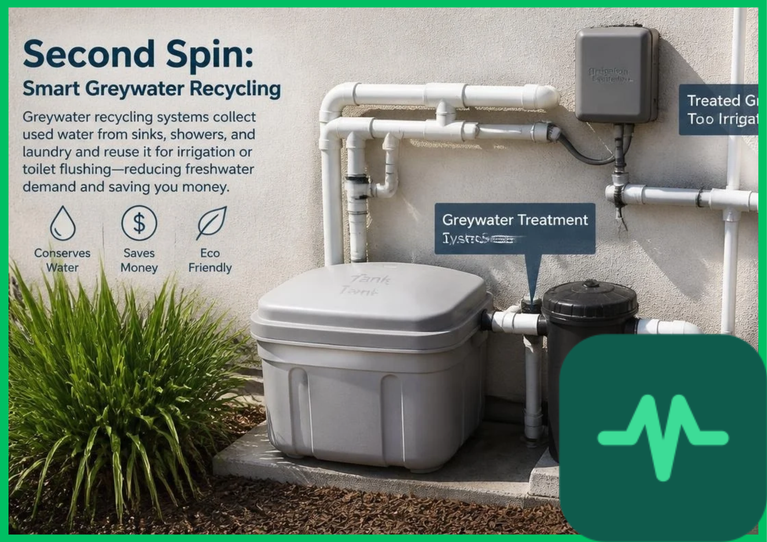
It does not filter or reuse the wastewater for drinking or washing.
Instead, it steals the heat out of the dirty water as it rushes past.
The device replaces a section of your vertical plastic drainpipe with a thick copper pipe wrapped in a separate coil of copper tubing.
As warm greywater rushes down the inside of the central copper drainpipe, it warms up the copper walls.
At the same time, incoming cold water from your municipal supply is routed through the outer copper coil on its way to your water heater.
Heat transfers instantly through the metal wall from the dirty drain water to the clean incoming water.
Your cold water gets preheated to a comfortable 25°C or 77°F before it ever reaches your water heater.
Your water heater coasts along gently, using a fraction of the energy it used before.
The Science of Simultaneous Flow and Heat Exchange
How can a simple pipe transfer heat so efficiently without mixing clean water with soapy wastewater?
It comes down to smart metallurgical engineering and simultaneous flow design.
Academic plumbing research shows that drain water heat exchangers rely on double-wall separation and counter-flow principles to guarantee absolute sanitary safety.
The dirty greywater flows down the center gravity channel. The clean potable water flows through the outer sealed coil in the opposite direction.
Because the two streams never touch, there is zero risk of contamination.
Furthermore, because people usually run the shower while warm water is actively draining, the heat exchange happens simultaneously.
You do not need a battery or a computer controller. The physics of thermal conduction work automatically the second you turn on the shower handle.
According to ENERGY STAR and international appliance efficiency evaluations, vertical greywater heat exchangers capture up to 60% to 70% of the thermal energy that would otherwise escape down the sewer.
Environmental Protection and Resource Conservation
The benefits of greywater heat recovery extend far beyond lowering your individual utility bills.
They play a vital role in global resource conservation.
Water heating is one of the largest domestic electricity consumers across the globe.
When millions of homes reduce their water-heating energy load by half, regional power grids experience a significant drop in demand during morning and evening peak hours.
According to UNEP resource sustainability frameworks, capturing thermal energy from wastewater reduces the burning of fossil fuels in regional power plants.
IEA energy transition assessments highlight that passive energy recovery systems—devices that require zero electricity to operate—represent the gold standard of sustainable engineering.
They save energy quietly day after day, year after year, with no moving parts to break and no filters to replace.
Designing Your Home for Thermal Recovery
Installing a greywater heat recovery system is easiest during new home construction or major bathroom renovations when plumbing lines are fully exposed.
Plumbers mount the vertical copper cylinder directly into the main drain stack beneath second-floor showers or basement bathrooms where gravity pulls greywater downward.
Once installed behind drywall, the system operates completely out of sight and out of mind.
It requires no maintenance, makes no noise, and quietly pays for itself through lower energy bills over a few short years.
According to real-world residential plumbing data, homes equipped with drain water heat exchangers experience a rapid return on investment while shrinking their household carbon footprints.
Catching Heat Toward a Sustainable Future
Greywater recovery systems prove that sustainability often hides in plain sight, waiting for smart engineering to unlock it.
We no longer have to accept that washing away daily comfort requires flushing valuable thermal energy down the sewer.
By capturing heat from our shower drains and preheating incoming water, we transform ordinary plumbing into an efficient energy recycler.
We step away from wasteful habits, embracing a smart, regenerative, and enduring standard of living.
Through brilliant thermal engineering, simple metallurgical design, and deep respect for our planetary resources, catching the heat secures a clean, bright, and sustainable future for every home on Earth.
Comments (0)
Login to leave a comment.
No comments yet. Be the first to share your thoughts!