That old assumption is fading fast.
Our world has changed, and so has what flows through our pipes. Microscopic threats that standard municipal treatment plants cannot always catch are turning up in water supplies globally. Ensuring you have clean drinking water at home is no longer a luxury. It has become a necessary step to protect the people you love.
Thankfully, the tools we have to clean our water are smarter than ever before. Choosing the right setup requires understanding how these systems work, what they actually remove, and how to protect your household from modern pollution.
The New Threats in Our Water
Most water systems do a great job of killing bacteria and viruses. They use chlorine or other disinfectants to make sure you do not get sick from a waterborne disease. That is a massive achievement for public health. However, modern life has introduced a completely different category of contaminants.
Microplastics Are Everywhere
It is almost impossible to escape tiny plastic particles. Recent studies show that minute pieces of degraded plastic are turning up in rivers, lakes, and oceans. Shockingly, they are also showing up in our drinking water. When you use a high-quality microplastics water filter, you put a physical barrier between these synthetic particles and your body. Without it, you are likely consuming thousands of tiny plastic fragments every single year.
Chemical Off-Gassing and Industrial Residues
Pesticides from farming, residues from manufacturing, and traces of prescription medications frequently find their way into water tables. These chemical compounds do not change the color or smell of your water. They slip through silently. Over decades, drinking even tiny amounts of these substances can impact your long-term wellness.
Aging Infrastructure
Even if water leaves a treatment plant perfectly pure, it has to travel to your house. That journey involves miles or kilometers of underground pipes. Many of these pipes are old. They can leach heavy metals like lead, rust, or copper directly into the stream before it hits your glass.
Choosing a Setup: Reverse Osmosis vs Carbon
When you start looking at home water filtration systems, the choices can feel overwhelming. The marketplace is full of technical jargon. Let us simplify things. Most effective home systems rely on two main technologies. They work very differently, and each has its own strengths.
Carbon Filtration: The Reliable Workhorse
Carbon filters work like a giant chemical sponge. They are usually made from activated charcoal, which has millions of tiny microscopic pores. As water flows through the carbon, contaminants stick to the surface of the charcoal.
- What it does best: Carbon is incredible at removing chlorine, bad tastes, odors, and organic chemicals. If your water tastes like a swimming pool, carbon will fix it instantly.
- The downside: Carbon filters cannot remove dissolved solids like heavy metals or minerals, and they can miss the absolute smallest synthetic particles.
Reverse Osmosis: The Ultimate Barrier
If you want the highest level of purity possible, you look at a system that uses a semi-permeable membrane. This process forces water under pressure through an incredibly tight screen.
- What it does best: The pores in a reverse osmosis membrane are so small that only water molecules can easily pass through. It strips away heavy metals, dissolved salts, and virtually all microplastics.
- The downside: These systems can be slower, and they naturally produce a small amount of wastewater during the cleaning process.
The debate of reverse osmosis vs carbon is not actually a competition. In reality, the best systems on the market combine both technologies. They use a carbon pre-filter to catch sediment and chlorine, then push the water through a reverse osmosis membrane for final, deep purification.
Real-World Savings and True Sustainability
People often hesitate to install home filtration because of the upfront cost. High-quality systems require an investment in hardware and routine filter replacements. However, when you look at the math, the financial and environmental benefits are striking.
Cutting the Plastic Habit
If you do not trust your tap water, your immediate alternative is often buying bottled water. This habit gets expensive incredibly fast. Buying single-use bottles means you are paying a massive premium for a plastic container and the fuel it took to ship that heavy liquid to your local store.
Filtering water right at your kitchen sink gives you the exact same purity for a tiny fraction of the cost per liter or gallon. You stop paying for packaging and start paying only for the water itself.
True Environmental Stewardship
Bottled water creates an enormous amount of plastic waste. Even if you recycle, the energy required to collect, melt down, and remanufacture that plastic is immense. Embracing sustainable water tech inside your own home eliminates that waste loop entirely. You reduce your carbon footprint and keep hundreds of plastic bottles out of landfills and oceans every year. It is a rare win-win situation where doing the right thing for your wallet also does the right thing for the planet.
Finding the Right System for Your Household
Every home is different. The right system for an apartment dweller might be completely wrong for a family living in a rural farmhouse. To find your ideal match, think about how you use water and what you are trying to fix.
Countertop and Pitcher Filters
These are the easiest systems to use. They require zero plumbing and sit right on your counter or inside your refrigerator. They are perfect for renters or individuals on a tight budget. While they are great for improving taste and removing chlorine, they have a shorter lifespan and require frequent filter changes.
Under-Sink Systems
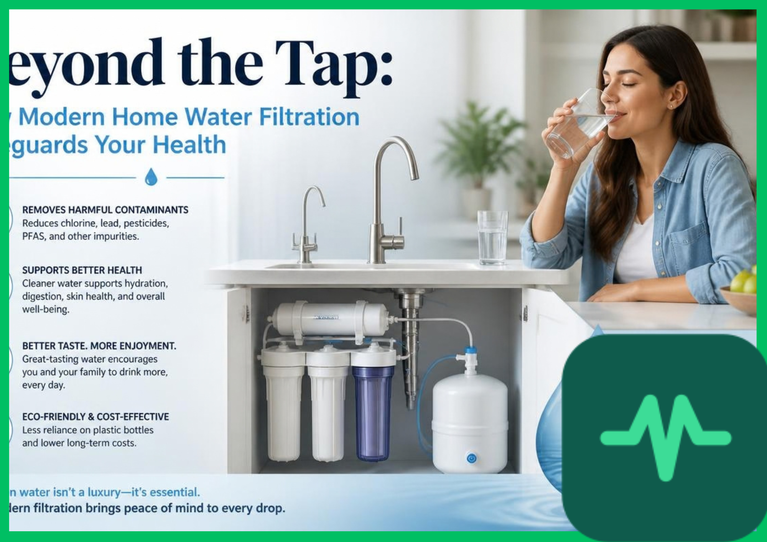
An under-sink system connects directly to your cold water line. It usually filters water through multiple stages and sends it to a dedicated small faucet on your sink. These systems are highly effective, out of sight, and only require maintenance once or twice a year. This is where you usually find high-performance reverse osmosis setups.
Whole-House Filtration
If you want to protect your entire home, a whole-house system cleans the water the moment it enters your property. This means every shower, washing machine, and tap runs on filtered water. This setup protects your plumbing and appliances from scale buildup, but it requires a larger upfront investment and professional installation.
Taking Control of Your Water
We cannot control what major industries dump into the environment. We cannot single-handedly replace the aging pipes underneath our cities overnight. It is easy to feel powerless when reading about environmental pollution and microplastics.
Investing in your home's water quality is a way to take that power back. It is a conscious, deeply caring choice to protect your health and the health of your family. When you turn on your tap and fill a glass, you should feel complete peace of mind. By choosing a system that fits your lifestyle, you ensure that every sip you take is pure, safe, and truly refreshing.
Comments (0)
Login to leave a comment.
No comments yet. Be the first to share your thoughts!