However, that durability is our greatest curse. Here is why. Petroleum-based plastics do not degrade. They fragment into smaller and smaller pieces, persisting in soil, rivers, and oceans for hundreds of years.
We cannot recycle our way out of the global plastic crisis. We need a fundamental change in material science.
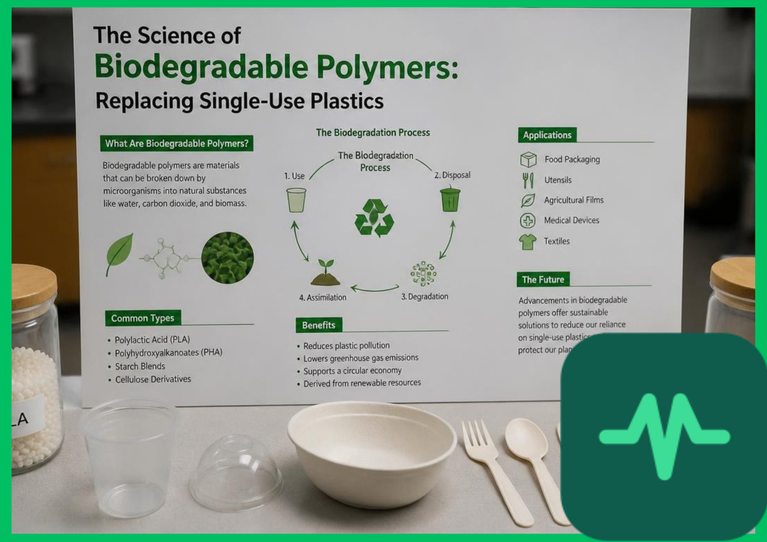
Scientists are engineering biodegradable polymers to replace persistent single-use plastics.
Here is how plant-based materials are closing the loop on waste.
The Persistence of Petrochemical Plastics
Traditional plastics are polymers—long chains of carbon and hydrogen atoms forged from petroleum.
Because these synthetic chemical bonds do not exist in nature, microorganisms and fungi lack the biological tools to break them down.
When a plastic bottle or food wrapper is thrown away, it stays intact indefinitely, floating in ocean gyres or breaking down into microscopic particles that enter human and animal food chains.
Recycling helps, but complex multi-layer food packaging is notoriously difficult and expensive to process, meaning the vast majority of plastic waste still ends up in landfills or incinerators.
To solve plastic pollution, we had to invent materials that nature knows how to digest.
Engineering Plant-Based Polymers
Biodegradable polymers are plastics engineered from renewable biomass rather than fossil fuels.
Common feedstocks include corn starch, sugarcane, cassava roots, cellulose from wood pulp, and microbial fermentation broths.
Material scientists rearrange these natural sugar and starch molecules into polymer chains that mimic the flexibility, strength, and clarity of traditional plastic packaging.
When a biodegradable polymer product is discarded into a proper composting environment, microorganisms recognize the natural organic bonds. Fungi and bacteria consume the material, breaking it down completely into water, carbon dioxide, and rich organic compost within weeks or months.
Industrial Composting vs. Natural Degradation
Understanding how biodegradable polymers work requires looking closely at disposal conditions.
Not all compostable plastics degrade in a backyard garden compost bin. Many advanced bio-polymers require the controlled high temperatures, specific moisture levels, and active microbial communities found in industrial composting facilities to break down rapidly.
Material scientists are actively refining formulas to ensure that next-generation polymers degrade safely even in home composters or natural marine environments, preventing accidental litter from lingering in ecosystems.
Closing the Loop on Packaging Waste
The transition to biodegradable polymers represents a crucial step toward a truly circular economy.
By replacing persistent single-use packaging with materials that return safely to the earth, we eliminate a major source of global environmental pollution.
Technology should serve human needs without leaving permanent toxic scars on our planet. Through the science of biodegradable polymers, we are building packaging that serves its purpose and then returns gracefully to nature.
Comments (0)
Login to leave a comment.
No comments yet. Be the first to share your thoughts!