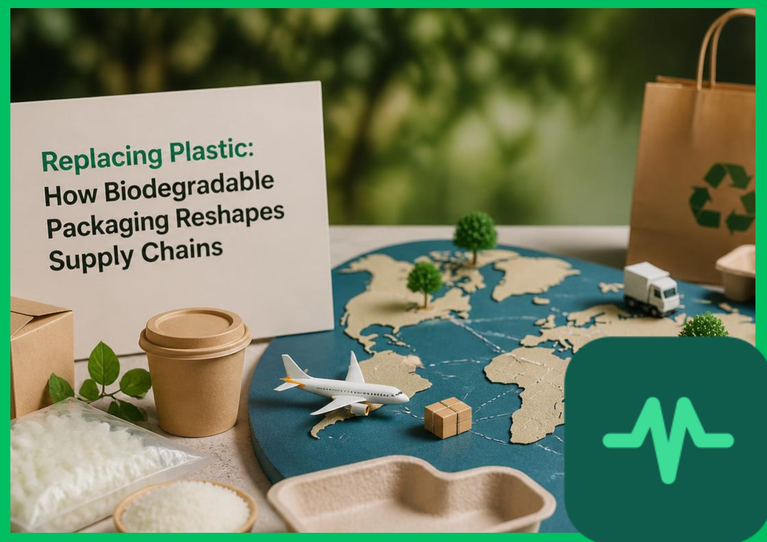
You finish unboxing, and you are left with the packing material.
Traditionally, that moment triggers a familiar dilemma. You hold a piece of rigid foam or plastic wrap that will sit unchanged in a municipal landfill or natural ecosystem for hundreds of years.
For decades, modern commerce ran on a simple rule: packaging had to be durable, lightweight, and virtually indestructible.
That durability turned out to be a planetary curse.
According to environmental assessments from the United Nations Environment Programme (UNEP), resource efficiency guidelines, and academic materials science research, single-use plastic waste is choking global ecosystems.
A quiet industrial revolution is rewriting how goods move across the planet.
Biodegradable packaging alternatives are replacing petroleum-based plastics, reshaping global supply chains from the factory floor to the consumer's doorstep.
Here is how plant-based materials work, why they are gaining traction, and how they transform modern logistics.
The Persistent Shadow of Conventional Packaging
To understand why supply chains must change, you have to look at the sheer scale of packaging waste.
Every year, millions of metric tons of single-use plastics wrap consumer goods, electronics, and food products.
Conventional plastics are manufactured from fossil fuel feedstocks. They are engineered to resist decay, moisture, and chemical stress.
That resilience makes them exceptional at protecting goods during transport, but it also makes them permanent pollutants when discarded.
Reports highlighted by environmental agencies show that conventional plastics account for the vast majority of marine litter and terrestrial waste, breaking down slowly into microscopic particles rather than disappearing naturally.
Recycling rates for flexible films and mixed packaging remain dismally low.
Logistics networks needed a material that protects products during transit without leaving a permanent scar on the earth.
What Is Biodegradable Packaging?
Biodegradable packaging replaces synthetic petrochemical polymers with organic materials that break down naturally under specific environmental conditions.
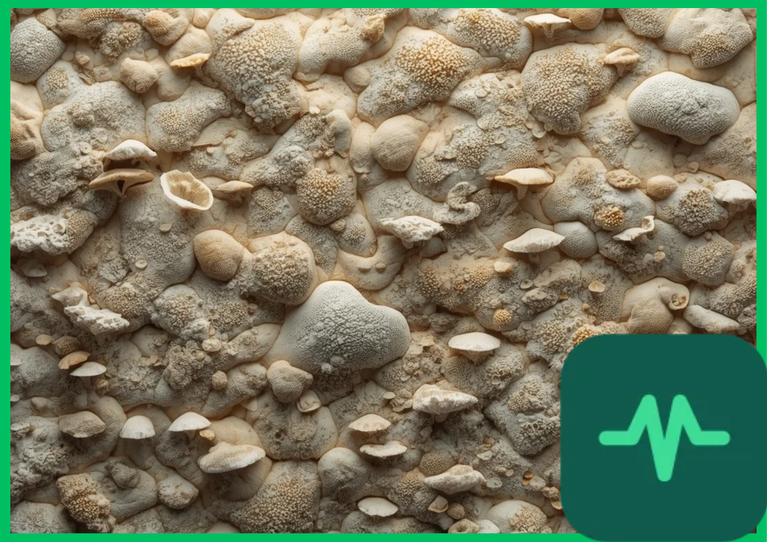
These innovative materials are crafted from renewable agricultural sources, including starch polymers derived from corn or cassava, cellulose fibers from wood pulp, mushroom mycelium networks, and agricultural waste by-products.
Unlike traditional plastics that persist for centuries, biodegradable polymers are consumed by microorganisms, fungi, and bacteria.
When exposed to correct composting or soil conditions, these organic packages break down into harmless natural elements: carbon dioxide, water, and biomass.
They provide the structural protection required for shipping fragile goods, yet they leave zero toxic residue behind when their lifecycle ends.
Reshaping Global Supply Chains
Integrating biodegradable packaging into global logistics requires a complete redesign of supply chain operations.
In the past, supply chain managers focused almost entirely on two metrics: unit cost and mechanical strength.
Today, procurement teams evaluate materials through a comprehensive lifecycle lens.
As academic research on industrial sustainability demonstrates, shifting to biodegradable packaging alters several key stages of commerce:
- Storage and Shelf Life: Because plant-based packaging reacts to moisture and microbial action, warehousing conditions require precise humidity control to ensure boxes and films remain stable until use.
- Transport Efficiency: Molded agricultural fibers and mushroom-based foams match the shock absorption of synthetic plastics while maintaining a lightweight profile, keeping shipping fuel consumption low.
- End-of-Life Processing: Supply chains are increasingly designed to integrate with commercial and industrial composting infrastructure, turning spent packaging into rich soil nutrients rather than municipal landfill burden.
Companies that adopt biodegradable materials future-proof their operations against tightening global regulations on single-use plastics.
Overcoming Performance and Scaling Hurdles
Replacing petroleum plastics with plant-based alternatives is an extraordinary scientific challenge.
Early iterations of biodegradable packaging suffered from structural flaws. They tore too easily, dissolved when exposed to rain, or degraded prematurely on warehouse shelves.
Modern materials science has solved many of those vulnerabilities.
Researchers use advanced cross-linking techniques and natural additives to enhance water resistance and tensile strength, ensuring plant-based films and containers withstand grueling international shipping conditions just as effectively as legacy plastics.
Scaling up production lines to match global demand requires ongoing investment and agricultural integration, ensuring that packaging crops do not compete with food production land.
Building a Clean Foundation for Commerce
The transition toward biodegradable packaging represents a profound shift in human enterprise.
We are moving away from permanent pollution and adopting regenerative systems that honor planetary boundaries.
By replacing synthetic plastics with smart, compostable alternatives, global supply chains reduce environmental stress, eliminate waste, and protect natural ecosystems.
Commerce does not require destruction.
Through innovative biodegradable materials, we are building a clean, circular foundation for how goods move around our world.
Comments (0)
Login to leave a comment.
No comments yet. Be the first to share your thoughts!