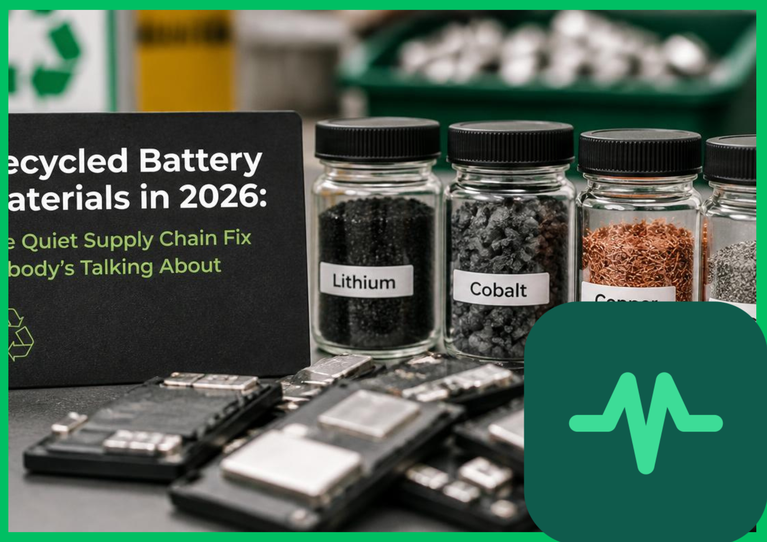
Let's talk honestly about why this quiet shift genuinely deserves more attention.
Why This Genuinely Matters So Much Right Now
Battery production genuinely depends on materials like lithium, cobalt, and nickel, resources that require real, often difficult mining to extract. As EV demand keeps growing, competition for these materials has genuinely intensified.
Recycled battery materials offer a genuine alternative source, reducing dependence on new mining and the real environmental and human costs that often come with it.
What's Genuinely Different in 2026
Recycling technology has genuinely matured significantly this year. Facilities can now recover a meaningfully higher percentage of valuable materials from old batteries than earlier processes managed, making recycled battery materials a genuinely more viable, cost-competitive option for manufacturers.
This shift from "interesting idea" to "genuinely reliable supply source" marks real progress worth celebrating.
Why This Genuinely Helps Your Future EV Purchase
As recycled battery materials become more widely used, manufacturers genuinely reduce their exposure to volatile mining markets and unpredictable international supply chains. This stability can genuinely translate into more predictable EV pricing over time.
Why the Environmental Story Genuinely Matters Too
Every battery built using recycled materials genuinely represents mining that didn't have to happen. Mining carries real environmental costs, disrupted land, water use, and often difficult labor conditions in certain regions.
Recycled battery materials genuinely reduce this pressure, offering a real, practical way to lessen the industry's footprint without slowing EV adoption.
Why National Supply Security Genuinely Matters Here Too
Many raw battery materials genuinely come from a small handful of countries, creating real vulnerability if supply gets disrupted. A strong recycling industry genuinely reduces this dependence, keeping more of the material supply chain closer to home.
The Honest Challenges Still Facing This Industry
Let's be fair about real hurdles. Not every worn-out battery reliably makes its way to a proper recycling facility yet. Building out genuine collection infrastructure remains real, ongoing work, especially as more EVs age out over the coming years.
Why This Feels Like Genuine, Practical Progress
There's something deeply satisfying about watching an industry solve its own waste problem before it genuinely becomes a crisis. Recycled battery materials represent real, thoughtful planning, not a scramble after the fact.
What This Means for the Broader EV Industry
As this technology matures further, expect recycled battery materials to become a genuinely standard, expected part of manufacturing, rather than a niche, optional practice a few companies pursue for good press.
Common Questions
Do recycled battery materials perform as well as new ones?
Yes, genuinely, when properly processed, recycled materials perform comparably in most battery applications.
Why does this matter for supply chain security?
It genuinely reduces dependence on a small number of countries controlling raw material mining and processing.
Is this industry genuinely growing in 2026?
Yes, significantly, with recycling technology maturing and more facilities coming online this year.
Final Thoughts
Recycled battery materials might not grab headlines the way a new EV model does, but this quiet shift in 2026 genuinely matters enormously for the industry's long-term health, and for the planet's too.
Comments (0)
Login to leave a comment.
No comments yet. Be the first to share your thoughts!