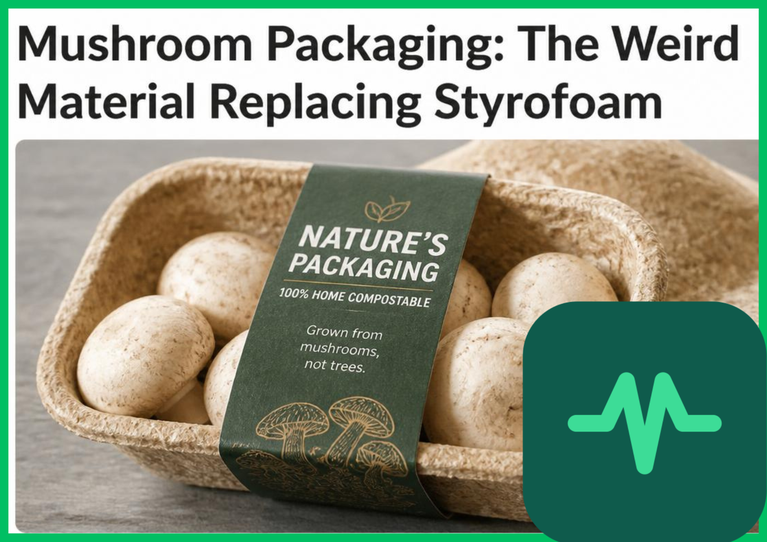
Picture this. A package arrives at your door. You open it, expecting the usual Styrofoam foam blocks. Instead, you find something that looks almost like foam, but it's actually grown from mushrooms.
This isn't a joke or a science fiction concept. Mushroom packaging is genuinely real, and it's replacing Styrofoam in a growing number of American products. Let's talk honestly about how this weird, genuinely clever material actually works.
Mushroom Packaging, Explained Simply
Mushroom packaging, technically called mycelium packaging, is made from the root-like network of fungi, called mycelium, combined with agricultural waste like corn husks or hemp fibers.
The mycelium literally grows through this waste material, binding it together into a solid, foam-like structure over a matter of days. Once fully grown, it gets dried, stopping the growth process and leaving behind a genuinely sturdy, lightweight material.
Why Styrofoam Became Such a Genuine Problem
Traditional Styrofoam packaging comes from petroleum, and it genuinely doesn't break down in landfills, not for hundreds of years, possibly longer. It also can't be effectively recycled in most American communities, despite the little recycling symbol stamped on it.
This creates a genuine environmental headache. Billions of pounds of Styrofoam end up in American landfills every year, sitting there essentially forever, a real, lasting problem for future generations.
Why Mushroom Packaging Genuinely Solves This
Here's the genuinely elegant part. Mushroom packaging is completely biodegradable, breaking down naturally in weeks, not centuries, when composted properly.
It's made from agricultural waste too, materials that would otherwise get discarded or burned. This gives genuine, useful purpose to leftover farming byproducts, rather than treating them as pure waste.
How the Actual Growing Process Works
This part genuinely sounds like magic, but it's just clever biology at work. Manufacturers mix agricultural waste with mycelium spores, then place this mixture into molds shaped exactly like the final packaging piece needed.
Over several days, the mycelium grows throughout the mixture, binding everything together into a solid form. Once it fills the mold completely, heat gets applied to stop the growth and dry the material, leaving behind a genuinely stable, ready-to-use product.
Does It Actually Work as Well as Styrofoam?
This is the honest, important question, and the genuine answer is yes, remarkably well. Mushroom packaging offers genuinely comparable cushioning and protective properties to traditional foam packaging.
Several American companies already use it for shipping fragile electronics, glassware, and other delicate products, trusting it to genuinely protect items during transit just as effectively as the Styrofoam it replaces.
Where You Might Already Be Seeing This
You might have already encountered mushroom packaging without even realizing it. Several furniture companies use it for protective shipping padding. Some tech companies use it for packaging delicate electronics.
It's not yet as universal as traditional foam, honestly, but it's genuinely spreading across more product categories every year, as more companies discover it works well and appeals to environmentally conscious customers.
Why This Feels Genuinely Hopeful
There's something genuinely delightful about the idea that mushrooms, of all things, might help solve a real, persistent waste problem. It's not a flashy, high-tech solution requiring massive factories and complex chemistry.
It's genuinely simple, almost humble, using nature's own biological processes to grow exactly what we need. That simplicity feels refreshing, honestly, compared to more complicated, expensive clean technology solutions.
The Honest Limitations Worth Knowing
Let's be fair about the real constraints here. Mushroom packaging currently costs more to produce than traditional Styrofoam, since the growing process takes real time, several days at minimum, compared to instantly molding foam.
It's also not suitable for every single packaging application yet. Extremely heavy or unusually shaped items might still need alternative solutions. The technology keeps genuinely improving, though, expanding what's realistically possible each year.
Why Composting It Matters
Here's a genuinely important detail. Mushroom packaging needs to actually get composted to break down properly, it won't magically disappear if simply tossed in a regular trash bin destined for a landfill.
Some communities have accessible composting programs. Others don't yet. This is genuinely worth understanding if you receive mushroom packaging, check whether your local area supports composting it properly, rather than assuming it'll break down in a standard landfill the same way.
The Bigger Picture: Bio-Based Materials Generally
Mushroom packaging represents part of a genuinely broader trend, bio-based materials replacing petroleum products across many industries, not just packaging alone.
Similar approaches are being explored for building insulation, even certain textiles. This broader movement toward growing materials, rather than manufacturing them from fossil fuels, feels genuinely significant, extending well beyond just solving the Styrofoam problem specifically.
What This Means for American Manufacturing
Building out mushroom packaging production creates genuine American manufacturing opportunity too, not just environmental benefit. These facilities need real workers, real agricultural partnerships, and genuine investment.
Several American companies have positioned themselves as genuine leaders in this space, building real domestic production capacity rather than relying entirely on imported materials.
Common Questions About Mushroom Packaging
Is mushroom packaging actually as protective as Styrofoam?
Yes, in most applications, it offers genuinely comparable cushioning and protection for shipping fragile items.
How long does mushroom packaging take to break down?
When composted properly, it typically breaks down within a few weeks, dramatically faster than Styrofoam's hundreds of years.
Can I just throw mushroom packaging in my regular trash?
It's better to compost it if possible. Regular landfills don't provide the ideal conditions for it to break down as intended.
Why isn't mushroom packaging used everywhere yet?
Cost and production time remain real obstacles, though the technology keeps genuinely improving and expanding into more product categories.
Final Thoughts
Mushroom packaging genuinely sounds like something out of a strange science fiction story, until you realize it's already sitting in real American warehouses, protecting real shipments right now. That's genuinely remarkable when you stop to think about it.
As this technology keeps improving and costs keep falling, expect to see far more of it in your future packages. It's a small, genuinely clever solution to a problem that's plagued us for decades, proof that sometimes nature offers better answers than chemistry alone.
Comments (0)
Login to leave a comment.
No comments yet. Be the first to share your thoughts!