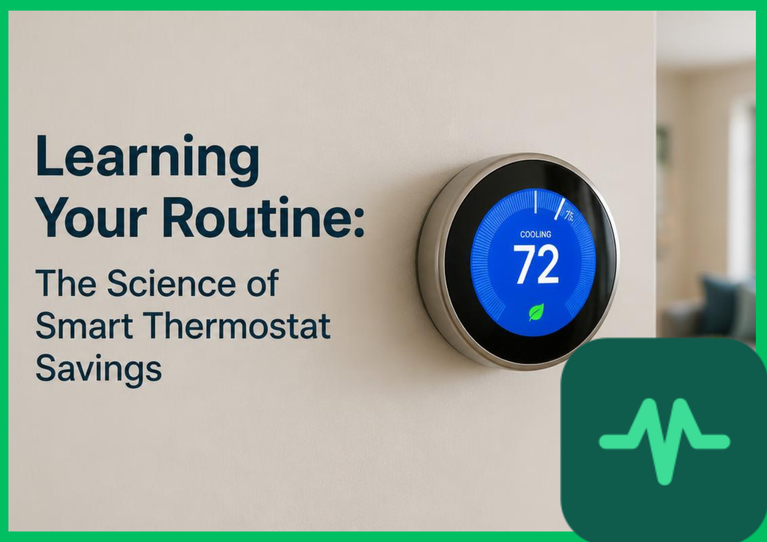
You head off to work or step out for the day. No one is home.
In a traditional house, the heating system keeps burning energy, heating empty rooms for hours on end until you return.
That empty heating wastes money and burns fossil fuels needlessly.
For generations, manual thermostats forced a frustrating choice. You either spent time constantly adjusting dials up and down throughout the day, or you left the heat running continuously and paid the price on your monthly utility bill.
Most people gave up and left the dial alone.
A quiet digital shift is transforming how residential buildings manage thermal comfort.
According to efficiency guidelines from ENERGY STAR, building sector reports from the International Energy Agency (IEA), and academic home automation research, smart thermostats are rewriting the rules of domestic energy consumption.
By using machine learning algorithms to learn your daily routine, these intelligent devices cut energy waste without sacrificing indoor comfort.
Here is how predictive climate control works, why behavioral heating automation matters, and how smart thermostats deliver real-world savings.
The Hidden Waste of Manual Temperature Control
To understand why smart thermostats matter, you have to look at how much energy goes into heating and cooling residential spaces.
HVAC systems account for the largest share of household energy consumption globally.
Whenever your furnace or air conditioner runs, it draws massive amounts of electricity or burns fossil fuels.
When you heat an empty house, that energy vanishes into thin air.
Traditional programmable thermostats allowed homeowners to set automated schedules, but they had major flaws.
Programming a traditional digital thermostat felt complicated and confusing. Most people set a schedule once and forgot about it.
When life changed—when work hours shifted, holidays arrived, or family members stayed home—the rigid schedule kept running blindly.
Homes ended up heated or cooled when no one was there, wasting valuable energy day after day.
We needed a system smart enough to adapt to real human lives.
What Is a Smart Thermostat?
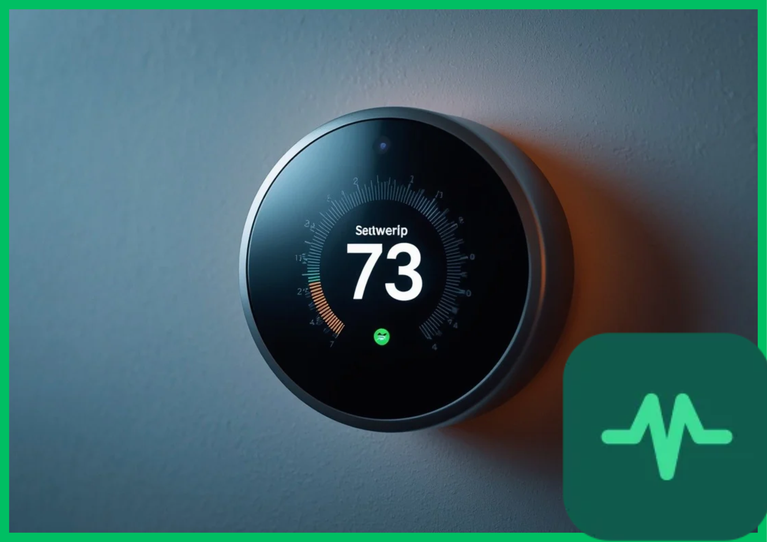
A smart thermostat is an internet-connected climate control device equipped with motion sensors, occupancy detectors, and machine learning software.
Unlike old-school dials or rigid programmable timers, a smart thermostat pays attention to what you do.
When you walk past the unit in the hallway, built-in infrared sensors notice movement.
When you adjust the temperature up because you feel chilly, the device records your preference, the time of day, and the outdoor weather conditions.
Over the course of a few days, the internal algorithm begins mapping out your household routine.
It learns when you typically wake up in the morning, when you leave for work or school, when you return in the evening, and when you go to sleep at night.
It builds a dynamic schedule that evolves naturally as your habits change.
The Science of Predictive Climate Control
Machine learning is where smart thermostats achieve their impressive efficiency gains.
Instead of reacting to changes after they happen, smart software uses predictive climate control.
The thermostat connects to local weather forecasts via Wi-Fi.
If a sudden cold snap or a scorching heatwave is heading your way, the thermostat anticipates the temperature shift.
It adjusts your HVAC system gradually, preventing the energy spikes that occur when a furnace or air conditioner has to work at maximum capacity to correct a sudden indoor temperature swing.
Furthermore, smart thermostats learn the thermal thermal inertia of your specific building.
They know exactly how long it takes your home to warm up from 18 degrees Celsius to 21 degrees Celsius (approx. 64 degrees Fahrenheit to 70 degrees Fahrenheit).
Instead of turning the heater on an hour too early, the algorithm calculates the precise minute required to reach your target temperature just as your feet hit the floor.
Real-World Cost and Energy Savings
The ultimate benefit of learning your routine is a noticeable drop in monthly utility bills.
ENERGY STAR efficiency data confirms that by automatically setting back temperatures when homes are empty or occupants are asleep, smart thermostats reduce annual heating and cooling energy use significantly.
When you lower your heating by a few degrees while away at work or tucked under blankets at night, heat loss slows down dramatically.
Over the course of a long winter or summer season, those automated setbacks save gigajoules of energy and prevent hundreds of kilograms of carbon emissions.
Lower utility consumption protects household budgets from volatile energy price swings while reducing environmental strain.
Empowering Sustainable Living Without Sacrifice
Adopting smart thermostat technology proves that saving energy does not require living in discomfort.
You do not have to shiver in winter or sweat in summer to protect the planet.
By letting intelligent software learn your daily rhythm, your home adapts effortlessly to your lifestyle.
The temperature stays comfortable when you are home, and energy use drops automatically when you are away.
Through predictive automation and smart heating schedules, we eliminate domestic energy waste one degree at a time, securing a comfortable, sustainable future for households everywhere.
Comments (0)
Login to leave a comment.
No comments yet. Be the first to share your thoughts!