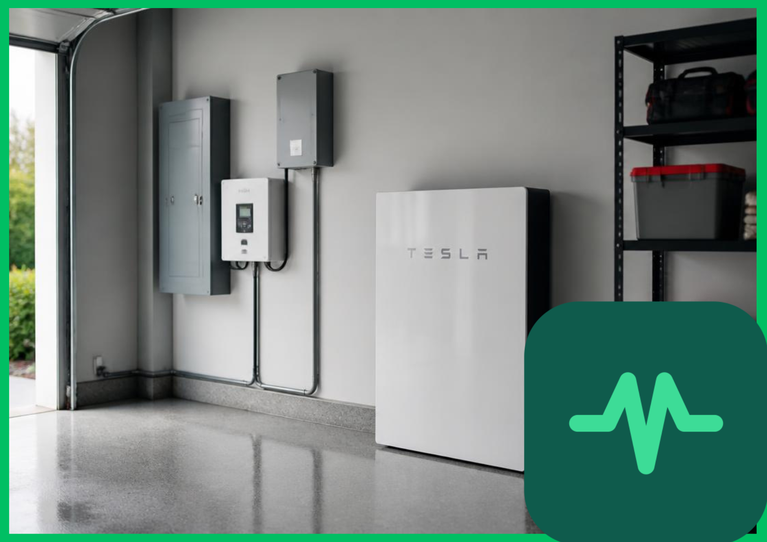
That image sells a lot of home batteries. But what actually happens once one is sitting in your garage?
Let's talk through it honestly and what a home battery storage does.
What a home battery actually does
At its core, a home battery stores electricity so you can use it later. That power might come from solar panels during the day, or simply from the regular grid at times when electricity is cheaper.
When the grid goes down, or when you want to avoid drawing power at expensive times, the battery steps in and takes over.
Simple idea. Genuinely useful in the right situation.
The backup power reality
Here's the honest part most marketing skips. A home battery usually doesn't power your entire house at full capacity for very long.
Instead, most systems are sized to cover essentials. Lights, refrigerator, phone chargers, maybe a router so you stay connected. Running a whole home, air conditioning included, for hours on end usually requires a much larger, more expensive setup.
For most households, covering the essentials during a short outage is exactly the right amount of backup. Just be clear about what "backup power" actually means for your specific battery size before you buy.
Where the real savings come from
If you already have solar panels, a battery lets you store extra daytime energy instead of losing it. That stored power then gets used in the evening, when your panels aren't producing anything.
Without a battery, many solar systems send unused energy back to the grid for a modest credit. With a battery, you can use more of that energy yourself, which is often the better deal.
Even without solar, some batteries help by charging during cheaper electricity hours and using that stored power during expensive peak hours, depending on your local electricity pricing structure.
The upfront cost, honestly
This is the part worth sitting with. Home batteries are a genuine investment, often costing as much as a good used car.
The payback period depends heavily on your electricity rates, your solar setup, and how you use the stored power. Some households see it pay off within several years. Others find the backup-power peace of mind is worth it regardless of the exact math.
There's no universal answer here. It genuinely depends on your specific home and habits.
Questions worth asking before buying
How often do you actually lose power? If outages are rare where you live, the backup benefit matters less than the daily savings potential.
Do you already have solar panels? A battery makes far more sense paired with solar than standing alone.
What's your realistic power need during an outage? Be honest about what you actually want to keep running, not what sounds nice in theory.
The maintenance side
Home batteries are largely maintenance-free. Most modern systems monitor themselves and alert you if something needs attention.
They do have a lifespan, though, typically many years before capacity noticeably declines. Think of it similarly to how a phone battery slowly loses its peak performance over time, just on a much longer timeline.
A realistic way to think about it
A home battery isn't magic. It won't make your whole house run forever during a blackout, and it won't slash your bill overnight.
What it genuinely offers is quiet reliability. Keeping the essentials running when the grid fails. Making better use of solar energy you're already generating. Adding a layer of resilience that simply didn't exist before.
The honest bottom line
Home battery storage is a real, valuable tool, but it works best when your expectations match reality. Know what you actually need it to do. Size it accordingly. And you'll likely find it earns its place quietly, exactly when you need it most.
Comments (0)
Login to leave a comment.
No comments yet. Be the first to share your thoughts!