You turn the handle on the shower. Within moments, steaming hot water flows out, washing away the sleep and waking up your senses.
That simple comfort feels entirely effortless.
Now, imagine walking down to your basement or utility closet.
Standing quietly in the corner is a large metal storage tank. That tank holds hundreds of liters or gallons of water, keeping it blazing hot twenty-four hours a day, waiting patiently for you to wake up, wash dishes, or do laundry.
Water heating is one of the heaviest energy consumers in any home.
For decades, traditional water heaters operated like brute-force resistance boilers. They drew massive amounts of electricity or burned fossil gas around the clock, reheating water over and over even when nobody was home.
That wasteful habit drives up your utility bills and pumps millions of metric tons of unnecessary carbon emissions into our shared atmosphere.
We cannot keep wasting energy just to take a hot shower.
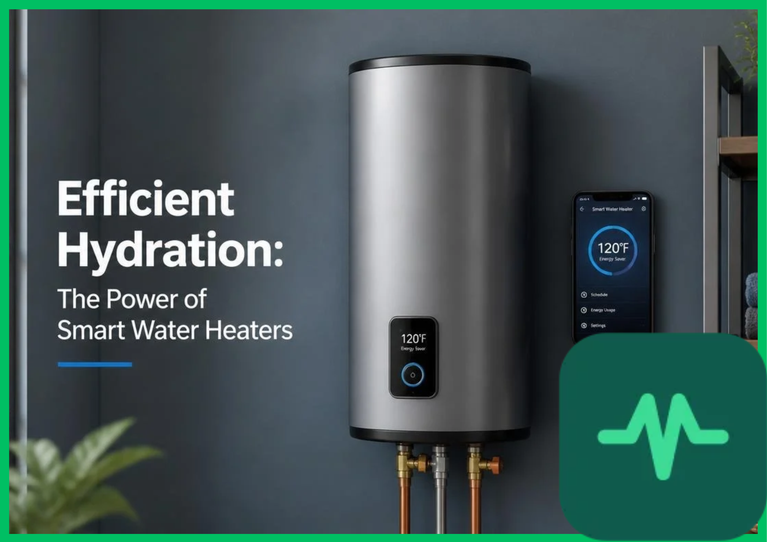
A quiet, thermodynamic revolution is transforming household water heating.
According to global energy efficiency reports from the International Energy Agency (IEA), resource sustainability frameworks from the United Nations Environment Programme (UNEP), appliance efficiency guidelines from ENERGY STAR, and academic thermal dynamics research, smart heat pump water heaters are changing how we manage domestic energy.
By pulling thermal heat straight out of the surrounding air and coordinating with smart grids, these advanced appliances save energy while delivering reliable comfort.
Here is how smart heat pump water heaters work, why ambient thermal extraction changes the physics of heating, and how smart grid integration secures our sustainable future.
The Wasteful Physics of Traditional Water Heaters
To understand why smart water heaters represent such a massive leap forward, you have to look inside a traditional electric resistance tank.
For generations, standard water heaters relied on simple metal heating elements submerged inside the water tank.
When cold water entered the tank, electricity rushed through the resistance coils, glowing red-hot to transfer thermal energy into the water.
That process is astonishingly inefficient on a thermodynamic level.
Traditional electric resistance heaters consume more energy than they actually deliver as usable heat.
Furthermore, traditional tanks lose heat constantly through their outer walls into the surrounding air—a phenomenon known as standby heat loss.
To prevent your water from turning lukewarm while you are at work or asleep, the heating elements kick on repeatedly all day and night.
When millions of homes run traditional water heaters during peak evening hours, regional power grids strain under the load, forcing utilities to fire up dirty fossil-fuel plants.
We needed a completely different way to heat water.
We needed to look at the air all around us.
What Is a Smart Heat Pump Water Heater?
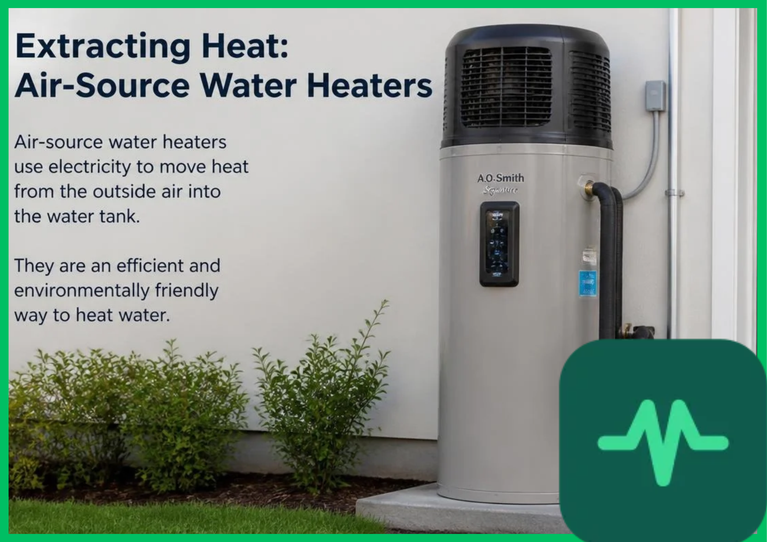
A smart heat pump water heater does not create heat by burning gas or forcing electricity through resistance coils.
Instead, it moves heat.
A heat pump water heater works on the exact same thermodynamic principle as a household refrigerator or air conditioner, but in reverse.
Mounted on top of the water storage tank is a compact compressor and fan unit.
The system draws in warm ambient air from your basement or utility room, passing it over a liquid refrigerant loop.
That refrigerant absorbs the free thermal energy floating in the air, even in relatively cool rooms.
The compressor squeezes the refrigerant gas, raising its temperature drastically.
That superheated gas flows through a coil wrapped around the water tank, transferring its heat directly into the water.
The chilled air is then exhausted gently out the top.
Because the appliance is simply moving existing heat from the air rather than generating it from scratch, it achieves incredible efficiency.
Academic thermal research shows that heat pump water heaters use up to 70% less electricity than traditional resistance tanks.
The Magic of Thermal Energy Storage
Efficiency is only part of the story. Modern water heaters are becoming truly intelligent.
A smart heat pump water heater acts as an onboard thermal battery for your home.
Water has a remarkably high specific heat capacity, meaning it holds onto thermal energy for hours without cooling down quickly.
Using intelligent demand response software, your water heater talks directly to the regional electrical grid.
When renewable wind and solar farms peak during the middle of the day, electricity is clean, abundant, and cheap.
The smart water heater senses those grid conditions and ramps up its compressor, heating the water tank to its maximum safe temperature and storing that clean thermal energy.
When evening arrives and the sun sets, electricity demand spikes across the city.
The smart water heater turns its compressor off completely, coasting through the evening peak while keeping your water piping hot using stored thermal energy.
According to ENERGY STAR efficiency evaluations, scheduling heat cycles around clean energy availability cuts residential carbon footprints drastically without requiring any sacrifice in daily comfort.
Overcoming Installation and Adoption Hurdles
Transitioning from an old-fashioned resistance tank to an advanced heat pump water heater requires understanding a few practical factors.
Heat pump units require a small amount of surrounding air volume—roughly 28 cubic meters or 1,000 cubic feet of unconditioned space—to extract ambient heat effectively.
In tight, enclosed utility closets, ducting kits can pull air from adjacent rooms or the outdoors.
Furthermore, while the upfront purchase price of a heat pump water heater is higher than a basic resistance tank, the operating cost savings pay for the difference within a few short years.
According to UNEP sustainable housing frameworks, upgrading residential water heating is one of the fastest ways for homeowners to lower their energy consumption and reduce monthly utility expenses.
IEA decarbonization roadmaps highlight that replacing millions of inefficient water heaters with heat-pump technology is an essential milestone in global energy efficiency.
Heating Our Homes Responsibly
Smart heat pump water heaters prove that everyday household appliances can be powerful tools in the fight against climate change.
We no longer have to accept that taking a hot shower requires wasting electricity or burning fossil fuels in inefficient resistance tanks.
By extracting free heat from ambient air, storing thermal energy intelligently, and coordinating with renewable power grids, we redefine domestic comfort.
We step away from wasteful energy consumption, embracing a smart, efficient, and sustainable standard of living.
Through brilliant thermodynamic engineering, smart grid integration, and thoughtful resource stewardship, smart water heaters secure a clean, warm, and thriving future for our world.

Comments (0)
Login to leave a comment.
No comments yet. Be the first to share your thoughts!