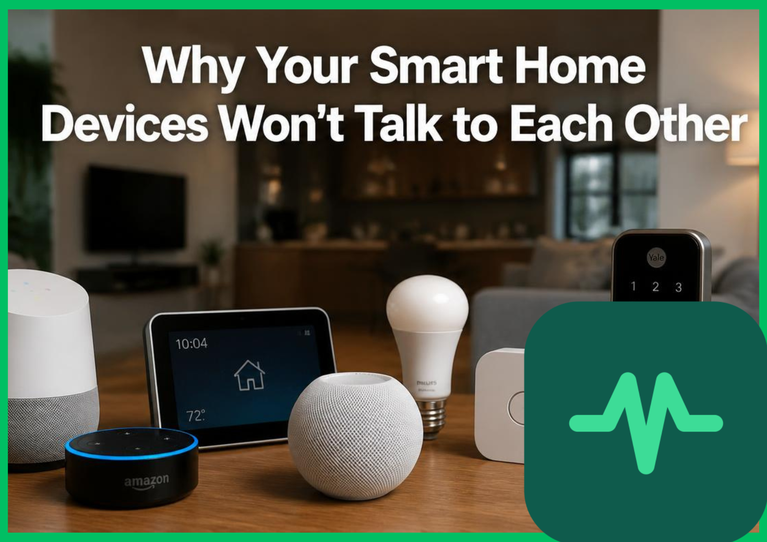
Three separate apps. Three separate logins. None of them talk to each other.
If this sounds familiar, you're not doing anything wrong. This is one of the most common frustrations in smart homes today, and honestly, it's not really your fault.
Why this keeps happening
Here's the truth nobody explains when you're standing in a store aisle. Different smart home brands often use different underlying systems to communicate. One brand might use one wireless standard. Another brand uses something completely different.
It's a bit like buying appliances that all plug into different shaped outlets. Each one works fine on its own. Getting them to work together is where things fall apart.
For years, this was simply accepted as normal. Buy one brand's ecosystem, and stick with it, or accept a house full of disconnected apps.
The quiet fix changing this
Recently, a new shared standard has started solving this exact problem. Instead of every brand doing its own thing, more manufacturers are building devices that speak the same underlying language.
Think of it like a universal translator sitting quietly between your devices. Once your gadgets support this shared standard, they can finally see each other, and actually work together, regardless of which brand made them.
This shift is still spreading across the industry, but it's already making a real, noticeable difference for anyone starting a smart home from scratch today.
What a smart home hub actually does
A hub is the device that ties everything together. Think of it as a translator sitting in the middle of your home, quietly making sure your bulb, your plug, and your thermostat can all understand each other, even if they were never designed with each other in mind.
Some hubs come as standalone devices. Others are quietly built into things you already own, like certain speakers or streaming devices, without most people even realizing it.
How to know if your devices will actually connect
Before buying anything new, check the packaging or product page for compatibility logos or mentioned standards. This single check saves enormous frustration later.
If you already own several disconnected devices, check whether your existing hub or app supports adding devices from other brands. Many do, quietly, without much fanfare, once you dig into the settings.
Why this actually matters for real people
This isn't just a technical annoyance. When your devices work together, real, useful things become possible. Your lights can dim automatically when your thermostat senses everyone's gone to bed. Your smart plug can turn off exactly when your front door locks for the night.
None of that works if every device lives in its own separate little world, refusing to acknowledge the others exist.
A simple way to start fresh
If you're building a smart home today, rather than years ago, you're in a genuinely better position than earlier adopters were. Look specifically for devices mentioning shared, cross-brand compatibility before buying anything.
This one habit alone prevents the exact frustration so many people already know all too well, the closet full of smart gadgets that never quite worked the way they promised.
What to do if you're already stuck
If you already own a mismatched collection of devices, don't panic. Many hubs now offer bridges specifically designed to connect older, incompatible devices into the same shared system.
It won't always be instant or effortless, but it's genuinely more possible today than it was even two years ago.
The emotional side nobody mentions
There's a real, quiet frustration in buying something exciting, unboxing it, setting it up, and discovering it simply won't cooperate with what you already own. It feels like a small failure, even though it isn't your fault at all.
Understanding why this happens takes away some of that frustration. It's not that you did something wrong. It's that the industry took a while to agree on speaking the same language.
The honest bottom line
Smart home compatibility problems are real, common, and genuinely improving. The frustration you've felt trying to connect mismatched devices isn't imaginary, and it isn't your fault either.
Look for shared standards before buying. Check your existing hub's hidden settings. And know that the smart home experience is quietly becoming less fragmented every year, even if it hasn't fully arrived just yet.
Your devices will get better at cooperating. In the meantime, a little research before each purchase goes a long way toward avoiding another silent, disconnected gadget sitting in a drawer.
Comments (0)
Login to leave a comment.
No comments yet. Be the first to share your thoughts!