So does it actually work?
Let's find out, honestly.
What a smart thermostat actually does
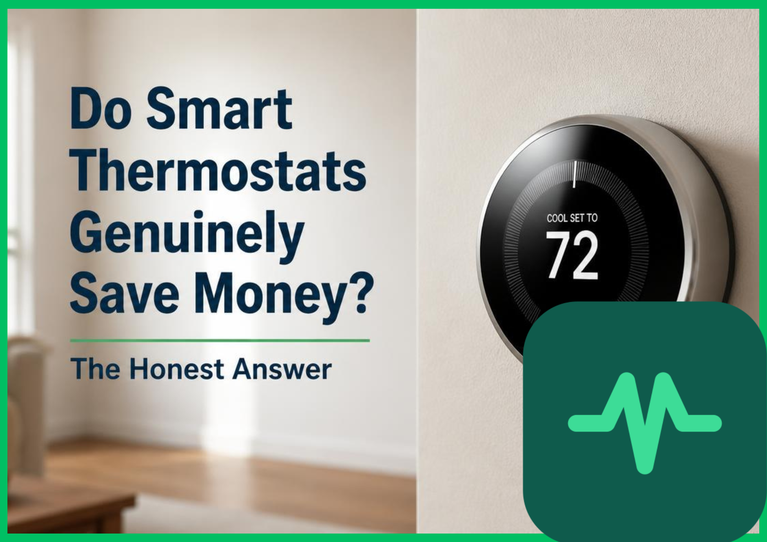
A smart thermostat learns your habits. It notices when you leave for work. It notices when you come home. Over time, it adjusts the temperature on its own, so you're not heating or cooling an empty house.
That's the whole idea. Simple, really.
But simple doesn't always mean guaranteed.
The real savings, not the marketing number
Manufacturers love to quote big percentages. You'll see numbers like "save up to 23% on heating and cooling." That number comes from real studies, but it comes with fine print most people never read.
Here's the honest version. Your actual savings depend heavily on your starting point.
If you already adjust your thermostat manually every day, a smart one won't do much extra. You're already doing the work it's designed to automate.
But if you're the type who sets it once and forgets it, a smart thermostat can genuinely help. It catches the waste you didn't know was happening.
Most homeowners land somewhere in between. A realistic expectation is modest, steady savings over a full year, not an overnight transformation.
The moment a smart thermostat pays for itself
Here's a simple way to think about it. Add up what the thermostat costs, including installation if you're paying someone to do it. Then compare that to your typical monthly heating and cooling bill.
For most homes, a smart thermostat pays for itself within one to two years. After that, every bit of savings is genuinely yours.
That's not instant, but it's not nothing either.
When a smart thermostat isn't worth it
Let's be honest about the other side too.
If you live somewhere with mild weather most of the year, your heating and cooling costs are already low. A smart thermostat has less room to make a difference.
If you rent and can't control the whole system, or if your landlord already keeps things efficient, the upgrade may not make sense right now.
And if your current thermostat is basic but you're already disciplined about adjusting it, you might see only small gains.
None of this means smart thermostats are a scam. It just means the marketing oversimplifies things.
What actually makes the biggest difference
Interestingly, the smartest feature isn't the app. It's the sensor.
Thermostats with room sensors can tell if a room is empty and stop wasting energy heating or cooling it. This one feature often creates more real savings than the "learning" algorithm everyone talks about.
If you're comparing models, prioritize this feature over flashy extras.
A few honest tips before you buy
First, check compatibility. Not every heating and cooling system works with every smart thermostat. A quick check before you buy saves a returned box and a wasted afternoon.
Second, don't expect magic in the first month. The learning period takes time. Give it a full season before judging the results.
Third, actually use the app. A smart thermostat you never open is just an expensive regular thermostat. The savings come from paying attention, at least a little.
The honest bottom line
Smart thermostats do save money, but not the dramatic amount the ads suggest. For most homes, it's a genuine, steady saving that adds up over a year or two.
If you're already careful with your temperature settings, don't expect a dramatic change. If you tend to forget, a smart thermostat quietly fixes that habit for you.
It's not magic. It's just a small, useful nudge in the right direction.
And sometimes, that's exactly what a home needs.
Comments (0)
Login to leave a comment.
No comments yet. Be the first to share your thoughts!