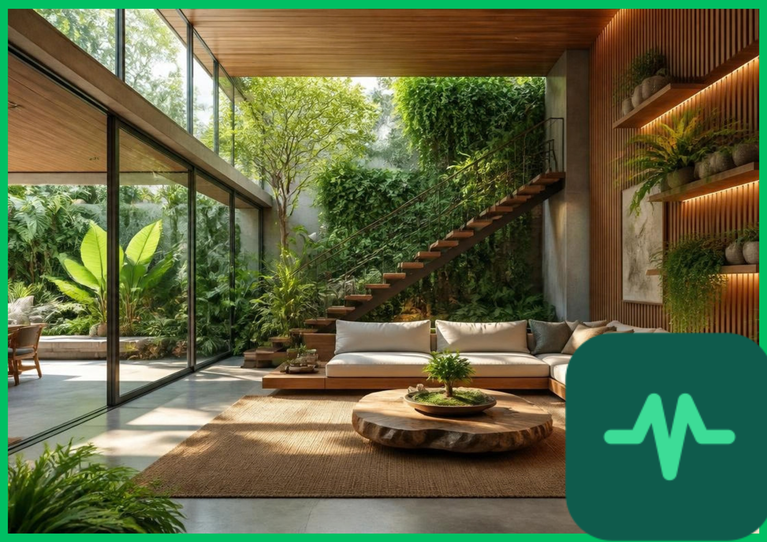
Now, imagine stepping into a space filled with sunlight, soft wooden textures, and living green plants. Your shoulders drop. Your breathing slows down.
That shift is not accidental. It is biological.
For most of human history, we lived outdoors. We evolved surrounded by trees, moving water, shifting shadows, and open skies. Our bodies and minds still expect that connection.
Instead, we spend up to 90% of our lives sealed inside artificial boxes. We starve our senses of the natural world.
Biophilic design changes that reality. It bridges the gap between sustainable living and natural aesthetics, turning your home into a living sanctuary that nourishes your well-being.
What Is Biophilic Design?
Biophilia means a love of life or living things. Biophilic design applies that concept directly to architecture and interior spaces.
It is not just about putting a potted fern on a windowsill. It is a systematic approach to weaving natural elements, patterns, and processes into the spaces where we live and work.
This design philosophy taps into our deep evolutionary roots. It recognizes that humans thrive when surrounded by organic elements. When we bring nature indoors, our stress levels drop, our focus sharpens, and our homes become genuinely restorative places.
At the same time, biophilic design aligns naturally with sustainability. It encourages the use of renewable organic materials, maximizes natural daylight to cut electricity use, and improves indoor air quality.
The Core Principles of Natural Aesthetics
Bringing nature indoors requires more than green paint and floral patterns. Effective design engages multiple senses.
You can break biophilic spaces down into three main categories of experience: direct experience of nature, indirect experience of nature, and the experience of space.
Direct experience involves bringing actual living elements into your home. This includes plants, natural sunlight, flowing water features, and fresh air ventilation.
Indirect experience involves representations of nature. This includes using organic wood grains, natural stone, earth-toned color palettes, and botanical artwork. It also means using patterns found in nature, like the branching structures of trees or the ripple patterns of sand.
The experience of space focuses on how your layout feels. Humans evolved to appreciate open views combined with safe, protected retreats. A well-designed room gives you a clear sightline to the outdoors while offering a cozy, grounded spot to sit.
Maximizing Natural Light and Air
Light is the heartbeat of any living space. Artificial lighting keeps the lights on, but it fails to support our natural biological rhythms.
Circadian lighting design focuses on maximizing natural daylight. Position furniture to face windows. Use sheer curtains that diffuse harsh glare while flooding your rooms with soft sunlight.
When natural sunlight fills a room, your mood lifts. You also burn fewer kilowatt-hours running overhead electric lights during daytime hours.
Fresh air matters just as much. Modern homes are often sealed so tightly that indoor air grows stale and stagnant. Incorporate operable windows on opposite sides of your home to create cross-ventilation. Let fresh outdoor air sweep through your living space, clearing out indoor pollutants and cooling your home naturally.
Choosing Sustainable Organic Materials
The materials you touch every day dictate the physical feel of your home. Plastic and synthetic laminates create a sterile, disconnected environment.
Organic materials tell a story. They age gracefully, carry unique textures, and connect you back to the earth.
Wood is a cornerstone of biophilic interiors. Choose certified sustainably harvested timber for furniture, flooring, and wall paneling. Unfinished or lightly oiled wood lets you feel the natural grain beneath your fingertips.
Incorporate natural stone, clay tiles, wool, linen, and jute. These materials breathe. They regulate indoor humidity naturally, absorbing excess moisture when the air is damp and releasing it when the air is dry.
Bringing Living Greenery Indoors
Plants are the most direct way to transform an indoor space. They soften hard architectural lines and purify the air.
You do not need an indoor jungle to reap the benefits. A few well-placed statement plants—like a tall indoor fig tree, trailing pothos vines on a bookshelf, or a collection of small herbs on a kitchen windowsill—make a massive difference.
Indoor plants improve air quality by filtering out volatile organic compounds released by furniture and paints. Caring for living things also grounds you, encouraging a slower, more mindful daily routine.
The Intersection of Sustainability and Wellness
Biophilic design proves that sustainable living is not about deprivation. It is not about living in a dark, austere box to save energy.
It is about abundance. It is about building a home that honors both planetary health and human happiness.
When you design with nature, your home uses less energy, relies on renewable materials, and supports your mental health. You stop fighting your environment and start living in harmony with it.
Open your windows. Let the sunlight in. Bring natural textures into your daily life, and watch your home transform into a true sanctuary.




Comments (0)
Login to leave a comment.
No comments yet. Be the first to share your thoughts!