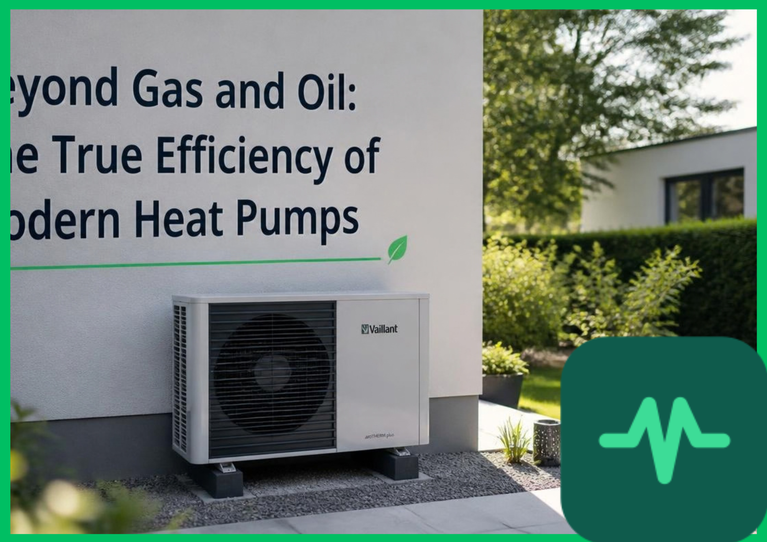
For decades, keeping a home warm meant burning something. Furnaces burned natural gas, heating oil, or propane inside a metal box, pushing raw heat through your vents.
That combustion model has defined residential comfort for generations.
It also represents a major source of global carbon emissions and wasted energy.
A quiet transformation is taking over residential climate control worldwide. According to tracking data from the International Energy Agency (IEA), efficiency benchmarks like ENERGY STAR specifications, and academic thermal research, modern electric heat pumps are rapidly replacing traditional combustion boilers.
They do not create heat by burning fuel. They move heat from one place to another.
Here is how modern heat pumps achieve staggering efficiency levels that leave traditional gas and oil heaters behind.
The Illusion of Combustion Efficiency
To understand why heat pumps represent a revolution, you have to look closely at how a standard gas or oil furnace works.
Traditional furnaces boast efficiency ratings based on how much fuel they convert into heat. Even a high-end condensing gas furnace maxes out near 95% to 98% efficiency.
No matter how well it operates, burning fuel means you get less thermal energy out than the chemical energy you put in. For every unit of gas you burn, you lose a fraction up the exhaust flue.
Furthermore, you emit greenhouse gases directly from your basement every time the system runs.
Electric resistance heaters—like standard baseboard units—are 100% efficient, turning one unit of electricity into one unit of heat, but that process consumes massive amounts of power and drives up utility bills.
We needed a completely different way to look at home comfort.
How Heat Pumps Defy Traditional Physics
Heat pumps operate on a brilliant, counter-intuitive principle: they do not generate heat from scratch.
Even when the outdoor air feels freezing cold to your skin, ambient air contains thermal energy down to absolute zero.
A heat pump uses a closed refrigerant cycle—similar to the mechanics inside your kitchen refrigerator—to capture that ambient heat from the outside air, ground, or nearby water source.
The liquid refrigerant absorbs outside thermal energy, evaporates into a gas, and passes through an electric compressor.
Compressing that gas raises its temperature dramatically.
The hot refrigerant then flows through indoor condenser coils, releasing warmth into your home's air ducts or water loops before cycling back outside to repeat the loop.
In cooling mode, the entire process reverses, extracting heat from your indoor living space and releasing it outside.
Because the system moves heat rather than creating it, the output energy vastly exceeds the input electricity required to run the compressor.
Understanding Coefficient of Performance (COP)
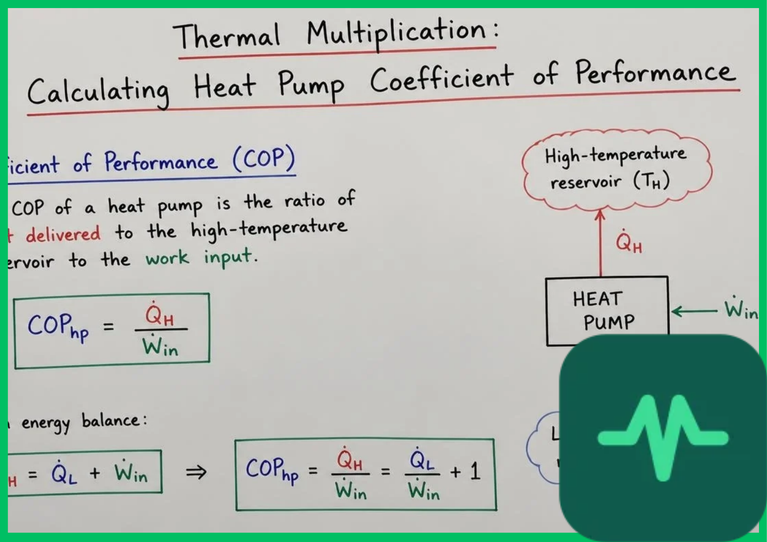
Engineers measure heat pump efficiency using a metric called the Coefficient of Performance, or COP.
While a traditional gas furnace operates at a COP below 1.0 (meaning less than 100% conversion efficiency), modern air-source heat pumps routinely achieve a COP of 3.0 to 4.0 under normal operating conditions.
This means that for every 1 kilowatt-hour of electrical energy you feed into the system, the heat pump delivers 3 to 4 kilowatt-hours of thermal energy into your home.
That is an operating efficiency of 300% to 400%.
Even during deep winter freezes when outdoor temperatures drop below freezing, cold-climate heat pumps certified by ENERGY STAR maintain high performance metrics, delivering reliable warmth without relying on auxiliary resistance coils.
Global Adoption and the Clean Transition
The shift toward heat pumps is a cornerstone of global decarbonization strategy.
As IEA tracking data reveals, manufacturing investments and residential deployments are scaling up rapidly across Europe, Asia, and North America.
Homeowners are discovering that upgrading to high-efficiency heat pumps slashes their annual heating energy bills while eliminating on-site fossil fuel combustion entirely.
When paired with a clean electricity grid or rooftop solar panels, heat pumps offer a completely carbon-neutral solution for interior comfort.
Comfort no longer requires burning fossil fuels. By harnessing ambient thermal energy and advanced thermodynamic engineering, modern heat pumps provide clean, efficient climate control for homes across the globe.
Comments (0)
Login to leave a comment.
No comments yet. Be the first to share your thoughts!