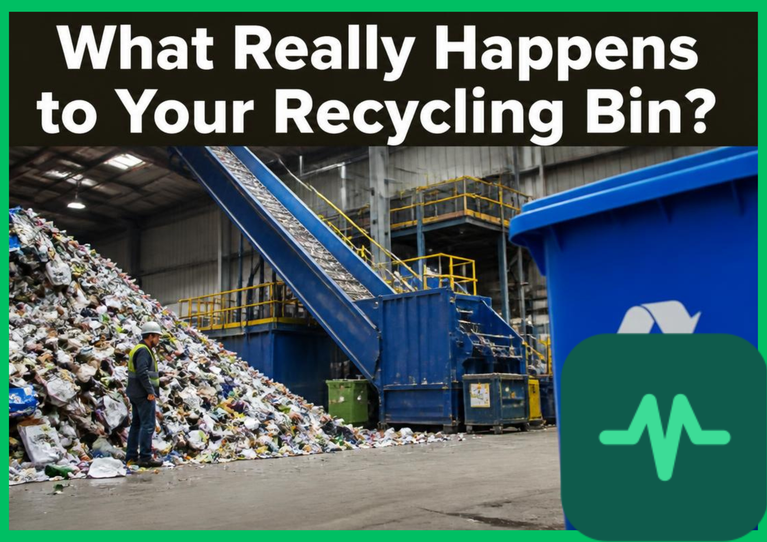
You rinse out a can, toss it in the recycling bin, and feel a small, genuine sense of doing the right thing. But have you ever actually wondered what happens next? Where does it actually go?
The honest answer is genuinely more complicated, and sometimes more disappointing, than most people realize. Let's walk through the real journey your recycling actually takes.
The Journey Starts With a Truck
Your recycling bin gets collected, usually by a truck separate from your regular garbage truck. This truck takes everything to a facility called a Materials Recovery Facility, often shortened to an MRF.
This is where the genuinely complicated sorting process actually begins, and where a lot of the honest reality about recycling starts to reveal itself.
The Sorting Process Is Genuinely Complex
At the MRF, your mixed recycling, plastic, glass, paper, metal, all gets sorted into separate material streams. This happens through a genuinely impressive combination of machines and human workers.
Magnets pull out metal items. Optical sensors identify different types of plastic based on how light reflects off them. Human workers still do real, physical sorting too, catching items the machines miss or get confused by.
Here's the Honest, Uncomfortable Truth
Not everything you put in your recycling bin actually gets recycled. This is genuinely important to understand, even though it's a bit deflating to hear.
Contamination is a huge, real problem. If a recyclable item is dirty, mixed with food waste, or if the wrong type of material ends up in the wrong bin, it can genuinely contaminate an entire batch, sometimes sending the whole thing to a landfill instead of actually being recycled.
Why "Wishcycling" Genuinely Hurts the System
There's a term for a habit a lot of well-meaning people have, called "wishcycling," tossing something in the recycling bin because you genuinely hope it's recyclable, even when you're not actually sure.
This habit genuinely backfires. Items that aren't actually recyclable in your local system can contaminate genuinely recyclable materials around them, sometimes sending an entire batch to the landfill that would have otherwise been successfully processed.
Plastic Recycling Is Genuinely the Hardest Part
Here's something that surprises a lot of people, and honestly, it should. Plastic recycling rates in America are genuinely quite low compared to metal or paper, often in the single digits percentage-wise for certain plastic types.
Different plastics require completely different recycling processes, and many types simply aren't economically worth recycling given current technology and market prices for the resulting recycled material. This is genuinely one of recycling's biggest honest weaknesses.
Why Metal and Glass Recycling Actually Works Well
Here's some genuinely good news to balance the frustrating plastic story. Metal recycling, aluminum cans especially, works genuinely well in America. Aluminum can get recycled repeatedly, essentially indefinitely, without meaningfully degrading in quality.
Glass recycling also works reasonably well, though it's genuinely more limited by regional infrastructure, some areas process glass efficiently, others struggle with it more.
Where Recycled Materials Actually Go Next
Once properly sorted, materials get sold to manufacturers who use them as raw material for new products. Recycled aluminum becomes new cans. Recycled paper becomes new cardboard or paper products.
This part of the system genuinely works well when materials are properly sorted and uncontaminated. The honest challenge lies earlier in the process, actually getting clean, properly sorted materials to this stage in the first place.
Why China's Policy Shift Changed Everything
Here's a piece of genuinely important recent history. For years, America shipped much of its recycling, particularly lower-quality plastic, to China for processing. In 2018, China dramatically restricted these imports, citing genuine contamination concerns.
This shift genuinely upended American recycling systems overnight. Many communities suddenly had far fewer options for processing certain materials, and some were forced to send materials to landfills that would previously have been shipped overseas for recycling.
What This Means for How You Should Actually Recycle
Given this honest reality, a few practical habits genuinely make a real difference. Rinse containers before recycling them, food residue is a major contamination culprit. Check your specific local recycling guidelines, they genuinely vary significantly by community.
When genuinely uncertain whether something is recyclable, it's often better to throw it in regular trash rather than risk contaminating an entire batch of otherwise recyclable material through wishcycling.
Why This Honest Reality Isn't a Reason to Give Up
It would be easy to read all this and feel genuinely discouraged, maybe even cynical about recycling entirely. That reaction is understandable, but it's genuinely not the right conclusion to draw.
Recycling still genuinely matters, and still genuinely works, when done correctly. The honest lesson here isn't "recycling is pointless." It's "recycling requires more care and attention than most people realize" to actually work as intended.
Common Questions About What Happens to Your Recycling
Does everything I put in my recycling bin actually get recycled?
No, honestly. Contamination and material type significantly affect what actually gets processed versus what ends up in a landfill anyway.
Why is plastic recycling so much harder than metal or glass?
Different plastic types require different processes, and many aren't economically viable to recycle given current technology and market conditions.
What is "wishcycling" and why is it a problem?
It's tossing questionable items in recycling hoping they're recyclable, which can contaminate genuinely recyclable materials and send entire batches to landfills.
Should I rinse containers before recycling them?
Yes, genuinely. Food residue is a major contamination source that can ruin otherwise recyclable materials around it.
Final Thoughts
The honest truth about recycling is genuinely more complicated than the simple, feel-good story we often tell ourselves. Not everything makes it through the process, and contamination genuinely undermines the whole system more than most people realize.
That honest complexity, though, isn't a reason to stop trying. It's a reason to recycle more carefully and thoughtfully. When done right, recycling genuinely works, and understanding the real process behind it helps you actually do your part more effectively.

Comments (0)
Login to leave a comment.
No comments yet. Be the first to share your thoughts!