
You finish your drink and walk over to the recycling bin.
You drop it inside, feeling a quiet sense of civic pride.
You believe you are doing your part to protect the planet.
You think that bottle will get crushed, melted down, and magically transformed into a brand new bottle just like it.
The honest reality is far more heartbreaking.
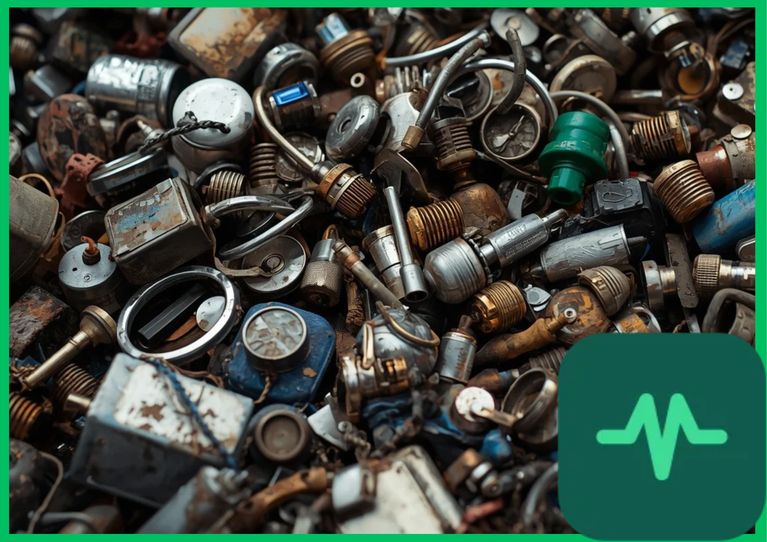
Traditional mechanical recycling is deeply flawed.
When a recycling plant melts down old plastic packaging, the polymer chains degrade, shorten, and weaken.
You cannot turn a flimsy grocery bag or a colored shampoo bottle into clear, food-grade packaging over and over again.
After just one or two cycles, traditional recycled plastic loses its strength, turns yellow, and gets tossed into a landfill or burned in an incinerator.
Millions of tons of plastic waste pile up in massive open landfills or drift across our oceans every single year.
We cannot build a clean, sustainable future while drowning our planet in disposable plastic waste that refuses to break down.
What if we could take any piece of waste plastic and unpick its chemical building blocks down to the individual molecule?
What if chemical recycling could grant plastic a true molecular rebirth, turning dirty trash into pristine, virgin-quality polymer feedstocks?
A quiet, brilliant materials science revolution is transforming recycling facilities across the globe.
According to global resource reports from the International Energy Agency (IEA), environmental protection frameworks from the United Nations Environment Programme (UNEP), efficiency benchmarks from ENERGY STAR, and academic polymer research, chemical recycling of plastic waste with advanced technology is changing our industrial waste landscape.
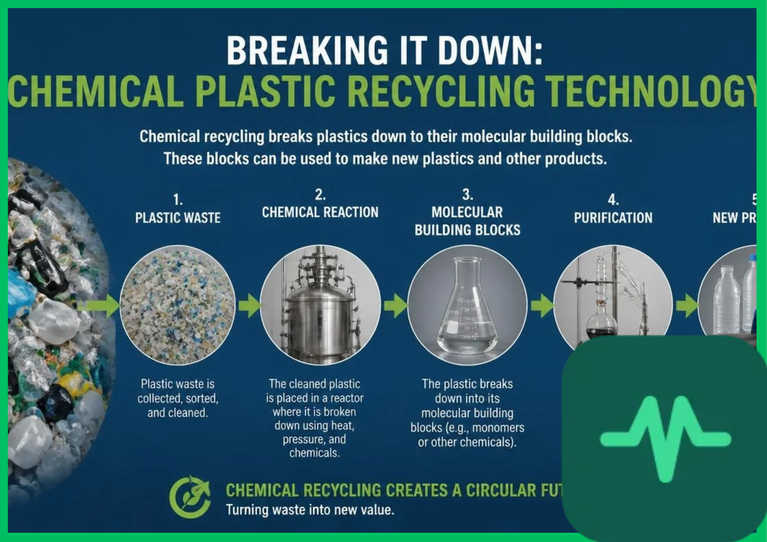
By using pyrolysis and depolymerization to break polymer chains back down into original chemical building blocks, we turn discarded trash into fresh industrial raw materials.
Here is how chemical recycling works, why molecular depolymerization changes circular economy economics, and how molecular rebirth secures our sustainable future.
The Broken Promise of Traditional Mechanical Recycling
To understand why advanced chemical recycling matters so much, you have to look at the physical limits of traditional mechanical sorting.
Traditional recycling is basically high-tech shredding.
Workers and optical machines sort plastic waste by resin type, wash it clean, chop it into tiny flakes, and melt it down into pellets.
That mechanical process works fine for clean, rigid milk jugs and soda bottles.
It fails completely for flexible films, mixed-color packaging, food-contaminated containers, and multi-layer plastics.
When you mix different types of plastics together in a mechanical shredder, the resulting melt is weak, brittle, and practically useless.
Skeptics once argued that plastics were simply too chemically complex to ever be recycled into high-grade materials.
Polymer chemists and circular economy pioneers proved those skeptics wrong.
You do not have to accept plastic waste as a permanent curse if you use clever chemistry to unravel the polymer bonds.
What Is Advanced Plastic Recycling?
Advanced plastic recycling is an industrial chemical conversion process that uses thermal pyrolysis, catalytic cracking, or enzymatic depolymerization to break waste plastics down into their original hydrocarbon monomers and chemical feedstocks, creating pristine raw materials that match virgin petrochemicals in purity and quality.
Instead of mechanically melting and degrading plastic flakes, advanced recycling uses chemical precision:
- Thermal Pyrolysis: Waste plastics are heated in oxygen-free industrial reactors, breaking long polymer chains apart into synthetic crude oil and hydrocarbon gases.
- Depolymerization: Specialized chemical solvents and mild catalysts dissolve specific polymers like polyester and nylon, unzipping the long chains back into pure liquid monomers.
- Contaminant Stripping: Advanced filtration and chemical scrubbing remove all inks, dyes, food residues, and chemical additives from the recovered material.
- Polymer Rebirth: The clean, purified monomers are repolymerized into brand-new plastic resins that are chemically identical to virgin materials pumped straight from petroleum wells.
You take dirty, contaminated ocean plastic or unrecyclable packaging and turn it into sparkling clean material ready for a brand-new life.
The Science of Depolymerization and Molecular Breakdown
How can chemical engineering take a tangled mess of waste plastic and separate it into clean, high-grade industrial building blocks?
It comes down to thermal cracking and selective solvent chemistry.
Academic polymer research shows that plastics are simply long, repeating chains of carbon and hydrogen atoms held together by covalent bonds.
When engineers apply precise thermal energy or specific chemical catalysts, those bonds snap apart in a controlled manner, turning solid plastic waste back into liquid oil or gas feedstocks.
Unlike burning plastic in an incinerator—which destroys the material and releases toxic emissions—chemical depolymerization preserves the carbon atoms so they can be reused infinitely.
Furthermore, ENERGY STAR and international industrial efficiency evaluations prove that advanced chemical recycling consumes significantly less energy and produces lower greenhouse gas emissions than refining brand-new plastics from raw fossil fuels.
Trash transforms into treasure at the molecular level.
Environmental Integrity and Circular Economy Realities
The environmental benefits of chemical recycling and advanced plastic depolymerization extend far beyond cleaning up polluted city streets or reducing landfill volume.
They provide the missing link to achieve a truly circular plastics economy.
According to UNEP resource governance frameworks, closing the loop on plastic manufacturing prevents millions of tons of persistent waste from breaking down into microscopic microplastics that poison marine ecosystems and enter human food chains.
When chemical recycling plants feed recovered monomers back into standard petrochemical crackers, society breaks its addiction to virgin oil extraction.
According to IEA clean energy roadmaps, scaling up circular feedstock recovery is an essential pillar to decouple industrial manufacturing from fossil fuel depletion.
When every piece of plastic can be unzipped and reborn, our material economy finally stops consuming the earth.
Overcoming Scaling, Sorting, and Energy Realties
Scaling advanced plastic recycling from pioneering laboratory reactors into universal industrial gigafactories involves navigating real-world economic and engineering hurdles.
Building large-scale pyrolysis and depolymerization plants requires heavy capital investment, reliable supplies of sorted plastic waste, and strict environmental emissions controls.
Chemical engineers, waste management firms, and industrial designers are solving these challenges by building integrated sorting facilities near chemical hubs, partnering with municipal recycling programs, and designing modular depolymerization units that process mixed plastic streams efficiently.
As chemical recycling capacity expands worldwide and regulatory standards reward circular content, molecular recycling is transitioning successfully from experimental pilot projects into standard industrial manufacturing infrastructure.
Achieving Molecular Rebirth Toward a Sustainable Future
Advanced plastic recycling proves that human chemistry can solve the most stubborn material waste challenges of our modern industrial civilization.
We no longer have to accept that plastics must be a single-use tragedy ending in landfills and oceans.
By unzipping polymer chains back down to their original building blocks through pyrolysis and depolymerization, we grant plastic a true molecular rebirth.
We step away from linear throwaway culture, embracing a clean, circular, and enduring standard of material design.
Through brilliant polymer science, rigorous academic research, and a deep respect for our planetary biosphere, molecular rebirth secures a clean, resourceful, and sustainable future for every community on Earth.

Comments (0)
Login to leave a comment.
No comments yet. Be the first to share your thoughts!