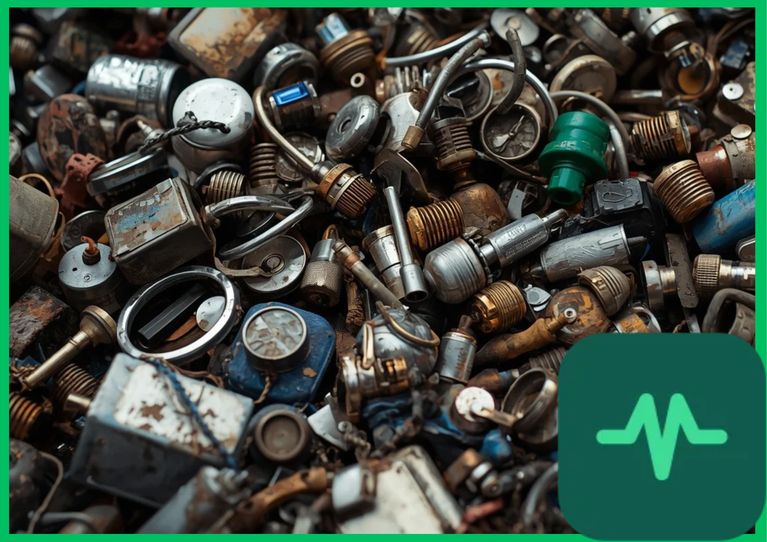
You look down at a pile of old, broken smartphones, dead laptops, and tangled charging cords.
You toss them into a cardboard box and forget about them.
Millions of households across the globe have that exact same box sitting in a closet or a garage.
We live in a digital age.
We upgrade our phones every two years, swap our laptops when a new model arrives, and throw away old electronics without a second thought.
We think nothing of it.
Yet inside those discarded gadgets lies a hidden treasure trove.
Old circuit boards contain more gold, silver, copper, and rare earth metals per ton than the richest raw ores pulled out of deep underground mines.
When we throw electronics into a trash can or let them collect dust in a drawer, we bury precious, finite resources.
Traditional mining rips apart pristine natural landscapes, scars mountains, pollutes rivers, and consumes staggering amounts of energy to extract virgin metals from the earth.
We cannot build a truly sustainable clean energy future while treating our electronic devices as disposable garbage.
What if our cities became the new mines of the twenty-first century?
What if recycling old circuit boards could supply all the critical minerals needed for our clean energy revolution?
A quiet, brilliant metallurgical revolution is transforming recycling facilities across the globe.
According to global resource reports from the International Energy Agency (IEA), environmental governance frameworks from the United Nations Environment Programme (UNEP), efficiency benchmarks from ENERGY STAR, and academic e-waste recycling research, urban mining and rare earth recovery are changing our industrial supply chains.
By using advanced hydrometallurgical processing and hydronic shredding to extract precious metals from discarded electronics, we turn urban e-waste into pristine industrial raw materials.
Here is how urban mining works, why electronic metal recovery changes global mining economics, and how digging through our cities secures our sustainable future.
The Ecological Toll of Traditional Deep-Earth Mining
To understand why urban mining matters so much, you have to look at the severe environmental damage caused by traditional metal mining.
Finding raw copper, gold, lithium, and neodymium requires blasting open massive open-pit mines.
Miners move millions of tons of earth, treat crushed rock with toxic acids, and wash wastewater into enormous tailing ponds that threaten local ecosystems and human communities.
As global demand for electric cars, wind turbines, and digital electronics skyrockets, deep-earth mineral demand pushes mining frontiers into fragile rainforests, deep sea beds, and pristine indigenous lands.
Skeptics once argued that recovering precious metals from tiny microchips and microscopic traces on circuit boards was too difficult and expensive to compete with virgin mining.
Materials scientists and metallurgical engineers proved those skeptics wrong.
Why dig deep holes in remote wilderness when millions of tons of high-grade metal sit locked inside drawers and landfills in every major city on earth?
What Is Urban Mining?
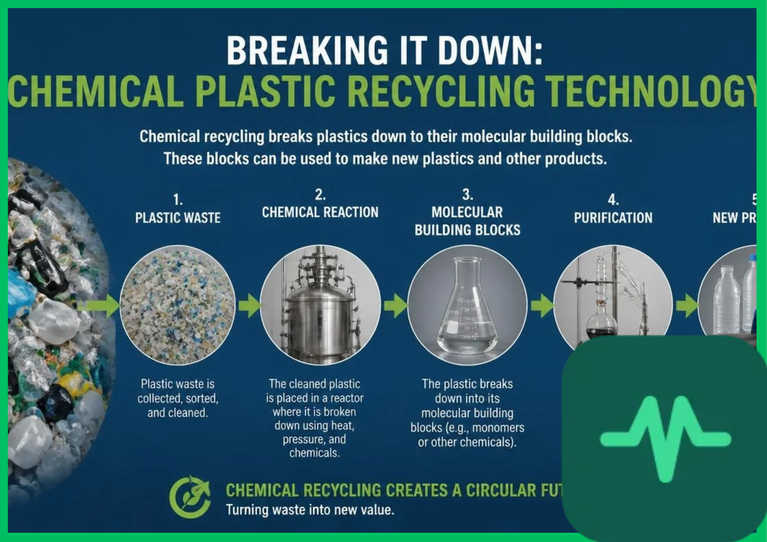
Urban mining is an advanced industrial recovery process that collects, sorts, and chemically processes discarded electronic waste—such as old computers, mobile phones, televisions, and appliances—to extract precious metals, base metals, and rare earth elements for reuse in new manufacturing.
Instead of tearing apart mountain ranges, urban mining harvests resources right where humans live:
- E-Waste Collection: Communities gather discarded electronics through organized municipal drop-offs, retail take-back programs, and specialized recycling drives.
- Mechanical Shredding: Heavy industrial shredders break down complex electronic devices into uniform fine particles, separating plastics, glass, and raw metal mixtures.
- Magnetic and Eddy Sorting: Powerful magnets and eddy-current separators pull iron, steel, and aluminum away from dense precious metal fractions.
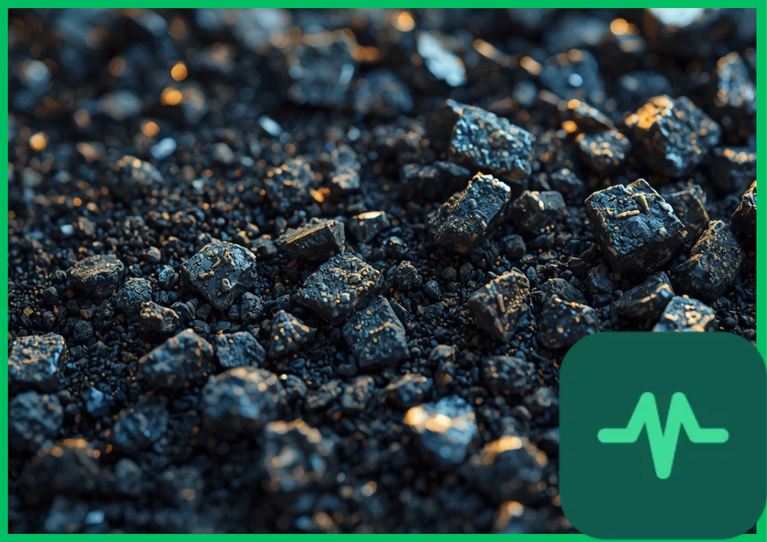
- Hydrometallurgical Refining: Advanced chemical baths use gentle leaching agents and selective solvents to dissolve gold, silver, palladium, and copper out of circuit board powders without releasing toxic smoke.
You take a broken smartphone gathering dust in a drawer and transform its internal chips into fresh industrial metals.
The Science of Hydrometallurgical Metal Extraction
How can chemical engineers separate microscopic layers of pure gold and rare earth elements from a crushed mixture of plastic, glass, and silicon?
It comes down to precision hydrometallurgical leaching and electrochemical refining.
Academic e-waste research shows that modern recycling facilities use controlled liquid acid solutions or non-toxic organic solvents to dissolve specific metals selectively out of shredded circuit boards.
Unlike traditional smelting—which burns electronic waste in high-temperature furnaces, releasing dangerous dioxins and wasting plastic housings—hydrometallurgical processing operates at lower temperatures and recovers up to 95% to 98% of precious metals in high purity.
Furthermore, ENERGY STAR and international industrial efficiency evaluations prove that recovering metals through urban mining uses a fraction of the energy required to mine, crush, and smelt virgin ores from raw earth.
Chemistry replaces brute-force excavation. Clean recovery protects our natural biosphere.
Environmental Integrity and Mineral Independence
The environmental benefits of urban mining and rare earth recovery extend far beyond cleaning out household junk drawers or reducing landfill clutter.
They provide the foundational mineral security required to build a 100% renewable energy economy.
According to UNEP resource governance frameworks, recycling critical metals breaks developing nations out of exploitative supply chain dependencies and reduces the geopolitical conflicts tied to virgin mineral extraction.
When a country secures its supply of copper, cobalt, and rare earth elements by recycling its own domestic e-waste, manufacturing becomes self-reliant and resilient.
According to IEA clean energy roadmaps, scaling up circular mineral recovery is an absolute pillar to achieve global net-zero emissions targets without destroying natural ecosystems.
When our cities supply the minerals for our next generation of technology, sustainable industry becomes a closed-loop reality.
Overcoming Collection Logistics and Consumer Habits
Scaling urban mining from pioneering recycling facilities into universal global infrastructure involves navigating real-world collection and consumer behavior hurdles.
The biggest bottleneck in e-waste recycling is not technical processing; it is getting people to hand over their old devices.
Billions of electronic devices remain trapped in domestic closets simply because owners worry about personal data security or do not know where to drop them off.
Municipal governments, electronics manufacturers, and recycling enterprises solve these challenges by offering certified data-destruction services, setting up convenient drop-off kiosks in local grocery stores, and establishing mandatory producer take-back laws that make recycling free and effortless.
As public awareness grows and collection networks mature, urban mining is transitioning successfully from scattered local green initiatives into standard municipal infrastructure worldwide.
Digging Through Our Cities Toward a Sustainable Future
Urban mining proves that human ingenuity can transform the waste of our digital age into the raw materials of our clean energy future.
We no longer have to accept that building advanced electronics requires tearing open new mines and scarring our planetary landscape.
By collecting discarded gadgets and extracting their precious metals through advanced hydrometallurgical chemistry, we mine our cities instead of our mountains.
We step away from extractive exploitation, embracing a circular, resourceful, and enduring standard of material stewardship.
Through brilliant metallurgy, rigorous academic research, and a deep respect for our natural environment, urban mining secures a clean, prosperous, and sustainable future for every community on Earth.


Comments (0)
Login to leave a comment.
No comments yet. Be the first to share your thoughts!