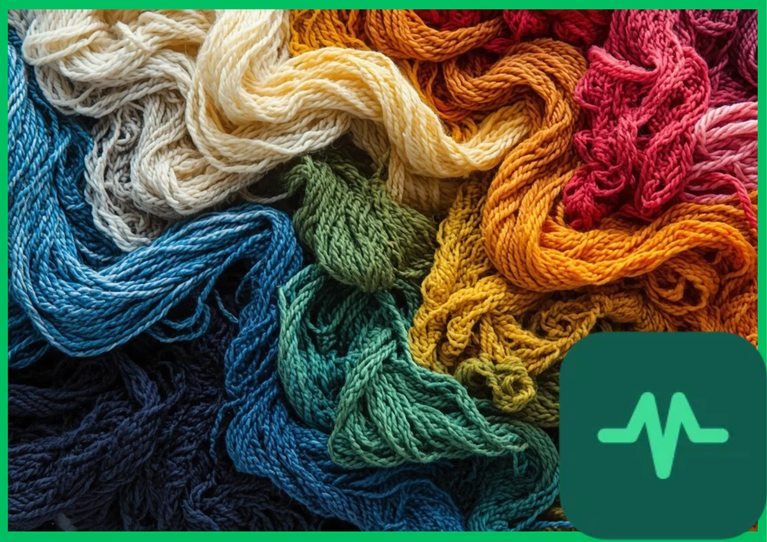
Racks of shirts, sweaters, and jackets hang neatly before you.
You pull out a favorite sweater, feeling its soft fabric against your skin.
You wear it for a season or two.
Then fashion trends shift, a seam frays slightly, or the color fades.
You toss it into a donation bin or a trash bag without a second thought.
You feel a quiet comfort, believing someone else is wearing it or that it is safely returning to the earth.
The honest reality of modern fashion is far darker.
Global clothing production has doubled over the past twenty years, while the time we keep each garment has plummeted.
Millions of tons of unwanted clothing pile up in massive open landfills or get burned in incinerators every single year.
Synthetic polyester, nylon, and blended fabrics take hundreds of years to break down.
When we throw away cheap garments, we discard valuable resources and choke our shared environment with synthetic waste.
We cannot build a truly sustainable future while treating our clothing as a disposable, single-use product.
What if every old garment could be unraveled, dissolved, and spun into fresh yarn without losing a single ounce of quality?
What if circular fashion could close the loop on clothing manufacturing once and for all?
A quiet, brilliant materials science revolution is transforming textile recycling facilities across the globe.
According to global resource reports from the International Energy Agency (IEA), environmental governance frameworks from the United Nations Environment Programme (UNEP), efficiency benchmarks from ENERGY STAR, and academic textile recycling research, textile waste and circular fashion recycling are changing our apparel industry.
By utilizing chemical fiber separation and mechanical shredding to break down post-consumer garments, we turn textile trash into pristine, high-quality fabrics.
Here is how circular textile recycling works, why closed-loop clothing recovery changes fashion economics, and how threads of change secure our sustainable future.
The Fast Fashion Waste Crisis
To understand why circular textile recycling matters so much, you have to look at the severe environmental toll of modern fast fashion.
For decades, clothing manufacturing operated on a linear, take-make-waste model.
Brands produced cheap, trendy clothing designed to last only a few washes before falling apart.
Shoppers bought massive volumes of garments, wore them a handful of times, and threw them away.
Recycling textiles is notoriously difficult because most modern clothing consists of blended fabrics—such as cotton woven tightly together with synthetic polyester threads.
When you throw a blended shirt into a traditional bin, machines cannot easily separate the plastic from the natural fiber.
Skeptics once argued that blended fabrics were chemically impossible to recycle at a commercial scale.
Polymer chemists and sustainable textile designers proved those skeptics wrong.
You do not have to accept apparel waste as an inevitable tragedy if you use clever chemical engineering to untangle blended threads.
What Is Circular Textile Recycling?
Circular textile recycling is an advanced industrial recovery process that uses mechanical shredding or chemical solvent separation to break post-consumer garments down into raw fibers or chemical monomers, creating high-grade recycled inputs for brand-new apparel manufacturing.
Instead of dumping worn-out clothing into landfills, advanced recycling facilities process garments through specialized recovery lines:
- Garment Sorting: Automated optical scanners and artificial intelligence sort unwanted clothing by color, brand, and exact fabric composition, separating pure cotton from synthetic blends.
- Mechanical Shredding: Heavy industrial machines rip durable garments into coarse fiber fluff, preparing them for spinning into new yarn.
- Chemical Fiber Separation: Advanced chemical baths dissolve synthetic polyester threads while leaving natural cotton fibers intact, or vice versa, untangling complex fabric blends completely.
- Fiber Regeneration: The purified natural and synthetic polymers are spun into brand-new yarn that matches virgin materials in softness, strength, and durability.
You take an old, worn-out blended jacket and transform its fibers into a brand-new, premium sweater.
The Science of Chemical Separation and Fiber Rebirth
How can chemical engineering take a tangled blended fabric and separate plastic polyester from natural cotton without destroying the material?
It comes down to selective solvent chemistry and polymer dissolution.
Academic textile recycling research shows that specialized, eco-friendly chemical solvents can target specific polymer bonds in synthetic blends, dissolving polyester into a liquid while leaving cotton fibers untouched as solid pulp.
Once separated, the dissolved polyester gets filtered, cleaned, and extruded back into pristine synthetic filaments, while the cotton pulp gets spun into fresh cellulose yarn.
Unlike traditional clothing incineration—which destroys valuable fibers and releases toxic greenhouse gases—chemical separation preserves the raw material so it can be reused infinitely.
Furthermore, ENERGY STAR and international industrial efficiency evaluations prove that recycling textile fibers consumes a fraction of the energy and water required to grow virgin cotton or pump raw petroleum for new polyester.
Chemistry replaces agriculture. Clean recovery protects our water supplies.
Environmental Integrity and Water Conservation
The environmental benefits of circular fashion and textile recycling extend far beyond cleaning out messy wardrobes or reducing landfill volume.
They provide a vital shield for global water resources and arable land.
According to UNEP environmental governance frameworks, conventional cotton farming consumes staggering amounts of fresh water and chemical pesticides, while synthetic fiber production pumps millions of tons of microplastics into rivers and oceans.
When fashion brands shift toward closed-loop recycling, the demand for water-intensive virgin farming and petrochemical extraction drops dramatically.
According to IEA clean energy roadmaps, scaling up textile circularity is an essential pillar to decouple apparel manufacturing from fossil fuel depletion and environmental degradation.
When every thread gets reused, our wardrobe stops costing the earth.
Overcoming Collection Logistics and Consumer Habits
Scaling circular textile recycling from pioneering laboratory pilots into universal global infrastructure involves navigating real-world collection and sorting hurdles.
Getting consumers to return old clothing requires convenient drop-off points, transparent take-back programs, and supportive municipal recycling systems.
Fashion brands, waste management firms, and textile engineers are solving these challenges by introducing digital product passports sewn into clothing labels, setting up automated garment collection bins in retail stores, and designing standardized recycling streams that make apparel return effortless.
As chemical separation plants scale up capacity and sustainable fashion regulations take root worldwide, textile recycling is transitioning successfully from niche eco-initiatives into standard global apparel manufacturing.
Weaving Threads of Change Toward a Sustainable Future
Circular textile recycling proves that human ingenuity can transform the wasteful fast fashion industry into a clean, regenerative model of design.
We no longer have to accept that wearing clothes requires filling landfills with discarded garments and exhausting planetary water supplies.
By separating blended fabrics and regenerating pristine fibers through advanced chemistry and mechanical shredding, we close the loop on clothing.
We step away from throwaway fashion culture, embracing a smart, circular, and enduring standard of apparel stewardship.
Through brilliant materials science, rigorous academic research, and a deep respect for our natural environment, threads of change secure a clean, stylish, and sustainable future for every community on Earth.

Comments (0)
Login to leave a comment.
No comments yet. Be the first to share your thoughts!