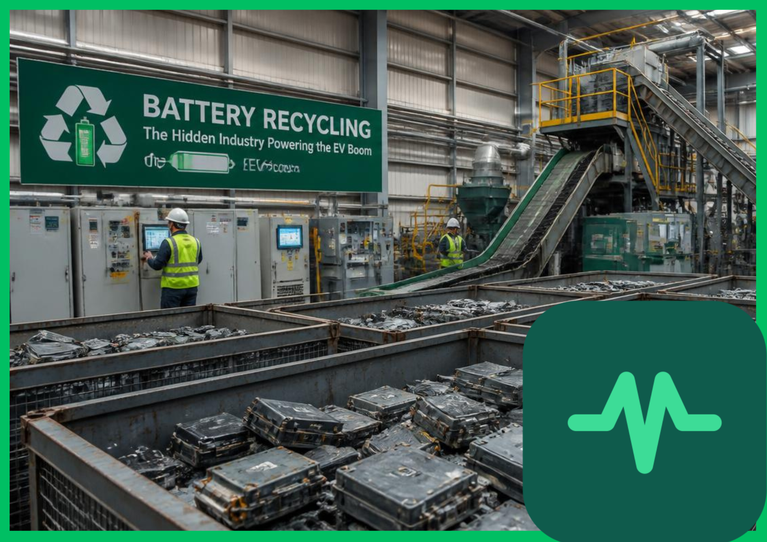
Electric vehicles get plenty of attention. What happens to their batteries once they wear out, though? That question gets far less airtime, but it genuinely matters.
Battery recycling is quietly becoming a real, growing American industry. Let's talk about why it matters, and what actually happens to a battery once it's done powering your car.
Why Battery Recycling Suddenly Matters So Much
As EV sales keep climbing across America, so does the number of batteries that will eventually reach the end of their useful driving life. This isn't a distant, future concern anymore. It's already happening.
Without a real recycling system in place, all those batteries would either end up in landfills, wasting valuable materials, or we'd need to mine ever more raw materials from the earth to build replacement batteries. Neither option is genuinely sustainable long-term.
What's Actually Inside an EV Battery
EV batteries contain genuinely valuable materials, lithium, cobalt, nickel, and other metals that took real mining effort to extract in the first place.
These materials don't wear out or disappear when a battery reaches the end of its useful life. They're still there, physically present, just no longer performing well enough for demanding EV use. That's exactly what makes recycling these batteries so genuinely worthwhile.
What Actually Happens to a "Dead" EV Battery
Here's something that surprises a lot of people. An EV battery that's no longer powerful enough for daily driving often isn't actually dead at all.
Many of these batteries still hold seventy to eighty percent of their original capacity. That's not enough for reliable daily EV use, but it's genuinely still useful for other purposes, like stationary home or grid energy storage. This is sometimes called a battery's "second life."
Only after this second life ends does a battery typically head to true recycling, where its materials get physically recovered and processed.
How the Actual Recycling Process Works
Once a battery genuinely reaches true end-of-life, it goes to a specialized recycling facility. The process itself varies by facility and technology, but generally involves breaking the battery down and separating its valuable materials.
Lithium, cobalt, nickel, and other metals get extracted and purified, ready to be used again in brand-new batteries. This creates a genuinely circular system, where materials keep getting reused instead of endlessly mined fresh from the ground.
Why This Feels Like Genuine Progress
There's something deeply satisfying about watching an entire industry build itself around not wasting valuable resources. Battery recycling represents real, practical sustainability, not just a feel-good marketing slogan.
Every battery successfully recycled means slightly less new mining required somewhere in the world. Mining carries real environmental and human costs, especially in certain regions where labor and environmental protections remain weak. Recycling genuinely helps reduce that pressure.
American Companies Are Racing to Build This Industry
Several American companies have emerged specifically focused on EV battery recycling, and the industry is growing fast to keep pace with rising EV adoption nationwide.
This represents real economic opportunity too, not just environmental benefit. Battery recycling facilities need workers, engineers, and genuine investment, creating real jobs tied directly to America's growing EV industry.
The National Security Angle Worth Understanding
Here's an angle that doesn't get talked about enough. Many of the raw materials needed for batteries currently come from other countries, sometimes politically unstable regions.
A strong domestic battery recycling industry reduces America's dependence on these foreign material sources. That's not just an environmental win. It's a genuine national security and economic independence benefit too.
Challenges the Industry Still Faces
Let's be honest about the real obstacles here. Battery recycling technology is still relatively young, and processes keep improving as the industry matures.
Collection also remains a real challenge. Not every worn-out battery reliably makes its way to a proper recycling facility yet. Building out that collection infrastructure, especially as more EVs age out over the coming decade, remains genuine, ongoing work.
What This Means for Everyday EV Owners
If you own an EV, you generally don't need to worry personally about battery recycling logistics. Manufacturers and dealers typically handle end-of-life battery collection directly, as part of broader warranty and service programs.
Still, it's genuinely reassuring to know this system exists, and keeps improving. Your EV purchase isn't creating some hidden, unaddressed waste problem down the road. There's a real, growing industry built specifically to handle it responsibly.
Common Questions About Battery Recycling
What happens to an EV battery when it can no longer power a car well?
Many get a "second life" in stationary energy storage before eventually reaching true recycling, where valuable materials get recovered and reused.
Why does battery recycling matter for national security?
It reduces America's dependence on foreign sources for critical battery materials, some of which come from politically unstable regions.
Is battery recycling actually a growing industry in America?
Yes, significantly. Multiple companies are building recycling facilities to keep pace with rising EV adoption nationwide.
Do I need to do anything personally to recycle my EV battery?
Generally no. Manufacturers and dealers typically handle end-of-life battery collection as part of their standard service programs.
Final Thoughts
Battery recycling might not be the flashiest part of the EV story, but it's genuinely one of the most important. It's the quiet infrastructure making sure this clean energy transition doesn't just trade one environmental problem for another.
As EV adoption keeps climbing across America, this industry will only grow more essential. It's genuinely good news, proof that the clean energy transition is thinking seriously about its full lifecycle, not just the exciting parts.

Comments (0)
Login to leave a comment.
No comments yet. Be the first to share your thoughts!