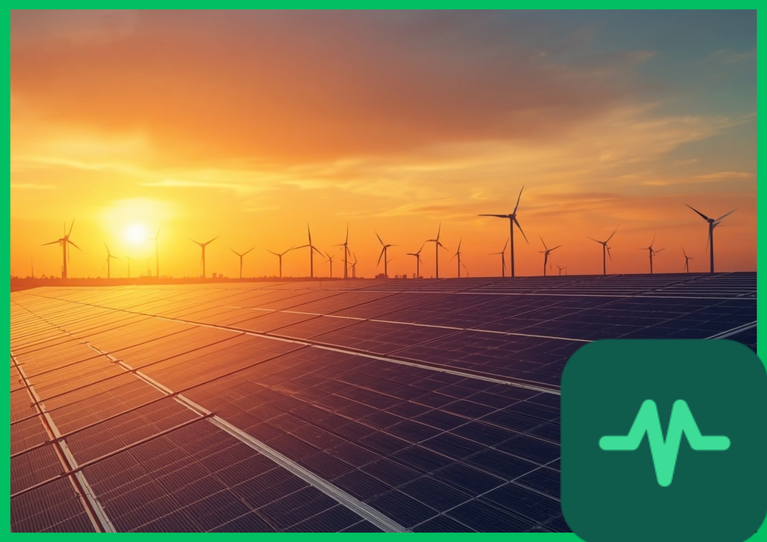
Coal-fired power plants, oil refineries, and natural gas pipelines drove industrial growth, powered cities, and shaped geopolitical power structures.
That centuries-old foundation is shifting.
A massive economic and industrial transformation is underway across international markets.
Global clean energy market trends reveal an unstoppable acceleration toward renewable power generation, electric mobility, and industrial decarbonization.
This shift is no longer driven purely by environmental idealism; it is driven by hard economics.
Here is what is fueling the global transition to clean energy.
The Economics of Falling Technology Costs
To understand the clean energy transition, you have to follow the money.
Over the last decade, the cost of manufacturing solar photovoltaic panels has plummeted by nearly 90%. Wind turbine technology has grown massive and hyper-efficient, while lithium-ion battery storage costs have dropped sharply year after year.
Clean energy technologies have crossed a historic tipping point.
In most regions across the globe, building a brand-new utility-scale solar or wind farm combined with battery storage is now significantly cheaper than building a new coal or natural gas power plant.
Market capital flows where profits and cost-efficiency lead.
Energy investors, multinational corporations, and sovereign wealth funds are shifting billions of dollars away from volatile fossil-fuel assets and pouring them directly into clean energy infrastructure.
The Industrial Push for Decarbonization
Macroeconomic trends are reinforced by sweeping industrial supply chain pressures.
Multinational corporations face intense demands from consumers, investors, and international trade regulations to clean up their operations.
Companies that manufacture consumer goods, automobiles, and technology want to stamp "100% renewable energy powered" on their products.
To retain customers and meet global standards, these industrial giants demand clean electricity from local utility providers, accelerating the construction of new wind, solar, and geothermal generation projects worldwide.
Overcoming Global Transition Hurdles
While the long-term trend lines are clear, the clean energy transition faces complex operational challenges.
Rapidly scaling renewable capacity puts immense pressure on transmission infrastructure, mineral supply chains, and skilled labor markets.
Furthermore, balancing intermittent sun and wind generation requires massive investments in smart grid automation, long-duration energy storage, and flexible demand response systems.
Yet, despite these hurdles, the momentum is irreversible.
The global energy market has crossed the Rubicon. The future of energy is clean, decentralized, and renewable.


Comments (0)
Login to leave a comment.
No comments yet. Be the first to share your thoughts!