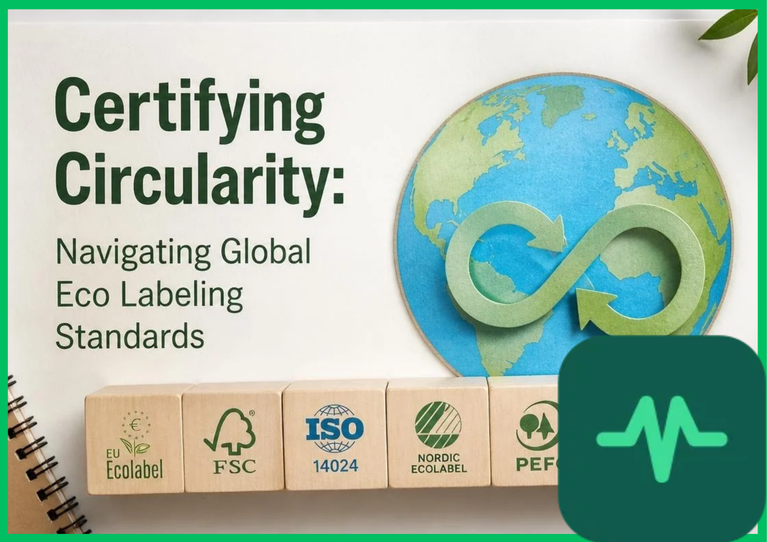
Life Cycle Assessment (LCA) Methodologies and ISO 14040/14044 Compliance
The foundational scientific basis for all credible eco-labeling programs is the Life Cycle Assessment (LCA), standardized internationally by ISO 14040 and ISO 14044. An LCA evaluates environmental impacts associated with all stages of a product's life, from raw material extraction through processing, manufacturing, distribution, use, and ultimate end-of-life recycling or disposal.
Executing a compliant LCA requires defining a functional unit, which provides a quantified reference basis for system performance comparisons. For instance, in industrial lighting systems, the functional unit is typically defined as providing 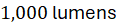 of luminous flux for
 . System boundaries must be explicitly declared, choosing between cradle-to-gate, cradle-to-grave, or cradle-to-cradle scopes.
Life Cycle Impact Assessment (LCIA) models translate inventory data—such as resource consumption, water usage, and chemical emissions—into environmental impact categories:
| Global Warming Potential (GWP) | Quantified in kilograms of carbon dioxide equivalent ( ) over a 100-year time horizon. |
| Acidification Potential | Measured in moles of hydrogen ion equivalents ( ) per kilogram of pollutant emission. |
| Eutrophication Potential | Quantified in kilograms of nitrogen or phosphorus equivalent ( or  ), reflecting aquatic ecosystem nutrient loading. |
| Abiotic Depletion Potential (ADP) | Measured in kilograms of antimony equivalent ( ) for fossil fuels and mineral elements. |
Independent third-party verification bodies audit these inventory models to ensure compliance with ISO 14044 data quality requirements, verifying that data precision, completeness, and consistency meet strict industrial certification thresholds.
Material Circularity Indicator (MCI) and Mass Balance Accounting
Beyond traditional environmental impact assessments, modern eco-labeling standards incorporate quantitative circularity metrics. The Material Circularity Indicator (MCI), developed by the Ellen MacArthur Foundation, measures how restorative a product's material flow is, assigning a score between 0 and 1. An MCI score of 1 indicates a fully circular material loop with zero waste generation and 100% recycled or reused content.
Calculating the MCI involves analyzing four primary vector inputs:
Mass of virgin feedstock ( ) | Total mass of virgin raw materials utilized. |
Mass of unrecoverable waste ( ) | Mass of material sent to landfill or incineration without energy recovery |
Utility factor ( ) | Ratio of the product's actual lifespan and usage intensity compared to an industry average benchmark product. |
Efficiency of recycling processes ( and  ) | Efficiency coefficients governing feedstock collection and recycling loss rates. |
For complex polymer blends, chemical compounds, and alloy metals, certifying circularity relies on mass balance accounting protocols. Mass balance standards—such as the International Sustainability and Carbon Certification (ISCC) PLUS framework—trace recycled or bio-based input materials through complex co-fed industrial chemical reactors. Even when physical molecules of recycled and virgin polymers intermix during processing, mass balance bookkeeping tracks input ratios through certified chain-of-custody documentation, ensuring that verified recycled claims match physical output volumes.
Type I, Type II, and Type III Environmental Declarations
Global environmental labeling standards are categorized under the ISO 14020 family of standards, separating claims into three distinct operational types:
- Type I Ecolabels (ISO 14024): Voluntary, multi-attribute, third-party certified programs based on life-cycle environmental criteria. Examples include the EU Ecolabel, the Nordic Swan, and ENERGY STAR specifications. Certifying bodies establish strict threshold criteria for energy efficiency, hazardous substance restrictions, and durability, requiring periodic facility audits and laboratory sample testing.
- Type II Environmental Claims (ISO 14021): Self-declared environmental claims managed directly by manufacturers. These include symbols, graphics, or text statements such as "recyclable," "biodegradable," or "ozone-friendly." Because Type II claims lack mandatory third-party verification prior to market entry, regulatory bodies increasingly penalize unsubstantiated claims under strict trade practice laws.
- Type III Environmental Declarations (ISO 14025): Quantified environmental data profiles based on independent LCA studies, known as Environmental Product Declarations (EPDs). EPDs adhere to strict Product Category Rules (PCRs) defined for specific industrial sectors, providing standardized, comparable numerical impact metrics for business-to-business (B2B) procurement and green building rating systems.
Digital Product Passports (DPPs) and Traceability Standards
Emerging global trade regulations mandate the implementation of Digital Product Passports (DPPs) to verify circularity claims transparently. DPPs link physical products—such as electric vehicle batteries, textiles, and electronics—to secure cloud databases via optical barcodes, RFID chips, or laser-etched Data Matrix codes.
DPP architecture relies on interoperable data standards, including GS1 identification protocols and secure API integrations. The digital passport records real-time material composition, hazardous substance disclosure, disassembly instructions, repair manuals, and end-of-life recycling pathways. Cryptographic ledgers ensure data immutability, preventing unauthorized modification of supply chain provenance records and ensuring compliance with international critical mineral governance frameworks.
Global Harmonization Challenges and Regulatory Enforcement
A primary hurdle in navigating global eco-labeling standards is regulatory fragmentation across international jurisdictions. Divergent testing methodologies, conflicting chemical hazard classifications, and regional trade variations create compliance overhead for multinational industrial manufacturers. Harmonization initiatives led by the International Organization for Standardization (ISO) and regional trade bodies seek to align PCR definitions and LCA impact assessment models, reducing redundant auditing costs.
Quantitative evaluations published by academic research consortia and the UNEP indicate that stringent eco-label enforcement reduces misleading green claims by over 40% while accelerating corporate investments in recyclable product design. As regulatory bodies enforce mandatory disclosure laws, certified circularity transitions from an optional marketing tool into an essential legal requirement for global industrial market access.



Comments (0)
Login to leave a comment.
No comments yet. Be the first to share your thoughts!