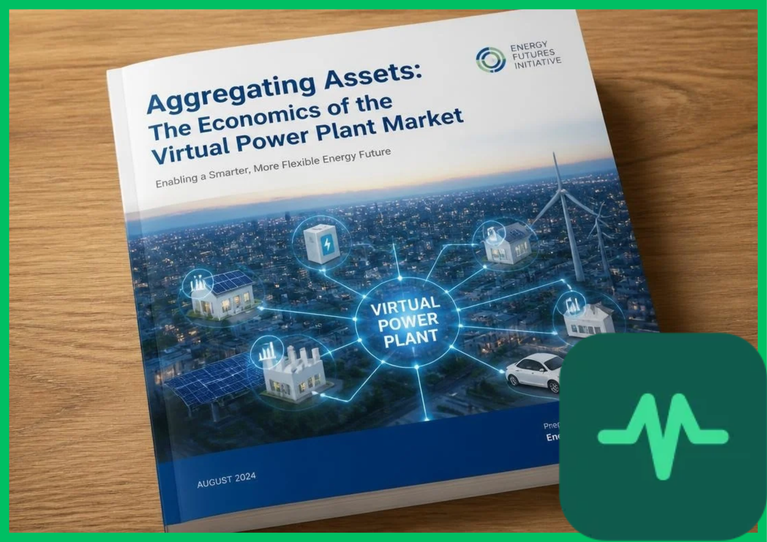
Aggregation Architecture and Distributed Energy Resource (DER) Heterogeneity
Managing thousands of heterogeneous assets distributed across wide geographical areas requires robust software orchestration platforms. Aggregation platforms utilize cloud-native microservices architectures, communicating via secure application programming interfaces (APIs) and international communication standards such as IEEE 2030.5, OpenADR 2.0b, and IEC 61850.
Heterogeneity among DERs introduces complex telemetry and control challenges. Residential lithium-ion storage units possess varying nominal capacities (ranging from  to
 ), disparate state-of-health (SoH) profiles, and distinct inverter response times. The aggregation platform must normalize these operational parameters into a single virtual asset block with predictable ramp rates and capacity ratings.
Telemetry data—including state-of-charge (SoC), active power ( ), reactive power (
 ), and internal temperature—is transmitted to central dispatch servers at sampling rates between
 and
 . High-frequency telemetry minimizes control latency, ensuring that the aggregated VPP response meets transmission system operator (TSO) or distribution system operator (DSO) dispatch commands within contractual performance windows.
Wholesale Market Participation Models and Ancillary Services Economics
VPP profitability depends on revenue stacking across multiple electricity market tiers. Unlike traditional centralized gas-fired peaker plants that generate revenue solely through wholesale energy sales or capacity payments, VPPs participate simultaneously in three distinct market segments:
| Energy Arbitrage | VPP aggregators buy electricity during periods of low locational marginal pricing (LMP)—typically during midday solar surges or overnight wind peaks—storing energy within distributed battery fleets. During evening demand peaks when LMPs spike, aggregators discharge stored energy back into the distribution grid, capturing the price spread minus round-trip efficiency losses. |
| Frequency Regulation Ancillary Services | VPPs provide sub-second frequency containment reserves (FCR) and frequency restoration reserves (FRR). Because battery inverters respond to frequency deviations within  to  , VPPs outperform slow-ramping gas turbines in high-frequency regulation markets, securing lucrative capacity availability payments. |
| Capacity Markets | By guaranteeing verifiable peak load reduction during systemic grid stress events, aggregators secure multi-year capacity contract payments from grid operators, deferring multi-million-dollar capital investments in new transmission lines and peaking generation facilities. |
Quantitative financial modeling demonstrates that revenue stacking increases aggregate asset returns by 35% to 60% compared to single-market participation strategies.
Financial Optimization and Arbitrage Algorithms
Optimizing dispatch schedules across volatile wholesale electricity markets requires advanced mathematical optimization techniques, including mixed-integer linear programming (MILP) and model predictive control (MPC). These computational models ingest real-time weather forecasts, historical load patterns, wholesale spot market price predictions, and grid tariff structures to compute optimal charging and discharging schedules for every individual asset within the portfolio.
A critical economic variable within optimization models is battery degradation cost accounting. Cycling lithium-ion batteries induces chemical aging via solid-electrolyte interphase (SEI) growth and mechanical stress. The optimization engine incorporates a degradation cost function ( ), quantifying capacity fade per equivalent full cycle (EFC). If wholesale price spreads are lower than the calculated marginal degradation cost per kilowatt-hour (
 ), the algorithm withholds the asset from dispatch, preserving battery lifespan for higher-value grid services.
Regulatory Barriers and Market Access Constraints
Despite favorable macroeconomic fundamentals, VPP market expansion encounters structural regulatory barriers across international jurisdictions. Legacy wholesale electricity market rules were designed exclusively for large centralized generators possessing capacities exceeding  (
 ). Consequently, minimum size thresholds, onerous telemetry compliance requirements, and double-taxation tariffs on stored energy have historically excluded smaller distributed aggregators.
Modern regulatory reforms—such as universal market access directives modeled after federal wholesale competition mandates—require grid operators to lower minimum participation size thresholds to  (
 ) or lower, permitting heterogeneous DER aggregations to compete directly alongside fossil-fuel generators. Furthermore, establishing standardized baseline calculation methodologies ensures accurate measurement and verification (M&V) of load reduction during peak demand response events, eliminating disputes over capacity crediting.
Global Market Projections and Economic Impact Metrics
Economic analyses published by the IEA and academic research consortia project that global virtual power plant market valuation will expand at a compound annual growth rate (CAGR) exceeding 25%, surpassing multi-billion-dollar capitalization thresholds. Decentralized aggregation reduces wholesale peak electricity prices by flattening demand curves, shielding industrial and residential consumers from extreme price volatility during heatwaves and cold snaps.
Capital expenditure (CapEx) comparisons reveal that deploying VPP software and subsidizing residential battery installations costs between  and
 , compared to capital expenditures exceeding
 for constructing open-cycle gas turbine (OCGT) peaker plants. This economic advantage accelerates decarbonization trajectories while maintaining strict system reliability standards across global electricity networks.



Comments (0)
Login to leave a comment.
No comments yet. Be the first to share your thoughts!