In the distance, a dark industrial city burns coal and gas, pumping thick clouds of smoke into the sky.
You turn your head the other way.
Across the sunlit hills, a massive wind park spins its white blades in steady rhythm, while golden solar panels drink in the bright afternoon light.
You feel a quiet sense of hope in your chest.
For over a century, human civilization ran entirely on burning fossil fuels.
We pumped oil from deep rock layers, mined coal from dark tunnels, and burned natural gas to power our homes, factories, and vehicles.
That energy fueled incredible human progress.
It also pushed our planetary climate toward a dangerous, warming precipice.
Transitioning our entire global energy system away from coal and gas is the greatest engineering challenge humanity has ever faced.
You cannot simply turn off fossil-fuel power plants overnight without plunging millions of people into darkness.
How do you guide an entire planet through a peaceful, orderly transition to 100% clean power?
You need a map.
A quiet, brilliant planning revolution is charting the future of human energy.
According to global energy transition reports from the International Energy Agency (IEA), resource protection frameworks from the United Nations Environment Programme (UNEP), efficiency benchmarks from ENERGY STAR, and academic grid research, renewable energy transition roadmaps are changing our world.
By following strategic international milestones and multi-decade planning guides, we phase out fossil fuels systematically while building a robust, 100% clean power grid.
Here is how transition roadmaps work, why strategic energy planning changes industrial growth, and how mapping our future secures our sustainable energy supply.
The Chaos of Unplanned Energy Transitions
To understand why renewable energy roadmaps matter so much, you have to look at the dangers of moving without a plan.
If governments and utility companies rush to shut down coal plants without building enough wind farms, solar arrays, and energy storage systems first, power grids collapse.
Communities face rolling blackouts, freezing homes during winter storms, and crippling industrial shutdowns.
Conversely, if policy makers move too slowly, greenhouse gas emissions continue rising, accelerating climate disasters across the globe.
Early energy planning was often messy and fragmented.
Different cities and industries pulled in opposite directions, fighting over permits, funding, and transmission lines.
Scientists and economists realized that shifting a multi-trillion-dollar global energy system requires meticulous, science-backed coordination.
We needed global roadmaps charting every single year from today toward a net-zero future.
What Is a Renewable Energy Transition Roadmap?
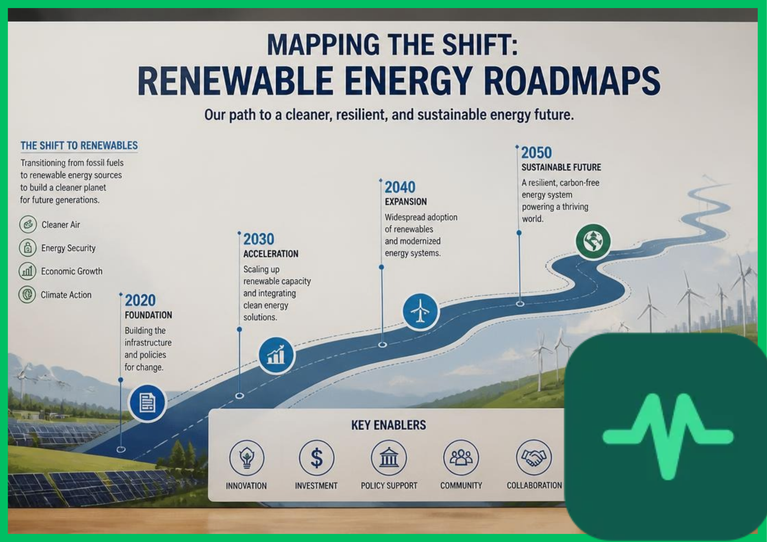
A renewable energy transition roadmap is a comprehensive, science-backed strategic plan developed by international agencies and research institutions that outlines the exact financial, technological, and regulatory milestones required to transition global power grids from fossil fuels to 100% renewable energy.
Instead of guessing what might happen in the future, energy roadmaps use advanced computer modeling to simulate every aspect of the global economy.
They calculate:
- Generation Targets: How many gigawatts of wind and solar capacity must be installed each year across every continent.
- Storage Requirements: How many gigawatt-hours of utility-scale batteries and pumped hydro systems are needed to balance variable weather conditions.
- Grid Modernization: How many kilometers or miles of high-voltage transmission lines must be built to move clean power from remote wind and solar farms to dense urban centers.
- Financial Capital: How many trillions of dollars in investment must shift from fossil fuel extraction to clean infrastructure annually.
These roadmaps give governments, utility operators, and investors a clear, synchronized timeline for building our clean energy future.
The Science of Modeling and Grid Interconnection
How do international energy agencies predict what our power grids will look like decades into the future?
It comes down to complex computer modeling and grid simulation physics.
Academic grid research shows that modern energy roadmaps use hourly weather data spanning decades to simulate how solar and wind generation fluctuates across every region on Earth.
If a severe winter storm hits a continent, the model calculates whether battery storage and green hydrogen reserves can keep homes warm and lights on.
These models prove that a 100% renewable grid is entirely possible, provided we build enough geographical diversity into our energy mix.
When solar generation drops in one region, high-voltage transmission lines wheel surplus wind power in from neighboring regions instantly.
According to ENERGY STAR and international industrial efficiency evaluations, implementing structured transition roadmaps prevents costly grid over-building, saving trillions of dollars in capital investments.
Environmental Integrity and Global Equity
As renewable energy transition roadmaps guide global investments, maintaining social equity and environmental integrity is an absolute priority.
The clean energy transition must not leave developing nations behind or create new mining injustices.
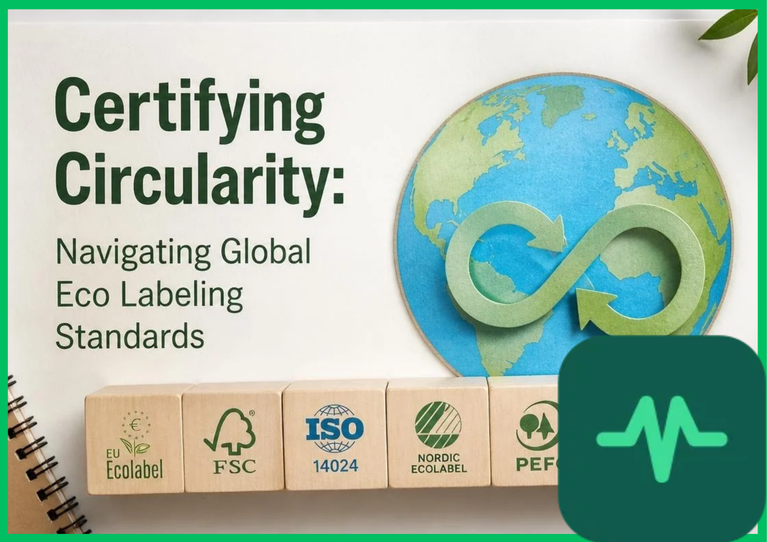
According to UNEP resource governance frameworks, transition roadmaps mandate strict environmental safeguards and circular recycling protocols for all clean tech supply chains.
When emerging economies receive financial and technical support to build clean grids, developing nations can leapfrog the heavy smog and fossil-fuel dependency of the past.
According to IEA clean energy roadmaps, achieving global net-zero targets requires unprecedented international cooperation, ensuring that clean electricity reaches every rural village and urban center equally.
Overcoming Implementation and Political Realties
Following a multi-decade energy roadmap involves navigating real-world political and regulatory hurdles.
Building high-voltage transmission lines often faces local permitting delays and bureaucratic red tape.
Governments and international planning bodies work constantly to streamline zoning laws, fast-track clean energy corridor approvals, and retrain fossil-fuel workers for high-paying green energy jobs.
As public support for clean air and cheap renewable power grows stronger, resistance to energy planning fades away.
Mapping Our Future Toward Sustainability
Renewable energy transition roadmaps prove that humanity can navigate complex global challenges with intelligence, science, and cooperation.
We no longer have to wander blindly through an uncoordinated energy crisis.
By following clear, science-backed milestones for wind, solar, storage, and grid modernization, we phase out fossil fuels systematically.
We step away from energy uncertainty, embracing a planned, secure, and enduring standard of power generation.
Through brilliant energy modeling, international policy alignment, and deep respect for our planetary climate, mapping the shift secures a clean, bright, and sustainable future for every person on Earth.
Comments (0)
Login to leave a comment.
No comments yet. Be the first to share your thoughts!