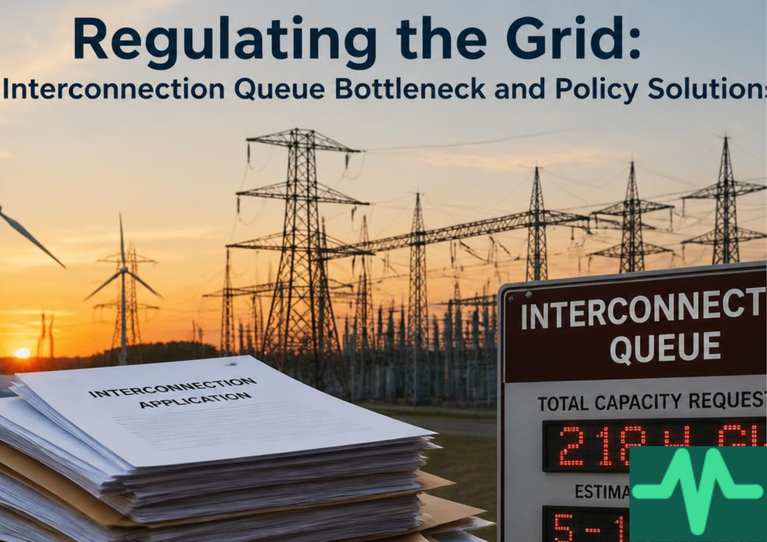
Picture a fully built solar farm. The panels are up. The wiring is done. Everything works. Yet it sits there, producing nothing. Why? Because it is stuck waiting for approval to connect to the power grid. This is exactly what the interconnection queue does to countless clean energy projects today.
In this guide, we will explore what the interconnection queue actually is. We will look at why it got so backed up. We will also look at the smart new rules helping clear this mess. By the end, you will understand why fixing paperwork might matter just as much as building better solar panels.
What Is the Interconnection Queue?
Let's start with the basics. Before any power plant can send electricity to homes, it must connect safely to the public grid. This connection process involves careful engineering checks. Utilities need to make sure new power sources will not destabilize the existing system.
This review process is called the interconnection queue. Developers submit an application. That application waits in line. Engineers study it. Eventually, if everything checks out, the project gets approval to connect and start delivering power.
This system made sense years ago. Back then, only a few massive power plants got built each decade. The interconnection queue could handle that slow, steady pace easily.
Why the Old System Broke Down
Here is where things went wrong. Clean energy exploded in popularity. Thousands of solar and wind projects started applying for grid connections at once. The old interconnection queue simply could not keep up with this new pace.
Worse, many of these applications were not even serious. Speculative developers filed dozens of applications just to check potential costs, without ever planning to actually build anything. This flooded the interconnection queue with paperwork that went nowhere.
Each of these applications still required a full, detailed engineering study. If a speculative project near the front of the line quietly dropped out, everything behind it had to be recalculated. This domino effect turned the interconnection queue into a chaotic, ever-shifting mess.
The Painful Real-World Impact
This bureaucratic tangle created real, painful delays. Projects that once expected quick approval instead waited four to seven years just to connect and start generating power. Meanwhile, the panels and turbines sat completely idle behind fences, fully built but totally useless.
This delay carries a real cost. Investors lose money waiting for projects to finally generate revenue. Communities miss out on the clean power they were promised. The entire climate benefit of these projects gets pushed back years, simply because of the interconnection queue backlog, not any actual technical problem.
Hundreds of gigawatts of clean energy capacity currently sit trapped inside this broken system. That is an enormous amount of power, built and ready, just waiting for the paperwork to catch up.
Why the Old Rules Made Things Worse
The old approach followed a simple idea: first come, first served. Applications got reviewed strictly in the order they arrived. This sounds fair on paper. In practice, it created a fragile, easily disrupted system.
Since every application in the interconnection queue needed its own full study, one dropped project could ripple backward through the entire line. Utilities had to redo calculations for everyone waiting behind that canceled project. This constant reshuffling slowed everything down even further.
This flawed design rewarded speculation over seriousness. Developers had little reason not to file extra, unnecessary applications, since there was no real cost to doing so. The interconnection queue became clogged with projects that were never truly going to get built.
The Fix: First-Ready, First-Served
To solve this mess, regulators introduced a smarter approach. Instead of reviewing applications one by one in strict order, utilities now group nearby projects together into a single cluster study. This means the interconnection queue evaluates several projects at once, rather than working through an endless, fragile chain.
This shift alone speeds things up significantly. Engineers can study the combined impact of several nearby projects together, rather than constantly restarting calculations every time one project drops out unexpectedly.
This new system is often called "first-ready, first-served." Instead of rewarding whoever filed paperwork first, it rewards developers who are genuinely prepared to build. This single change helps clear out much of the clutter that used to clog the interconnection queue for years at a time.
Making Developers Prove They Are Serious
Alongside this cluster approach, regulators added another smart fix. Developers must now put down serious, non-refundable deposits before entering the interconnection queue. They also must prove they have secured land and equipment contracts in advance.
This requirement filters out speculative applications almost immediately. Casual developers, just testing the waters, no longer have an easy, cost-free way to clog the system. Only genuinely committed projects move forward through the interconnection queue now.
If a developer does back out later, their deposit does not simply vanish. Instead, it gets used to help fund transmission upgrades needed by the remaining, serious projects still waiting in line. This turns a wasted application into something genuinely useful for everyone else still working through the interconnection queue.
Why This Boring Fix Actually Matters So Much
It is easy to overlook something as unglamorous as paperwork reform. Yet the interconnection queue may matter just as much as any single piece of clean energy hardware. A perfect solar panel means nothing if it cannot actually deliver power to anyone.
This is exactly why policy experts have started paying such close attention to interconnection queue reform. Fixing this administrative bottleneck could unlock hundreds of gigawatts of clean energy almost overnight, without building a single new panel or turbine.
For everyday people, this shift matters more than it might seem. Faster interconnection queue processing means clean energy projects start delivering real electricity sooner. It means climate goals move closer within reach, simply by clearing away years of unnecessary administrative delay.
What Comes Next for Grid Policy
As these new rules spread across more regions, expect the interconnection queue backlog to shrink steadily over time. Early results from areas that have already adopted cluster studies show real, measurable improvement in approval speed.
Regulators are also exploring further improvements, including more proactive transmission planning. Instead of reacting to each new project individually, utilities are starting to plan ahead for expected clean energy growth. This kind of forward planning could help prevent future interconnection queue backlogs from forming in the first place.
Common Questions About the Interconnection Queue
Why do solar and wind projects get stuck in the interconnection queue? Outdated review processes could not keep up with the sudden surge of clean energy applications, causing massive delays even for fully built projects.
What is a cluster study, and how does it help the interconnection queue? It groups nearby applications together for a single combined review, replacing the old system where each project was studied individually and repeatedly disrupted by dropouts.
Why do developers now need to pay deposits to enter the interconnection queue? Deposits discourage speculative applications, ensuring only serious, financially committed projects take up space in the review process.
How long do projects typically wait in the interconnection queue? Historically, average delays stretched four to seven years, though new reforms aim to significantly shorten this timeline going forward.
How Other Regions Are Handling This Problem
The interconnection queue crisis is not unique to any single country. Many advanced economies with fast-growing clean energy sectors face similar backlogs. Some regions have moved faster than others in adopting reforms, offering useful lessons for places still struggling with long delays.
Countries that adopted cluster study methods early have generally seen faster improvement in their interconnection queue processing times. This has encouraged other regulators to study these early adopters closely, borrowing successful strategies rather than starting from scratch on their own.
International cooperation on this issue is growing too. Energy regulators increasingly share data and strategies across borders, recognizing that interconnection queue reform benefits everyone working toward similar clean energy goals. This kind of collaboration could help spread effective fixes even faster in the years ahead.
Final Thoughts
The interconnection queue may not sound exciting, but it holds real power over how fast clean energy actually reaches our homes. Fixing this quiet, administrative bottleneck could unlock more clean electricity than almost any single new piece of technology.
By shifting to cluster studies and requiring serious financial commitments, regulators are finally clearing out years of unnecessary delay. This reform proves that sometimes, the biggest barrier to progress is not technology at all. It is simply outdated paperwork.
As more regions adopt these smarter rules, expect the interconnection queue to keep shrinking. That means faster clean power for communities, quicker returns for investors, and real progress toward climate goals that have waited far too long behind a stalled bureaucratic line.



Comments (0)
Login to leave a comment.
No comments yet. Be the first to share your thoughts!