Those materials carry a hidden story.
For generations, heavy industries manufactured steel, cement, and chemicals without accounting for the environmental consequences of their emissions. Pumping millions of tons of greenhouse gases straight into the atmosphere cost industrial producers nothing.
Polluting was free.
That industrial free ride is coming to an end.
According to tracking data from international climate reports, the International Energy Agency (IEA), and academic economic research, putting a financial price on carbon pollution is transforming global industrial markets.
When pollution carries a direct financial liability, heavy industry changes its behavior overnight.
Here is how global carbon pricing mechanisms turn environmental damage into a clear economic cost and accelerate industrial decarbonization worldwide.
The Illusion of Free Pollution
To understand why carbon pricing matters, you have to look closely at how heavy manufacturing operates.
Making traditional steel requires burning coal at extreme temperatures to strip oxygen from iron ore. Making cement requires heating limestone until it releases carbon dioxide directly into the air as a chemical byproduct.
Historically, industrial producers factored the cost of raw iron, coal, electricity, and labor into their balance sheets, but treated atmospheric emissions as a "free externality."
Because releasing carbon dioxide cost nothing, companies had little financial incentive to invest in cleaner, more expensive manufacturing methods.
Environmental damage was absorbed by society at large through rising global temperatures and intensifying climate disasters.
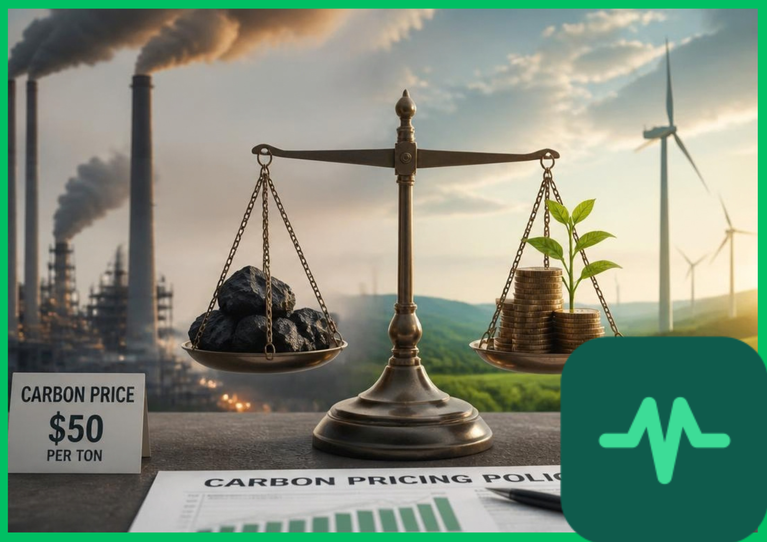
Carbon pricing corrects that market failure by forcing polluters to pay for the ecological damage they cause.
How Carbon Pricing Mechanisms Work
Governments and international bodies primarily use two distinct policy instruments to establish a direct financial price on greenhouse gas emissions:
1. Carbon Taxes
A carbon tax sets a direct, fixed price on every metric ton of carbon dioxide equivalent (tCO2e) emitted by burning fossil fuels or running industrial processes. Manufacturers know exactly how much they will pay per unit of pollution, allowing them to calculate the financial return of investing in cleaner equipment.
2. Emissions Trading Systems (ETS)
Often called cap-and-trade programs, emissions trading systems establish a strict legal limit on total industrial greenhouse gas emissions across an economy. The government issues a declining number of pollution permits. Companies that cut their emissions efficiently can sell their extra permits to heavier polluters on an open market. This creates a transparent market price for carbon, rewarding innovation and penalizing inefficiency.
According to global policy tracking data, nearly 30% of global greenhouse gas emissions are now covered by direct carbon pricing instruments, generating over $100 billion annually in public revenues that fund infrastructure and clean energy transitions.
Transforming Heavy Industry From the Inside Out
When a government puts a real-time financial price on carbon, corporate balance sheets react immediately.
Heavy industrial sectors—long considered the hardest parts of the economy to clean up—face intense financial pressure to innovate.
If a steel manufacturer continues using legacy coal-fired blast furnaces, mounting carbon liabilities will erode their profit margins until they can no longer compete in the global marketplace.
This financial reality drives heavy industries to adopt breakthrough clean technologies:
- Green Hydrogen Production: Replacing polluting metallurgical coal with green hydrogen produced via renewable water electrolysis, resulting in pure water vapor instead of carbon emissions.
- Carbon Capture and Storage (CCS): Installing advanced scrubbers on industrial smokestacks to capture unavoidable emissions and inject them permanently into secure underground geological formations.
- Electrified Kilns: Switching fossil-fuel-fired industrial kilns to high-efficiency electric arc furnaces powered by clean electricity grids.
When carbon carries a steep financial price, cleaning up industrial operations transforms from an expensive charity project into a basic requirement for business survival.
Leveling the Global Playing Field
A common concern among industrial producers is economic competitiveness.
If one country imposes a strict carbon price while a neighboring region allows pollution for free, domestic manufacturers worry they will lose market share to cheaper, dirtier foreign competitors.
To solve this challenge, international policymakers are expanding cross-border carbon adjustment mechanisms.
These border adjustments place an equivalent fee on carbon-intensive imports coming from regions with lax environmental regulations.
By leveling the playing field, border adjustments protect domestic clean technology investments and encourage international trading partners to establish their own domestic carbon pricing frameworks.
Aligning Economics With Planetary Limits
Putting a price on carbon proves that market forces and environmental protection can work hand in hand.
By turning greenhouse gas emissions into a measurable financial liability, carbon pricing aligns corporate profitability with global climate survival.
We are shifting toward a resilient industrial economy where manufacturing excellence and environmental stewardship go hand in hand.


Comments (0)
Login to leave a comment.
No comments yet. Be the first to share your thoughts!